Africa-Press – Malawi. A sharp political clash has erupted between the Malawi Congress Party (MCP) and governance commentators over the country’s worsening fuel and foreign exchange crisis, with experts accusing the opposition party of “cheap politics” and deflecting responsibility for problems they say were created during its time in power.
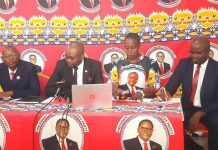
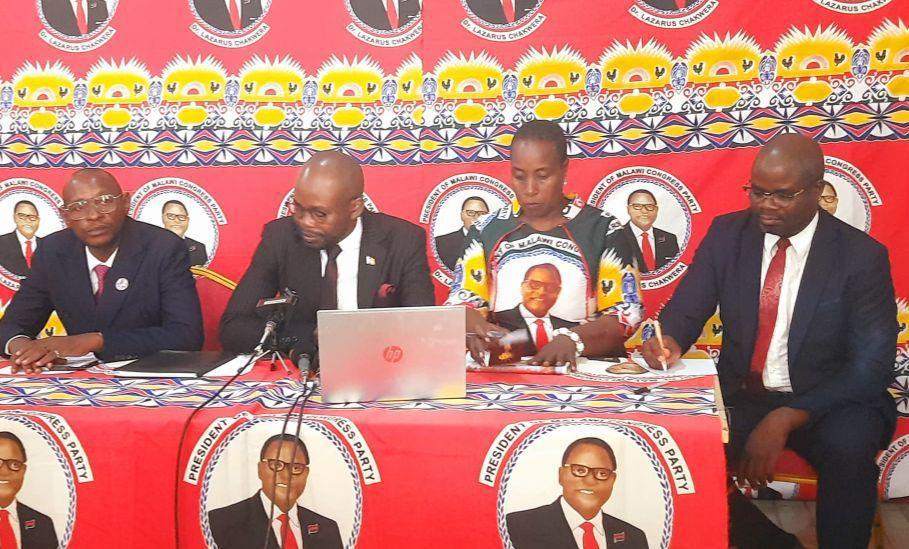
The dispute follows a strongly worded press briefing by MCP on April 22, 2026, in which the party blamed the current Democratic Progressive Party (DPP) administration for fuel shortages, declining forex reserves, rising cost of living, and failures in agricultural support systems.
MCP Director of Campaign and Member of Parliament for Dedza Mlunduni, Moses Kunkuyu, said Malawians deserve “transparency, honesty, and transformative leadership,” questioning why the DPP is now raising alarm over forex shortages after previously downplaying the situation.
“Malawians expect leadership that accepts responsibility rather than shifting blame,” the party said, while defending its own record in government. MCP pointed to a government-to-government fuel procurement system introduced under former President Lazarus Chakwera, arguing it was designed to reduce reliance on cash purchases and ease forex pressure.
The party also dismissed official inflation figures showing a marginal drop from 24.1 percent to 23.8 percent, describing the change as “cosmetic” and disconnected from the reality on the ground.
“The cost of basic goods, transport, and essential services remains high, and households continue to feel the strain,” the statement said.
MCP further raised concerns over maize pricing, the 2025/2026 tobacco marketing season, and what it described as a “disastrous” fertilizer programme. Kunkuyu used a metaphor to criticise government decisions, saying: “There is no logic in a father selling a house just to buy biscuits,” while also questioning the handling of national resources and the visibility of leadership.
But governance experts have pushed back strongly, accusing MCP of attempting to score political points instead of offering solutions.
Political analyst George Chaima said the party lacks the moral authority to criticise the current administration on fuel issues.
“MCP should stop making blatant noise. They have no high moral ground to accuse the DPP on fuel matters because they are the creators of this problem,” Chaima said.
He argued that many of the challenges now being faced were rooted in decisions made during MCP’s time in government, adding that even the current administration is struggling to stabilise the situation.
“We have a government that is also struggling to invest in these areas. Running a government is not a one-man job—it requires coordination across many players,” he said.
Chaima added that political actors often oversimplify solutions while in opposition, only to face the same difficulties once in power.
“People outside government always think they have easy solutions. But when you get there, it becomes another challenge,” he said, urging for collaboration rather than blame.
On the fuel crisis, he said the country currently lacks a clear “champion” to drive a solution, stressing that the problem requires political will and collective effort from multiple stakeholders.
He also advised MCP leaders to tone down their criticism and instead contribute constructively.
“MCP cannot absolve itself of responsibility. They had their time in government and failed to fully resolve these issues,” he said.
Social accountability expert Mavuto Bamusi echoed similar sentiments, faulting MCP for politicising the crisis.
Bamusi said the party should be the last to point fingers at an administration that is dealing with structural challenges inherited from the previous government.
The ongoing exchange highlights growing political tension as Malawi grapples with persistent fuel shortages and forex constraints, with both sides trading blame while citizens continue to bear the economic pressure.
For More News And Analysis About Malawi Follow Africa-Press