
By Wezzie Gausi:
The Ministry of Health has admitted that corruption remains a serious challenge in public hospitals, with officials disclosing widespread malpractice including bribery, fake receipts, drug theft and illegal charges for services meant to be free.
Secretary for Health Dan Namarika made the disclosure when he appeared before the Parliamentary Committee on Health alongside senior officials from major public hospitals during an ongoing inquiry into corruption in the sector.
The inquiry follows media investigations that exposed alleged corruption in public hospitals, where some patients were reportedly forced to pay bribes to access treatment and medical services that are supposed to be free.
Namarika said corruption remains a major problem in the public health system but added that government has already started taking action against officers implicated in the malpractice.
– Advertisement –
NAMARIKA—We have started taking action
“We acknowledge that corruption is happening in some of our public health facilities and government has already started taking action against those involved,” Namarika said.
During the session, hospital officials presented several cases of corruption identified in government health facilities.
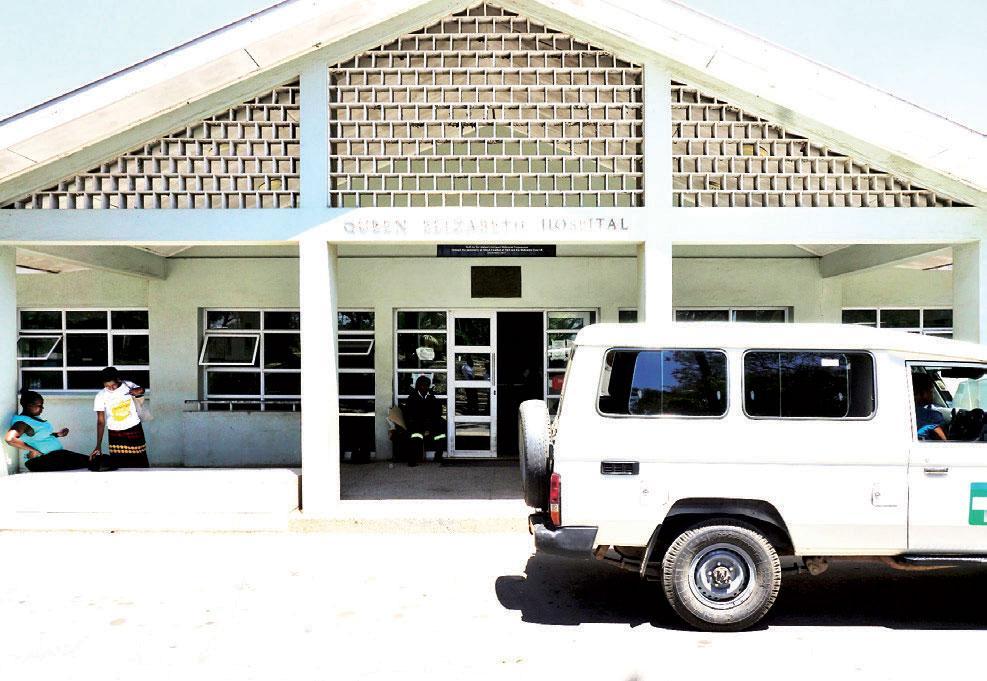
At Queen Elizabeth Central Hospital (QECH), management said corruption has existed for a long time and continues to affect service delivery.
The hospital reported cases where patients allegedly paid money to jump queues and access services faster while others feared reporting corrupt officers due to fear of losing access to care.
– Advertisement –
– Advertisement –
QECH officials also reported theft of hospital supplies including theatre clothing, gauze and cotton rolls.
At Kamuzu Central Hospital (KCH), management said corruption includes diversion of drugs to private pharmacies, extortion for free services, procurement irregularities and misuse of referral documents.
The hospital also reported cases where patients were allegedly asked to pay money before receiving treatment.
One patient reportedly paid K90,000 to access services at the Endoscopy Department while another was allegedly asked to pay K18,500 before a tooth extraction.
KCH officials further disclosed that two pharmacists and a hospital attendant were implicated in the theft of drugs from the hospital pharmacy for private gain.
Mzuzu Central Hospital told the committee that corruption cases at the facility include illegal collection of bypass fees, fake receipts, theft of drugs and allegations of staff demanding money before providing treatment.
The hospital also said fear among whistleblowers has made investigations difficult, as some complainants withdraw cases due to intimidation and fear of retaliation.
Chairperson of the Parliamentary Committee on Health Anthony Masamba described the revelations as disturbing and warned that corruption in hospitals is putting the lives of ordinary Malawians at risk.
“What is happening in our public hospitals is very worrisome because innocent Malawians are suffering while some individuals are taking advantage of a broken system. Government must act fast,” Masamba said.
He said the committee expects authorities to strengthen anti-corruption systems and ensure that officers found abusing public resources are held accountable.
The hospitals told the committee they have introduced measures such as integrity committees, complaint boxes, toll-free reporting systems, CCTV installations and collaboration with the Anti-Corruption Bureau to curb corruption in the health sector.
The media investigation, ‘Pay up or die’, was conducted earlier this year by reporters from Capital Radio Malawi, Platform for Investigative Journalism, Zodiak Broadcasting Station, The Nation, MIJ FM, The Times Group and The African Brief.
It revealed a system of unofficial payments at referral hospitals such as QECH and KCH, where families were charged for services that are officially free, including scans, surgeries and mortuary processes.
Following the investigation, President Peter Mutharika ordered the Ministry of Health and the Anti-Corruption Bureau to investigate the allegations and take disciplinary action against staff involved in demanding bribes.
He also directed that hospital ombudsman offices be strengthened to improve the handling of complaints.