
Africa-Press – Mauritius. There have always been suspicions of abusive practices used to extract ‘confessions’ from suspects. But videos circulating since last Saturday, containing overwhelming evidence of brutality against three individuals in police custody, have sparked outrage across the country.
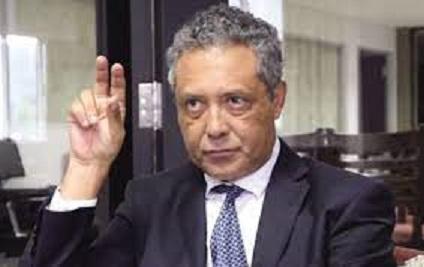
Although we shouldn’t generalize and blame the whole police force, it’s very serious, isn’t it? Me Antoine Domingue: Indeed, such crimes deserve exemplary punishment.
These are images and sounds that are difficult to bear and reveal sadistic, barbaric and inhuman practices – which the Constitution prohibits as “Crual and unusual punishment”. It is a perversion of the rule of law.
When you look at these images, you can clearly see that these are torturers who enjoyed going after and torturing the suspects with prohibited weapons, such as Tasers, obtained illegally.
I’m not far from thinking that they deserve to be given the same treatment. . . if that were allowed. . . ! * Do you feel that the hierarchy of the police force is aware of the seriousness of these practices and that there is a real will to put an end to them?
It is possible that the hierarchy turns a blind eye in some cases although I believe that in general they will not actively encourage such practices of torture which are totally illegal. In any case, if they do not discourage such practices, they are complicit in it.
What is needed is to put in place mechanisms to allow certain authorized persons to have access to all places of detention and investigation at any time in order to make unannounced inspections.
This is why we asked that the Police and Criminal Evidence Bill be reviewed and put on the agenda of Parliament. This would be one of the ways to exercise external and effective control to ensure that the rule of law applies and that the rule of law is respected by law enforcement.
It must be understood that this is not the first time that we have found ourselves in this kind of situation, there was a photo which had been taken at the CID of Curepipe by Me. Anoup Goodary, lawyer.
The latter, instead of being congratulated, was shouted down even by some well-meaning members of the profession and by the police for alleged violation of the ICTA Act! The person in charge of the Curepipe CID was only transferred, nothing more.
This time, we are touching the bottom of the abyss in this descent into hell, with videos of some police officers who have covered themselves with ignominy.
The Commissioner of Police said he was shocked by these images which are, as I told you, difficult to bear, and it is therefore necessary to demand exemplary punishment against these criminals. All those who, more or less, have been guilty of such crimes no longer have a place in the police force.
Since it is the Commissioner of Police who is the Responsible Officer on the dark side of this supposedly disciplined Force, he is required by applicable regulations to initiate disciplinary proceedings beginning with a Prohibition Order.
It is up to him to initiate, after consultation with the Solicitor General, disciplinary proceedings with a view to dismissal from the Force of any police officer who has made himself liable to disciplinary sanctions.
These police officers are also liable to criminal penalties for possession and use of Tasers, torture of prisoners and aggravated bodily harm as well as civil suits for damages for gross negligence.
Their personal tort liability and that of the State and the Commissioner of Police will also be engaged in civil proceedings by the victims and the relatives of the victims since the Commissioner of Police bears sole and ultimate command responsibility for the Force.
This responsibility of Police Commissioner Nobin, I have already engaged it before the Supreme Court in the case of the secretary of the former President of the Republic and the case will be called before the court on Thursday, June 2, 2022 for the implementation state of the case.
I had the opportunity to talk about it on a Radio Plus program and I said that the Police Commissioner, as Responsible Officer of the police force, must exercise his disciplinary power over his subordinates, for lack of which he himself would be liable to disciplinary proceedings.
We see today that this is not a purely academic point of view, as one might have thought, wrongly. It appears that the Commissioner of Police would not be in a position to exercise any power or control over the CID/CCID, whose head would be appointed by the PMO. Is this normal? I’m not aware of that, but what I’m aware of is what the law says.
Section 71 (2) of the Constitution provides that “The Police Force shall be under the command of the Commissioner of Police”, and section 72 (4) provides: “Nothing in this section shall be construed as precluding the assignment to a Minister of responsibility under section 62 for the organisation, maintenance and administration of the Police Force, but the Commissioner of Police shall be responsible for determining the use and controlling the operations of the force and, except as provided in subsection (3) , the Commissioner shall not, in the exercise of his responsibilities and powers with respect to the use and operational control of the force, be subject to the direction or control of any person or authority.
” This is what constitutionally engages the ‘command responsibility’ of the Commissioner of Police.
The doctrine of command responsibility posits that when a general fails to effectively prevent, suppress, or punish the war crimes of his subordinates, the general can be punished for the war crimes committed under his command. It is the Commissioner of Police who is responsible for controlling the operations of the Force.
Regardless of the administrative arrangements that may be made within the CID or CCID, the Commissioner of Police is indeed responsible for the actions of all the police officers who are under his orders, whether they are in uniform or not.
In the case I told you about, I brought before the Supreme Court the responsibility of Police Commissioner Nobin, the Minister of the Interior, the chief inspectors of the CCID.
I invoked section 17 of the Constitution following the violations of the fundamental rights of the secretary of the former president of the republic who was arrested by officers of the CCID and detained in the middle of Covid without being able to have access to her two lawyers on the first day of his arrest and detention.
In the past, there has been a case where the Public Prosecutor’s Office, represented by Me. Rashid Hossen refused to prosecute a defendant at the assizes after he had been referred by the district magistrate on the grounds that it was obvious that the accused had been tortured and that a confession had been extracted through violence and torture.
In this case, Mr. Hossen discontinued the proceedings at the assizes, and the accused was acquitted. Subsequently, the DPP had ordered a judicial inquiry before the Court of Port-Louis against the police officers who were implicated.
What follow-up was given to this shameful affair? No one knows since the conclusions of the judicial investigations remain secret and sleep at the bottom of a drawer in the office of the Director of Public Prosecutions.
Let us not forget that the police force is a ‘disciplined force’ and that whoever is the Responsible Officer is required to maintain discipline within this force, failing which he himself would be liable to disciplinary sanctions.
This was, unfortunately, the case with Commissioner of Police Raj Dayal who was removed from office following disciplinary proceedings taken against him by the Secretary for Home Affairs (‘SHA’) before a constitutional court presided over by the former Chief Justice RajsoomerLallah QC and comprising Justices K.
P. Matadeen QC and P. Lam Shang Leen. But the report – I deplore it – was, alas, never published. I have the hope that a day will come when it will be.
.
.
* The Bar Council as well as the Entente de l’Espoir have called for the establishment of a commission of inquiry to shed light on this case updated since last Saturday and the previous cases.
What do you think? I think it’s absolutely necessary. The Council of Ministers should take up the matter, and prepare with the assistance of the Solicitor General the attributions of such a commission of inquiry.
I note that a private lawyer (Me. Neelkant Dulloo) mentioned the responsibility of the President of the Republic, the one who is supposed to be, first and foremost, the guarantor of the Constitution.
We expect him to come forward, if only through a press release from the presidency, to let us know that he cares and that it concerns him. On the other hand, there is this Independent Police Complaints Commission which has been set up, at great expense, to deal with such cases.
Furthermore, I note that the leader of the MMM has maintained that it is inadmissible for the police to investigate the police. Should this independent commission, invested with all the necessary powers, play its role effectively and make it known? One of its managers has just communicated in the written press (in Le Défi), this is a first step and should reassure, to a certain extent.
But, in these too many proven cases of barbarism, is it still necessary that this institution, which has the chance and the privilege of having Mrs Beesoondoyal, train judge, within it, know how to communicate better and know how to make itself better heard and better respect.
Its credibility and, ultimately, its survival depend on it. There is no place in Mauritius for the “Benallas”, the one who is reputed to be at the origin of the biggest scandal of President Macron’s five-year term.
He then held the position of project manager at the Elysée Palace as deputy chief of staff, supposedly in charge of security. On May 1, 2018, in a video, we see him violently intervening alongside the CRS and attacking two demonstrators. He was disavowed and he paid a heavy price for doing so. It must be so, here too.
In Mauritius, some police officers who are in civilian clothes behave like political agents and openly put themselves at the service of either members of the opposition or those in power, thinking thus to advance their careers at the expense of their colleagues.
Those who do, we know them. If they want to do it, let them do it in broad daylight and have the courage to return their uniform. * With regard to allegations of police brutality by suspects, I suppose that as a lawyer, you sometimes have to sort out what is false or true.
What about magistrates and judges? Are they generally more apt to believe that such claims are more likely false than true? It depends on how the case was argued and the evidence that was presented in court.
We cannot generalize. I have just spoken of the ProsecutingCounsel, Maître Rashid Hossen, who – in his time – lived up to his responsibilities and his oath as a lawyer in an assize case.
I would like to specify, for the good understanding of your readers, that the “informal admissions” supposedly made verbally to the police and recorded in the pocket note books of the police officers or in the diary books as well as the confessions recorded in writing by recording officers, as they are called, some of whom are patent forgers, on statement pads and they are ‘persons in authority’ and therefore subject to the ‘Judges’ Rules’ – should be carefully assessed in law and in fact by the Court, by Prosecuting Counsels, by lawyers and by Police Prosecutors.
Some of these alleged confessions are inadmissible because they are not voluntary. Others are not believable. “They do not carry any weight”. For example, at the assizes in Regina v Louis Eddy Cader, the late Sir Gaëtan Duval QC decided, after consulting me, not to object to the admissibility of the so-called confession which was the only of the case on which the accusation was based.
“He merely questioned its weight before the jury by scientific evidence which showed that the alleged time of death in the alleged confession did not tally with the actual time of death, as revealed by the scientific evidence.
”
Following the brilliant argument of Sir Gaëtan Duval QC and an appropriate ‘summing up’ of Judge Ahmed, who presided over the assizes, the jury had no difficulty, within the hour, in agreeing on a unanimous verdict.
of acquittal. This resulted in tears and groans from the attorney for the prosecution… who was later appointed judge. She should have wept with joy that justice had been served and an innocent person had been acquitted.
In our country, which prides itself on being a state of law in a democratic and multicultural society, we rarely rejoice that an accused has been acquitted by his peers.
We all, as long as we are, still have enormous progress to make in the education of our fellow citizens, and this requires the education of our students from the pre-primary cycle.
We should learn the basics of the right to children. * Opposition member Mr EshanJuman appealed to the DPP to appoint a judicial inquiry into these cases of police brutality. Do you think that the DPP can also, in this case, intervene after such events have taken place? I have touched on this question before.
A judicial inquiry may be desirable on a purely ad hoc basis when the DPP wishes to be more fully informed about the circumstances of a case, in order to make the appropriate decision, i.
e. to prosecute or not to prosecute, in a given case. But not when the facts are proven and have been filmed in many cases by the torturers themselves.
This initiative of this member of the Labor Party, however commendable it may be, cannot do justice to the current situation, which we are all facing, and which encompasses a large number of cases which are undoubtedly only the peak of the iceberg.
We absolutely need a commission of inquiry. It is about human rights and the administration of justice. It is about democracy and the reputation of Mauritius.
To great evils, great means! Such a decision cannot be the responsibility of the DPP who is only an official of the executive and not an elected representative of the people.
This is the responsibility of the Council of Ministers, as a whole, which includes a significant number of lawyers, a psychiatrist, and not least, and including the Attorney General, who was in his time an eminent member of the prosecution.
They should all know what to expect when they are accountable to their constituents. * You said before that the CP must react and take action in order to restore confidence in the police. There is indeed a lack of trust also in other so-called independent institutions.
We still do not know where the investigations in the St Louis affair and that in relation to the murder of the former political activist SoopramanienKistnen are… Is this worrying for our democracy?
Yes, and that is the reason why it must be put in order, once and for all, and the President of the Republic – a career lawyer with a long and rich experience behind him – and who therefore finds himself bound by two oaths: that of an attorney to the Supreme Court of Mauritius and that of President of the Republic can, with the assistance of members of the executive, fully assume his responsibilities as Head of State.
For More News And Analysis About Mauritius Follow Africa-Press