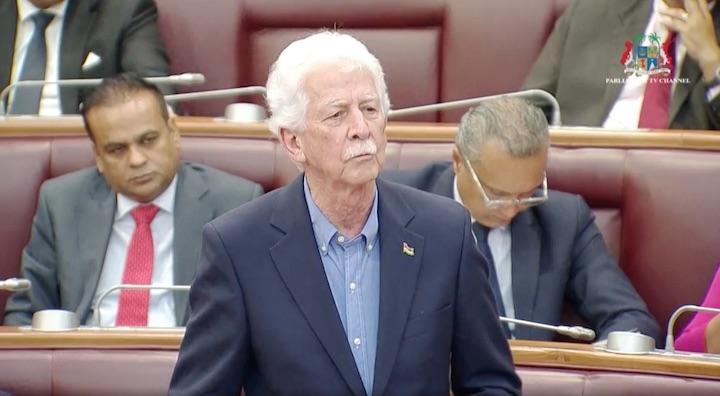
Africa-Press – Mauritius. Deputy Prime Minister Paul Berenger outlined the government’s ambitious democratic reform agenda, aiming to establish Mauritius as an exemplary democracy. His remarks were punctuated by an altercation with Opposition Leader Joe Lesjongard, stemming from Berenger’s initial reference to an opposition lawmaker as being seated next to a “culprit.” This led to a brief exchange before Lesjongard left the chamber.
Berenger clarified his statement, asserting that the government’s actions are a response to ten years of anti-democratic actions by the previous administration. He highlighted several initiatives, including restoring parliamentary dignity, reforming the MBC (Mauritius Broadcasting Corporation), incorporating regional democracy into the Constitution, and holding municipal elections. Further planned reforms include electoral reform, data protection legislation, and an end to the practice of provisional charges.
A key element of the democratic reform is restoring and strengthening the DPP’s powers. Berenger emphasized that the current bill is merely the beginning, with a future bill on financial crimes—or a potentially even more advanced replacement—in the works. Constitutional amendments are also being considered. This comprehensive approach aims to establish a more robust and transparent legal system.
Berenger’s speech concluded with a personal reflection, expressing sadness over the political trajectory of Ivan Collendavelloo, a former associate. He reaffirmed the government’s commitment to implementing further steps to create a truly exemplary democracy in Mauritius.
The overall tone of Berenger’s speech was one of determined optimism and a strong commitment to democratic reform, contrasting sharply with the actions of the previous administration. The altercation with Lesjongard highlighted the strong political divisions and high stakes involved in these reforms.
For More News And Analysis About Mauritius Follow Africa-Press