Africa-Press – Mauritius. Four months before the kickoff of World Cup 2026, Mexico was supposed to be counting down to a historic football celebration. Co-hosting the tournament alongside the United States and Canada, the country is set to welcome the world in Guadalajara, Monterrey and Mexico City, with the Estadio Akron, Estadio BBVA and the iconic Estadio Azteca scheduled to host major fixtures, including the opening match.
Everything appeared ready for a festival of football, until a sudden escalation of violence shattered the atmosphere. The death of Nemesio Oseguera, known as “El Mencho” and leader of the Jalisco New Generation Cartel (CJNG), during a military operation triggered an immediate and brutal backlash across the country, plunging Mexico into fear just months before the tournament.
A country rocked by violence
Following El Mencho’s death, large parts of Mexico descended into chaos. Burning roadblocks, torched vehicles, sporadic gunfire and blocked highways were reported in nearly twenty states. Guadalajara, one of World Cup 2026 host cities, was particularly affected, with residents fleeing armed groups in the streets near the Estadio Akron.
Authorities suspended school classes, closed courts and declared a Code Red in Jalisco, while public transport was halted in some areas and mass gatherings temporarily banned. President Claudia Sheinbaum urged calm as the United States and Canada issued security alerts for their citizens.
Several football matches have already been impacted, including the postponement of the women’s derby between Chivas and Club América and the suspension of multiple Liga MX and second-division fixtures, highlighting how deeply the violence has disrupted daily life.
FIFA facing a security dilemma
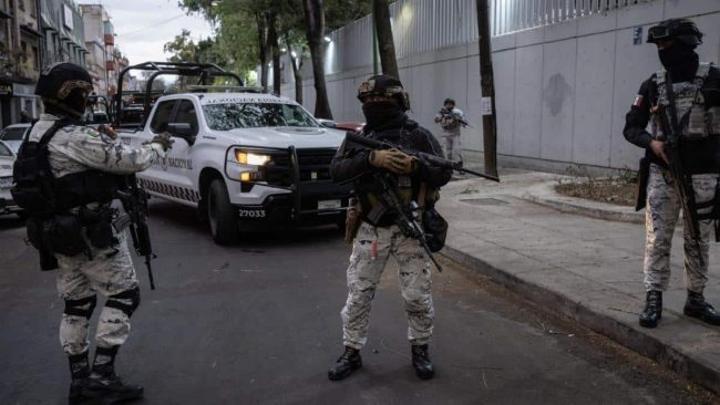
As images of the unrest spread rapidly on social media, concerns grew over the safety of World Cup 2026 matches in Mexico. Officially, no games are under threat, and Mexican authorities insist that extensive security measures have been planned in coordination with FIFA, including heavy deployment of the army and National Guard, reinforced surveillance and international cooperation. However, the scale and speed of the violence have raised doubts.
The CJNG, active across all 32 Mexican states and considered one of the most powerful criminal organizations in the world, has demonstrated its ability to paralyze major urban centers within hours. Rumors of a possible relocation of matches to cities in the United States or Canada have begun circulating, even if nothing has been confirmed.
For FIFA, the situation represents a delicate balancing act: maintaining confidence in Mexico’s ability to host safely while knowing that any security failure during the tournament would have global repercussions. What was meant to be a celebration of football now stands at the crossroads of sport, politics and security, with the coming months proving decisive for the future of the Mexican World Cup venues.