What You Need to Know
At the 9th Indian Ocean Conference, Mauritius aims to be recognized as a Large Ocean State, emphasizing sustainable growth and equitable governance. Minister Dhananjay Ramful highlighted the importance of collective stewardship in ocean governance, especially amid current geopolitical challenges. The conference gathered nations with shared interests in the Indian Ocean, focusing on collaboration.
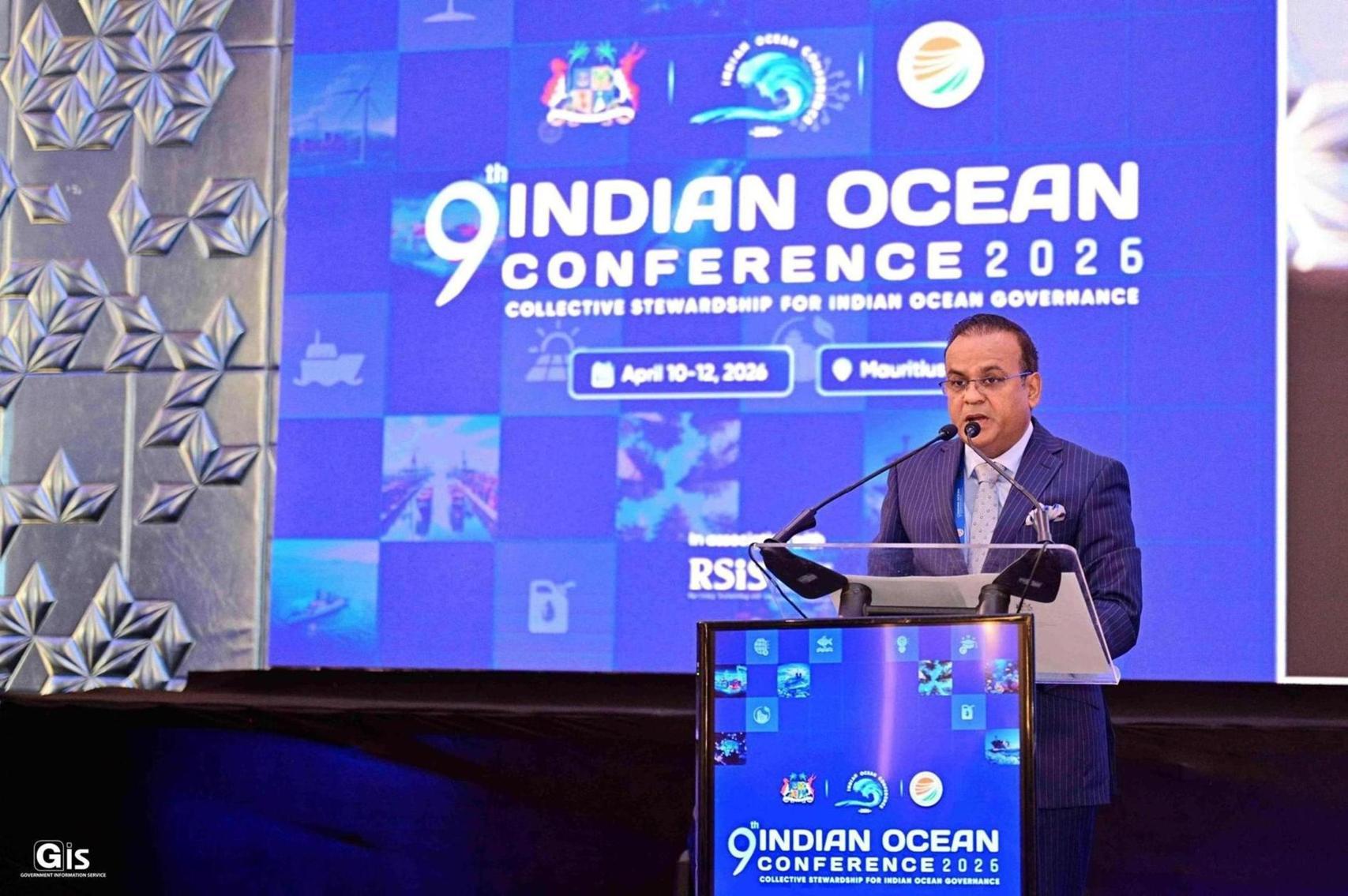
Africa-Press – Mauritius. Mauritius, leveraging its vast maritime domain to drive sustainable growth, regional influence, and equitable ocean governance, is charting its course to be recognised as a Large Ocean State rather than a Small Island Developing State (SIDS). This vision was shared by the Minister of Foreign Affairs, Regional Integration and International Trade, Mr Dhananjay Ramful, during plenary sessions held this morning in the context of the 9th Indian Ocean Conference at the Intercontinental Hotel in Balaclava.
The conference, an initiative of the India Foundation, has brought together delegations from countries bordering the Indian Ocean, united by shared strategic and economic interests. The plenary sessions were chaired by the President of the India Foundation, Mr Ram Madhav.
In his keynote address, the Minister underlined that this year’s theme for the Conference, “Collective Stewardship for Indian Ocean Governance” , is highly relevant given the current geopolitical context with the ongoing conflict in the Middle East. He remarked that the current situation compels us to reflect and reassess our priorities, reorient our collective efforts towards an effective governance of the Indian Ocean for the interest of the region and beyond.
He highlighted that the Conference has gathered all nations based on their common interest in the Indian Ocean, and the goal to work for our greater good, both today and tomorrow.
Minister Ramful underpinned Mauritius’ ambition to pave its way as a SIDS as a prosperous, sustainable, and fully integrated country in a globalised and equitable world. ‘Globalisation and equity have never been more relevant today, especially for us, the States of the Indian Ocean and their partners beyond’, he said.
Besides, he recalled that in line with the principles of the Non-Aligned Movement, Mauritius has remained steadfast in its commitment to sovereignty, territorial integrity, and non-interference in the internal affairs of States, which he pointed out ,are crucial to establish trust and stability.
He moreover dwelt on the importance of the United Nations Convention on the Law of the Sea – UNCLOS as the legal framework governing ocean space, defining maritime zones, and guiding marine resource management.. The contribution of key partners, namely Australia, France, India, Japan, the United Kingdom, and the United States of America, in the enhancing of the governance capacities of the Indian Ocean, was also acknowledged.
Furthermore, Minister Ramful commended the multifaceted contribution of India for the collective governance of the Indian Ocean through the rolling out of major actions including: the MAHASAGAR vision, the Indian Ocean Rim Association, and the Information Fusion Centre.
According to him, it is through the enhancing of the collective capacity, both bilateral and organisational, that collective stewardship of the Indian Ocean will gain in credibility.
The Minister renewed Mauritius’ commitment to collective stewardship for the governance of the Indian Ocean, stressing its firm belief in multilateralism as the preferred path towards the collective good.
Mauritius has long been recognized for its strategic location in the Indian Ocean, which has shaped its economic and political landscape. As a Small Island Developing State (SIDS), it faces unique challenges, including climate change and resource management. The push for recognition as a Large Ocean State reflects a broader ambition to leverage its maritime resources for sustainable development and regional leadership, aligning with global efforts for equitable governance in ocean spaces. This initiative is part of a growing trend among island nations to assert their influence in international maritime discussions.