By
Kamal Fadel
What You Need to Know
The United Nations Security Council is revisiting the Western Sahara conflict, focusing on the MINURSO mandate. The article highlights three critical missteps that could derail progress: weakening MINURSO, accepting Moroccan autonomy under occupation, and labeling the Polisario Front as a terrorist organization. Each of these actions threatens the Sahrawi people’s right to self-determination and a
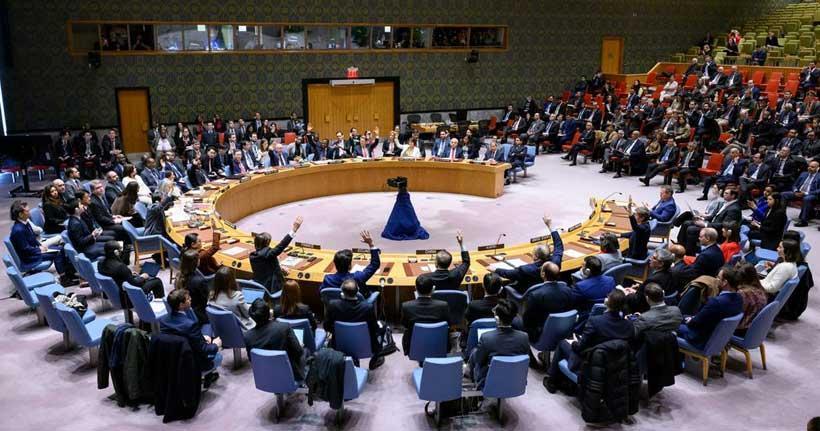
Africa-Press – Mozambique. At the end of April the United Nations Security Council returns to a file it has been unable to close for more than three decades: Western Sahara. Members will consider the mandate of the UN Mission for the Referendum in Western Sahara, MINURSO, on the basis of a strategic review submitted by the Secretary-General. What is decided in New York shapes not only the future of the last colony in Africa but also the credibility of the international rules the Council itself was set up to uphold.
Three currents are pulling the file in the wrong direction. All three need to be resisted.
First: leave MINURSO alone and let it do its job.
There is quiet talk in some Western capitals, encouraged by Morocco, of trimming MINURSO’s mandate, shrinking its presence, or simply letting it wither. That would be a serious mistake.
MINURSO was established in 1991, by agreement of the two parties and alongside the ceasefire, for one purpose written plainly in its name: to organize a referendum on self-determination for the Sahrawi people. That referendum has still not been held. Not because such a vote is impossible—Namibia, East Timor, and Eritrea all managed theirs—but because Morocco has spent thirty-five years obstructing the process. Morocco accepted the ballot once. It walked away the moment it became clear it would lose.
Weakening MINURSO now, in the face of that obstruction, would reward the obstructor. It would tell every regime tempted to swallow a neighbor that patience and stonewalling pay. It would reopen the territory to full-scale war—the ceasefire having already collapsed in November 2020 after Morocco’s military incursion at Guerguerat. And it would leave the Sahrawi people, both those under occupation and those in the refugee camps near Tindouf, without even the minimal international witness they have today.
MINURSO’s real problem is that it remains the only major UN peacekeeping operation in the world without a human rights monitoring component. Morocco has fought ferociously to keep it that way, because independent monitors would document what journalists, lawyers, and UN special rapporteurs are routinely barred from seeing: arbitrary detention, torture, the harassment of Sahrawi activists, and the suppression of peaceful protest. The answer is not to bury MINURSO. It is to give the mission the human rights mandate that every comparable operation already has and to back it politically with the tools to carry out its original task: organizing the long-promised vote.
The UN’s responsibility to the Sahrawi people is not optional. It runs until they have freely exercised the inalienable right to self-determination recognized by the General Assembly, by the International Court of Justice in 1975, and by the Security Council itself. To walk away before then is to walk away from the Charter.
Second, autonomy under occupation is not a solution.
Morocco has launched an intensive marketing campaign, aimed above all at the new US administration, to sell its 2007 autonomy proposal as the only conceivable outcome. A revised version of that proposal was reportedly tabled at the US- and UN-sponsored Madrid meeting in February.
Morocco’s proposal asks the Sahrawi people to administer their internal affairs while accepting Moroccan sovereignty as a precondition. That precondition is the whole problem. The proposal treats the central question—to whom does Western Sahara belong? —as if it had already been answered in Morocco’s favor, when in fact international law says the opposite. In 1975 the International Court of Justice found no ties of territorial sovereignty between Morocco and Western Sahara at the time of Spanish colonization. That opinion has never been overturned, and no amount of bilateral recognition by individual states can overturn it.
Even setting the law aside, the proposal cannot work as a matter of plain political reality. Fifty years of Moroccan rule have shown the Sahrawi people exactly what life under the Moroccan state looks like. They have lived as second-class citizens in their own land, their resources plundered, their protests crushed, their culture and identity denied.
Morocco is also an absolute monarchy in which the king combines temporal and religious authority and in which constitutional reform has consistently stopped at the throne’s edge. Whatever the King grants today, he can withdraw tomorrow. There is no independent judiciary capable of enforcing an autonomy statute against the Crown, no parliament able to override a royal decree, and no precedent of meaningful regional self-government anywhere in the kingdom—not even in the Rif, which has been asking for it for a century.
Resolution 2797, adopted on 31 October 2025, is being read in some capitals as an endorsement of the autonomy plan. It is no such thing. The resolution refers to the Moroccan proposal only as a basis, reaffirms every previous Council resolution, requires that any solution be mutually acceptable, and preserves Sahrawi self-determination as the touchstone of any settlement. Independence remains on the table because, under international law, it has to.
The Polisario Front, for its part, submitted an expanded peace proposal to the Secretary-General in October 2025 (S/2025/664). It offers the Sahrawi people three options consistent with General Assembly resolutions 1541 and 2625: independence, free association, or integration. That is what self-determination actually looks like. Anything narrower is a script, not a choice.
Third: the terrorism slur is an old colonial trick.
The most recent and most cynical move is the bill before the US Congress that would trigger consideration of designating the Polisario Front as a terrorist organization. The waiver clause gives the game away: the designation could be lifted if the Polisario were judged to be negotiating in good faith on Morocco’s autonomy plan. That is not counter-terrorism policy. It is blackmail in legislative dress.
The contradiction is impossible to miss. The Polisario Front is the internationally recognized representative of the Sahrawi people, affirmed by UN General Assembly Resolution 34/79 and a full member of the African Union through the Sahrawi Arab Democratic Republic. The Polisario is a party to the UN-led negotiations. Only weeks ago, its delegation sat across the table from Moroccan and US officials in Madrid, under UN auspices. If the Polisario were a terrorist organization, why is the Security Council treating it as a negotiating partner? Why has every Moroccan king from Hassan II to Mohammed VI met with its representatives?
The Polisario has never been designated as a terrorist organization by the UN, the African Union, the European Union, or the United States itself. In late 2025 the British government told its own Parliament that it had seen no evidence of Iranian support for the Polisario. The movement is secular and nationalist; the suggestion that it is aligned with Hezbollah or Iran is, frankly, geopolitically illiterate.
The Sahrawi people have heard versions of this accusation before. During the Cold War we were called communists. After 9/11 we were said to have links to Al-Qaeda. Now it is Iran. When evidence is requested, none ever arrives. The label changes with the season; the purpose does not.
The Polisario has ratified the Geneva Conventions, adhered to Additional Protocol I, and committed to the African Union Convention on the Prevention and Combating of Terrorism. Its armed forces are subject to international humanitarian law. If any specific act in armed conflict warrants prosecution, that is a matter for the laws of war, not for terrorist designations that would criminalize a whole people’s struggle for freedom and choke off humanitarian aid to the refugee camps.
This is the same playbook that was used against the African National Congress in South Africa, against the FLN in Algeria, against ZANU and ZAPU in Zimbabwe, and against the resistance in East Timor. Each of those movements was once on someone’s terrorist list. Each of them turned out to be right.
The way forward
The path out of this impasse is not difficult. What it requires is political will.
It begins with an honest mediator that is willing to be even-handed towards all parties, not just one. The talks must be conducted exclusively under UN auspices, with a genuinely neutral facilitator, and without preconditions.
The destination has already been mapped, repeatedly, by the Security Council itself. Any just solution must be consistent with the UN Charter, must provide for Sahrawi self-determination, and must be acceptable to the Sahrawi people and to their representative, the Polisario Front. A solution cannot be imposed. Autonomy under Moroccan sovereignty in particular cannot be imposed, because it assumes the very thing the International Court of Justice found absent in 1975: Moroccan sovereignty over the territory.
The Sahrawi people, through the Polisario Front, have already placed a serious proposal on the table, one consistent with the UN Charter and with every requirement the Security Council has set out. What is missing is not a plan. What is missing is the political will to reach a just and lasting solution to the conflict.
States that speak of a rules-based international order are now being tested on whether they mean it. The test is simple enough: refuse to recognize annexation acquired by force; preserve and strengthen MINURSO; reject this cynical terrorism bill; and support a genuine self-determination process that keeps independence on the list of options.
Africa’s decolonization will remain unfinished business until Western Sahara is free. That this is still true in the twenty-first century, on a continent that endured colonization for too long, is a scandal.
The Sahara conflict has persisted since Spain’s withdrawal in 1975, leading to a territorial dispute between Morocco and the Sahrawi people, represented by the Polisario Front. The UN has attempted to mediate a resolution, but the situation remains unresolved, with Morocco’s claims of sovereignty contested by international law and the Sahrawi demand for self-determination. The ongoing stalemate reflects broader issues of colonial legacy and the struggle for independence in Africa, emphasizing the need for a renewed commitment to decolonization efforts.
moderndiplomacy