What You Need to Know
Mozambique and China have entered a significant agreement that combines defense cooperation with investment in the country’s vast natural gas reserves and critical minerals. This partnership aims to enhance Mozambique’s industrial capabilities and security, while also addressing the challenges posed by local insurgencies affecting resource development.
Africa-Press – Mozambique. Mozambique and China have signed a comprehensive agreement covering defense, geological mapping, and industrial investment to boost resource development.
The deal centers on Mozambique’s vast natural gas reserves and significant untapped deposits of critical minerals like graphite, lithium, and rare earths.
China will conduct detailed geological surveys and invest in local processing infrastructure, helping Mozambique move up the industrial value chain.
The partnership includes security cooperation, with China supporting Mozambique’s counterterrorism efforts to stabilize resource-rich regions.
Mozambique is deepening ties with China in a sweeping agreement that combines defence cooperation, geological mapping and industrial investment to unlock one of Africa’s most resource-rich frontiers, revealing Beijing’s growing influence in the continent’s mineral and energy sectors.
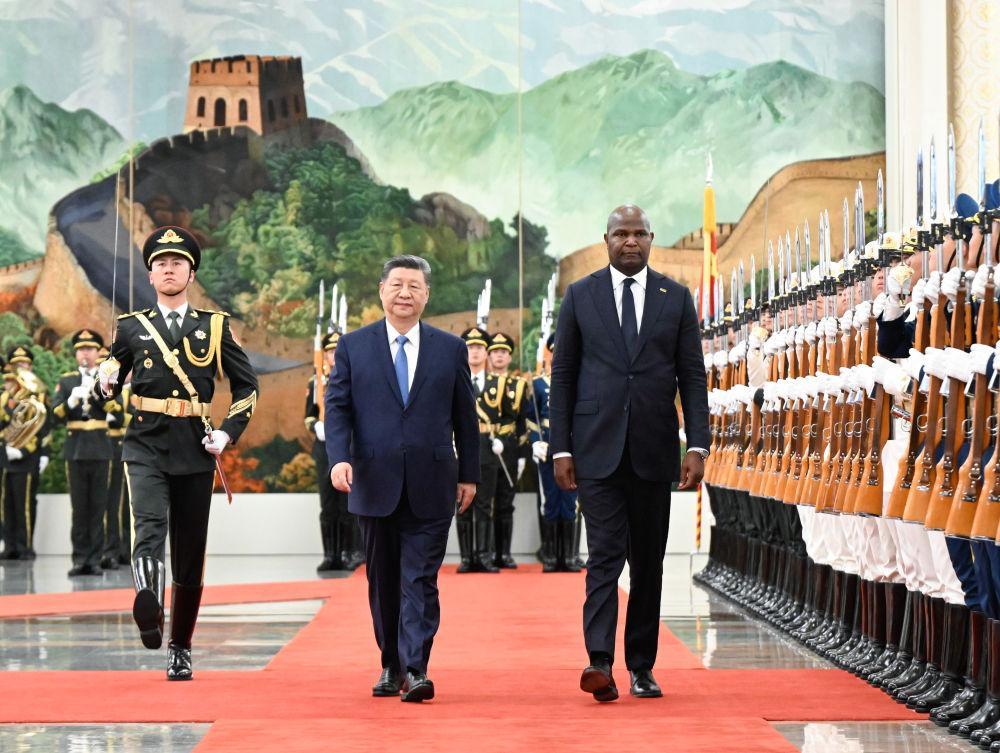
The announcement was made in a joint statement following talks in Beijing between Chinese President Xi Jinping and his Mozambican counterpart Daniel Chapo.
At the centre of the deal is Mozambique’s vast resource base, including more than 5 trillion cubic metres (180 trillion cubic feet) of natural gas discovered in the Rovuma Basin, alongside significant untapped deposits of critical minerals across its northern provinces.
The agreement also includes a large-scale geological survey targeting high-value deposits of graphite, lithium and rare earth elements, key inputs for the global green energy transition.
Under the framework, China will map and assess mineral deposits in Mozambique’s resource-rich north, a crucial first step in unlocking reserves that remain largely underexplored due to security and infrastructure constraints according to reporting by South China Morning Post.
The initiative will be supported through platforms such as the China-Africa Geoscience Cooperation Centre and the Belt and Road International Geoscience Education and Training Centre.
China adopts infrastructure-for-minerals model in Africa’s resource push
While China is building integrated, state-led industrial partnerships, the US strategy is centred on securing positions in key supply chains for critical minerals used in electric vehicles and advanced technologies.
A clear example is the United States International Development Finance Corporation (DFC) deepening its exposure through targeted investments in existing operations in Mozambique.
The DFC plans to convert a $31 million loan into equity in Syrah Resources, which operates the Balama graphite mine, giving it an estimated 20% stake.
It will also invest an additional $15 million into Twigg Exploration and Mining Limitada, the local unit running the mine in Cabo Delgado.
Rather than focusing narrowly on extraction, Beijing is offering a full-package model which involves combining resource mapping, infrastructure, industrial processing, market access and security cooperation.
Under the agreement, China will fund projects to establish local processing plants, helping Mozambique shift away from raw material exports toward building a domestic industrial base.
It will also expand agricultural imports using zero-tariff access and a “green channel,” alongside cooperation in irrigation, logistics and seed development.
The partnership also carries a strong security component. Northern Mozambique, particularly Cabo Delgado province, has been affected by a violent insurgency since 2017 that has displaced more than a million people and disrupted major energy projects.
China has pledged to support Mozambique’s counterterrorism efforts through training, equipment and joint exercises, aiming to stabilise regions critical to gas and mining operations.
The security push is designed to protect strategic assets as development resumes in parts of the region.
President Xi said China is willing to “explore new paths for cooperation in infrastructure and comprehensive energy and mineral development,” signalling long-term strategic intent.
By combining mapping, security, financing and industrialisation, China is positioning itself ahead of Western rivals in securing access to both Mozambique’s vast gas reserves and its critical minerals, reinforcing its expanding dominance in Africa’s resource sector.
Mozambique is home to one of Africa’s largest natural gas reserves, with over 5 trillion cubic meters discovered in the Rovuma Basin. The country has also been identified as rich in critical minerals such as graphite and lithium, which are essential for the global green energy transition. However, security issues, particularly in Cabo Delgado province, have hindered exploration and development efforts since 2017, when an insurgency began displacing local populations and disrupting projects.
In response to these challenges, Mozambique is strengthening its ties with China, which has been actively investing in Africa’s resource sector. The recent agreement reflects China’s strategy of offering