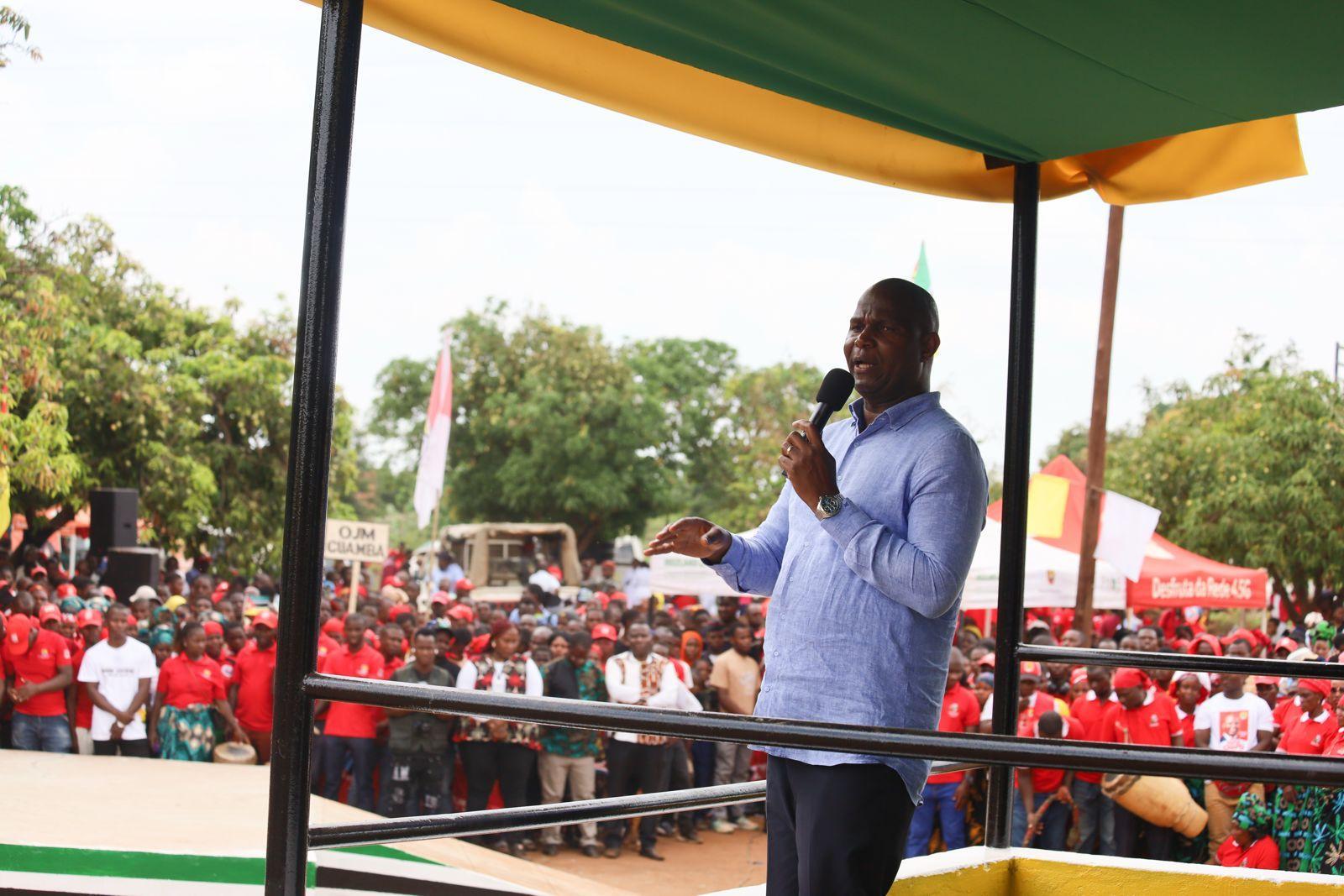
Africa-Press – Mozambique. Mozambican President Daniel Chapo has announced that a graphite processing plant will be inaugurated in Nipepe district, in the northern province of Niassa, next year.
Speaking on Thursday, Chapo said this new factory will be a step forward in building a country which is not limited to extracting minerals from its subsoil, but which transforms them within its own borders, “generating value, jobs and prosperity for Mozambicans”.
Chapo stressed that Mozambique is at a historical turning point, at which it is “definitively abandoning the model which has pushed the country for decades to the mere export of raw materials, and instead building industries which add knowledge, technology and wealth to the nation”.
“Our vision is clear: mineral resources should be processed in Mozambique, benefitting Mozambicans”, declared the President. “Just as we did in Inhassoro, with the first national factory processing cooking gas (inaugurated last Wednesday), now we are advancing with Nipepe. The industrialisation of graphite will be a source of new economic opportunities and greater value added for the country”.
Chapo pointed out that graphite is a strategic mineral that can place Mozambique in the vanguard of the global economy, since it is essential for the manufacture of batteries, high precision devices, and electrical equipment used in the world energy transition.
“By transforming this resource on Mozambican territory, the country is strengthening its position on the international market, attracting foreign investment and stimulating sectors such as transport, logistics, construction and trade”, said Chapo.
The future graphite processing factory, he continued, will play “a structuring role” in the “new national economic cycle, a cycle in which Niassa ceases to be simply a holder of potential, and becomes a protagonist in the industrialisation of the country”.
The government believes, he said, that the new factory “will stimulate the development of Niassa and of the entire province”,
Chapo announced that a resettlement neighbourhood for households affected by the project has already been completed. It will provide “decent housing, access to basic services and secure inclusion in this development process”,