Africa-Press – Mozambique. Mozambican President Daniel Chapo on Thursday stressed that his vision for the coming period is a vision of “economic independence”.
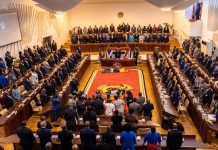
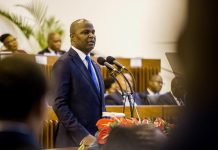
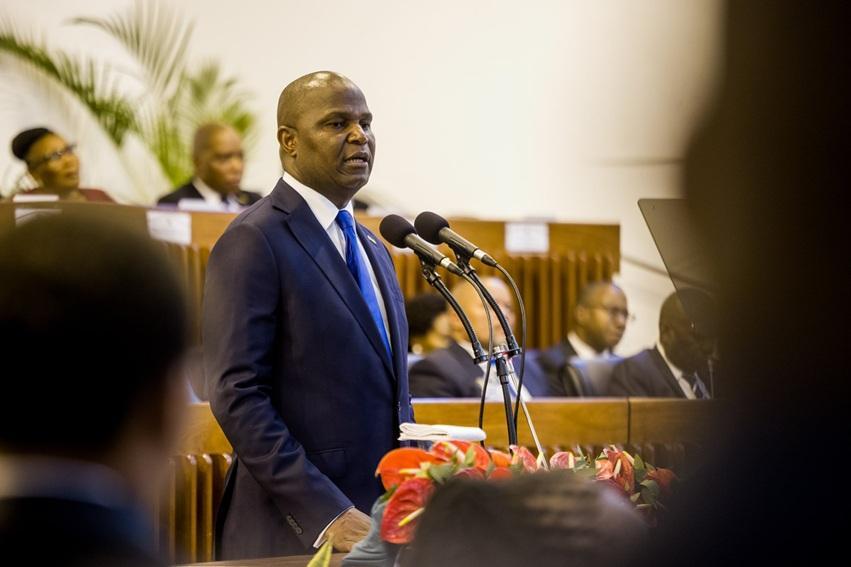
Giving his annual State of the Nation Address to the Mozambican parliament, the Assembly of the Republic, Chapo said “this vision defines the direction of the Mozambican economy for the coming years, seeking self-sufficiency in the production of essential goods and services; financial autonomy; sovereignty over our natural resources and their exploitation; a trade balance with healthy import and export ratios; and export diversification, so that we are no dependent solely on the export of minerals”.
“We are re-organising the economic model of Mozambique and laying the foundations for a modern, diversified and competitive economy”, declared Chapo.
The first pillar for this strategy was “industrialisation and the development of value chains”, he said. “Mozambique cannot continue depending on the export of unprocessed raw materials. We need to create integrated value chains that are competitive and able to generate skilled jobs”.
“The objective is clear”, continued Chapo. “It is to diversify the economy, empower local content, create opportunities for small and medium enterprises, and develop an industrial platform that makes us less vulnerable to outside shocks and more competitive in the region”.
But Mozambican industry is not advancing: it is going backwards. Earlier this week, the largest industry in the country, the Mozal aluminium smelter on the outskirts of Maputo threatened to close down because it has been unable to reach agreement with the government on the price of the electricity it needs to buy.
Negotiations have been under way for months, but the differences seem insurmountable.
According to a report issued on Tuesday by the Maputo-based Zitamar News Service, the maximum tariff that the majority shareholder in Mozal, the Australian company South32, is willing to pay is 6.4 US cents per kilowatt hour
But the Mozambican government points out that 6.7 cents per kilowatt hour is the minimum that should be charged to cover the costs of generating the 950 megawatts of power that Mozal uses.
0.3 US cents may not seem very much, but over a year it would amount to 25 million dollars, The government regards this as a subsidy and does not see why Mozambique should pay an annual subsidy of 25 million dollars to an Australian company.
This month is the deadline for Mozal to buy raw materials and consumables for its normal operations. That deadline is now passing: Mozal’s current plan is to put the smelter on a basic maintenance schedule. It would not be shut down, but it would take 12 months to put Mozal back into operation,
Given the sheer size of Mozal, it could play a key role in the government’s industrialisation strategy. Dozens of other companies supply goods and services to Mozal.
Mozal employs 1,100 people directly, and about 5,000 indirectly. Losing all these jobs would be a severe blow to the Mozambican economy. So the government has an awkward choice – either submit to what is regarded as blackmail by a foreign company, or lose thousands of jobs.
But Mozal is not mentioned in Chapo’s State of the Nation address. Not a word.
He did, however, stress the need for boosting the country’s supply of skilled labour. “Economic independence will only be possible”, he said, “if we train a new generation of skilled, creative and disciplined Mozambicans prepared to compete in an ever more demanding global market”.
Summing up Mozambique’s current situation, Chapo struck a note of optimism, declaring “the state of the nation is one of renewed confidence, driving towards sustainable and inclusive development”.