
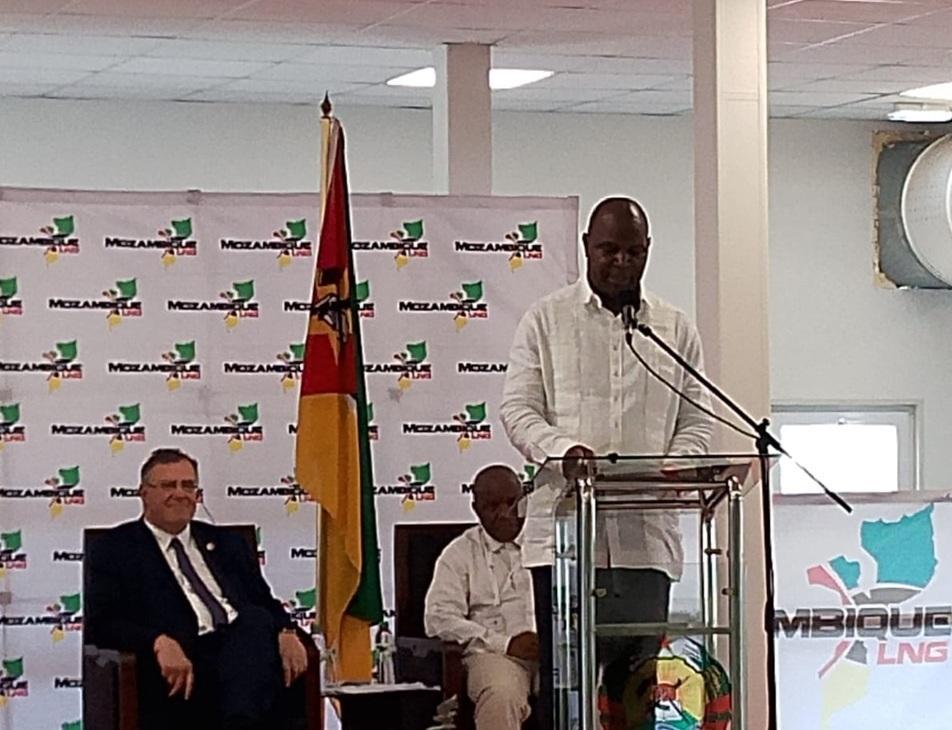
President Daniel Chapo on Thursday described the resumption of TotalEnergies’ Liquefied Natural Gas (LNG) megaproject in Cabo Delgado, suspended for almost five years due to terrorist attacks, as a symbol of “resilience, courage and determination”.
“Today is a day of celebration for Mozambique, for Africa and for the world,” said Chapo, recalling the importance of the Mozambique LNG project, “one of the largest” LNG production projects on the continent, and emphasising the “effective, total and complete resumption” of the project, which took place today, with exports expected to begin in 2029.
After visiting the formal resumption of work at the Afungi basin, in the presence of TotalEnergies President Patrick Pouyanné, the Head of State stressed that more than just the restart of work, “it represents the victory, resilience, courage and determination of the Mozambican people in the face of adversity” and praised the exemplary process of resettling the affected communities.
He even highlighted that today is the “beginning of a new phase for Cabo Delgado and Mozambique”.
Chapo recalled that in terms of revenue for the state alone, Mozambique LNG will contribute US$35 billion (€29.2 billion) over 25 years, creating 17,000 jobs during the construction phase, with more than 4,000 already in place at the facilities, 80% of which are Mozambican.
This is a project valued at US$20 billion (€17.5 billion) with a capacity to produce 13 million tonnes per annum (mtpa) from the Rovuma offshore basin.
“The “force majeure” is over,” said Patrick Pouyanné in his speech, emphasising that this is TotalEnergies’ largest investment in Africa, adding: “As the President says, “let’s get to work”.
“But it is imperative to think about safety first,” said the president of TotalEnergies, with the entire complex currently under tight security measures and plans to create the new city of Afungi, which in practice is only accessible by air and sea transport for security reasons.
Daniel Chapo and Patrick Pouyanné visited the resumption of construction of the LNG production complex in Afungi, Palma region, Cabo Delgado, this morning, marking the return of the project.
“While the cost assessment process is ongoing, the project is not stopping,” said Chapo, referring to the agreement with TotalEnergies to resume work while the costs inherent to the shutdown period are being assessed.
The Mozambique LNG consortium today officially resumed construction of the LNG production and export project in Afungi Bay, which had been suspended since April 2021 when TotalEnergies invoked the “force majeure” clause due to terrorist attacks.
Four and a half years later, in October 2025, after international financing for the project was reconfirmed and claiming improvements in security conditions in the area, TotalEnergies, leader of the Rovuma Basin Area 1 consortium, lifted the clause and began the restart process.
The Mozambican government mandated an independent audit of the costs incurred by the project during the “force majeure” period. It was also decided that the four-and-a-half-year period of “force majeure” would not count towards the concession period, despite TotalEnergies formally proposing its extension for more than 10 years to compensate for alleged losses of US$4.5 billion (€3.87 billion) since 2021.
TotalEnergies indicates that the first LNG delivery from the first line to be installed in Afungi has been postponed from July 2024, as planned before the shutdown, to the first half of 2029.
Mozambique has three approved mega-development projects for the exploration of LNG reserves in the Rovuma basin, ranked among the largest in the world, off the coast of Cabo Delgado, including this one from TotalEnergies and another from ExxonMobil (18 mtpa), worth US$30 billion (€26.1 billion), which is awaiting a final investment decision, both on the Afungi peninsula.
Added to this is the Italian company Eni, which has been producing around seven mtpa since 2022 from the Coral South floating platform, which will be doubled from 2028 with the second Coral North platform, in an investment of US$7.2 billion (€6.2 billion).
Source: Lusa