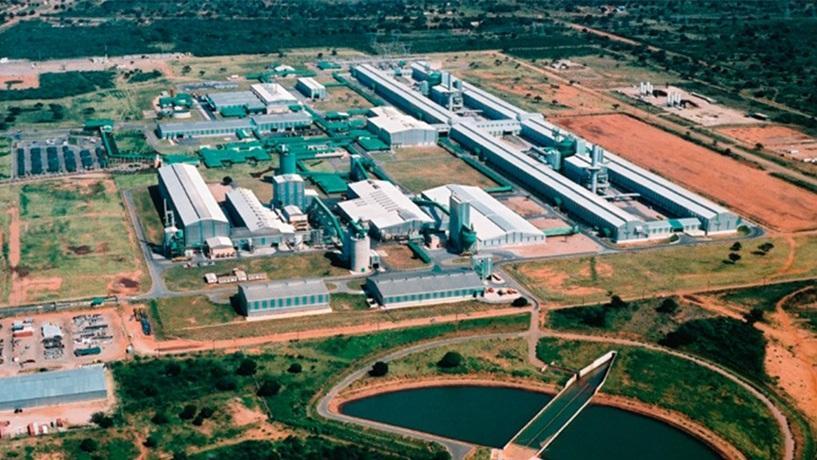
Africa-Press – Mozambique. Mozambique’s Energy Minister, Estêvão Pale, said the government is trying to avoid the suspension of operations at the Mozal aluminium smelter, the country’s largest industry, which employs 4,000 people and is scheduled to halt activity within a month.
“There are discussions on the matter. The government is doing everything necessary to ensure that the factory does not go into a maintenance shutdown,” said the Minister for Mineral Resources and Energy, Estêvão Pale, speaking to journalists on the sidelines of the Mining Indaba conference, which has been taking place since Monday in Cape Town, South Africa.
The dispute concerns Australia’s South32, Mozal’s main shareholder, which operates on the outskirts of Maputo, over the energy tariffs to be provided by Mozambique for the smelter’s operation.
South32 announced in December that Mozal would suspend activities and enter care and maintenance from 15 March 2026, due to the absence of a new electricity supply agreement.
“A new electricity supply agreement has not been secured, and Mozal will be placed into care and maintenance from around 15 March 2026. Consequently, the raw materials required to sustain operations beyond March 2026 have not been procured,” reads a statement from South32.
According to the document, at the time of the latest update, Mozal was continuing to engage with the Government, Cahora Bassa Hydroelectric (HCB) and South African energy company Eskom to ensure the supply of “sufficient and affordable electricity” until the suspension in March, when the current energy supply agreement expires.
“Throughout our negotiations, we emphasised that Mozal’s ability to continue operating depended on securing sufficient electricity at a price that would allow the smelter to remain internationally competitive. Unfortunately, the parties remained at an impasse on the appropriate price for electricity, which was exacerbated by drought conditions affecting HCB’s electricity supply,” South32 CEO Graham Kerr said in the statement.
He acknowledged that the announcement was “difficult” for the company’s team and would also have an impact on suppliers, customers, communities and other stakeholders: “We understand that today’s announcement is difficult for our team at Mozal, and we are committed to supporting them throughout this process (…). We are working with them as we transition operations into care and maintenance over the coming months.”
According to the statement, the cost of care and maintenance, including contract terminations, is expected to be around US$60 million (€51 million), and ongoing annual care and maintenance costs are estimated at around US$5 million (€4.2 million).
“The alumina supplied by our Worsley Alumina refinery to Mozal will be sold to third-party customers. South32 has secured options with customers to sell this alumina at index-linked prices,” the document further states, adding that production guidance for the 2026 fiscal year, ending in March, “remains unchanged at 240,000 tonnes.”
Mozal purchases almost half of the energy produced in Mozambique — mainly from the Cahora Bassa Hydroelectric Plant — and is estimated to account for at least 3% of the country’s Gross Domestic Product (GDP).
On 18 August, Mozambican President Daniel Chapo said that the energy tariffs proposed by Mozal would lead to the collapse of HCB, responding at the time to the threat of Mozal’s closure.
Electricity is supplied to Mozal via Eskom, which in turn purchases energy from HCB — 66% of the total produced in 2024 — which operates in central Mozambique. The Mozambican government, however, intends to reverse this arrangement.
Lusa reported in February 2024 that the Mozambican government plans, from 2030 onwards, to repatriate for domestic use the electricity it has been exporting from HCB to South Africa since 1979, as outlined in the Strategy for Energy Transition in Mozambique until 2050.