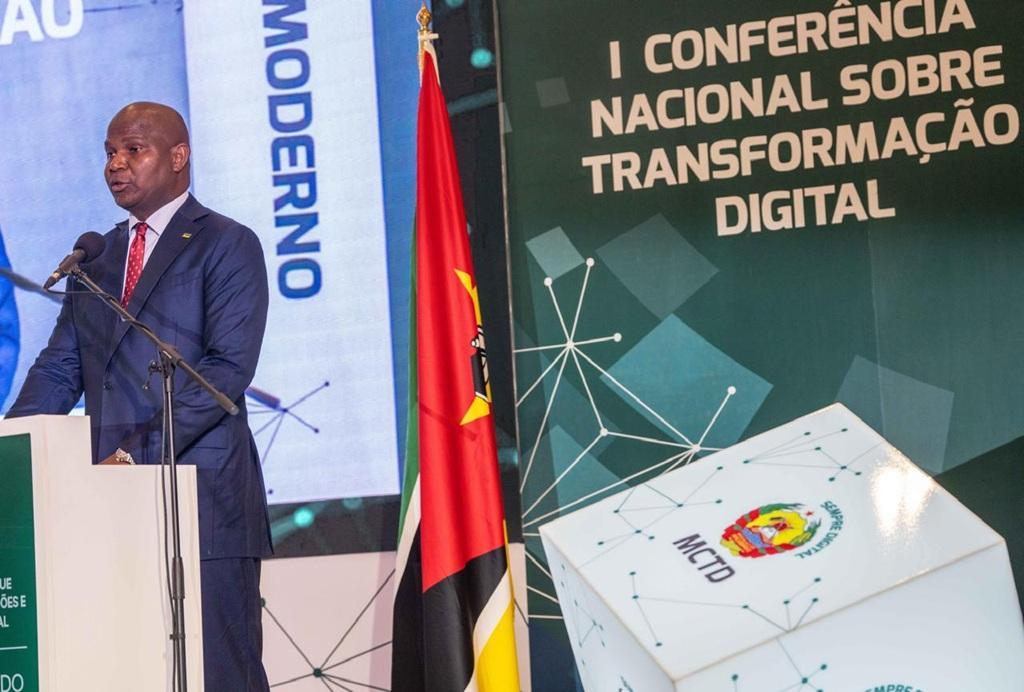
Africa-Press – Mozambique. Mozambican President Daniel Chapo believes that the full digitalization of public administration services brings the State apparatus closer to the citizen and improves efficiency of various types of activities.
According to the President, who was speaking on Wednesday, in Maputo, at the opening ceremony of the First National Conference on Digital Transformation, under the motto “Towards a Modern, Digital, and Citizen-Centered State”, there should be no technological islands within our State, which means that various systems must communicate with each other.
“Digital fragmentation compromises the efficiency of public administration, increases operational costs, and hinders citizens’ access to essential services. It is unacceptable that citizens are forced to move between various institutions to deal with a single document or service, becoming, in practice, messengers for an administration that should be fully integrated in the 21st century,” he said.
The President recalled that many Mozambicans continue to face long queues and long journeys to obtain basic documents, warning that “as long as this persists, we are failing in our mission to serve the Mozambican people.”
According to Chapo, digital integration takes on increased importance in the context of natural disasters and without it “we compromise the protection of lives and the collective memory of the Mozambican nation. The absence of coordinated systems reduces the State’s response capacity and weakens administrative continuity.”
He also called on public institutions to strengthen coordination and interoperability, aligning themselves under the leadership of the Ministry of Communications and Digital Transformation.
“The 21st century is not the century of isolated institutions. It is the century of interconnected institutions,” he declared.
As part of ongoing reforms, he announced the creation of a Multisectoral Technical Commission for Digital Services, mandated to map existing systems, eliminate redundancies, and propose a national roadmap for integration.
“Only with interconnected systems will it be possible to build an efficient, transparent, and citizen-oriented state, capable of reducing bureaucracy, improving the business environment, and combating improper practices”, he said.
For his turn, Américo Muchanga the Minister of Communications and Digital Transformation said that the government believes in a digital state based on the human factor.
“Technological transformation primarily must serve the interests of the citizen. The success of this intention depends on the involvement of all social strata, from academia to the private sector, the latter being called upon to play an active role in the implementation of technological systems”, he said.
The minister also announced public a tender for the implementation of the “digital identity system”, as well as the expansion of telecommunications infrastructure to more than 1,300 points throughout the country.
“There are many other initiatives underway. The important thing is that we all participate, implement with quality and ensure, ultimately, that citizens benefit from the technology,” he said.