Africa-Press – Mozambique. The Food and Agriculture Organisation of the United Nations estimated on Thursday that the province of Gaza, in southern Mozambique, lost 13% of its total livestock due to flooding, warning that this could also affect future production.
“There are livestock that have been affected by flooding meaning that future production is anticipated to decrease as waterborne diseases and overall stress impact the production process,” reads a report by that organisation, to which Lusa had access yesterday.
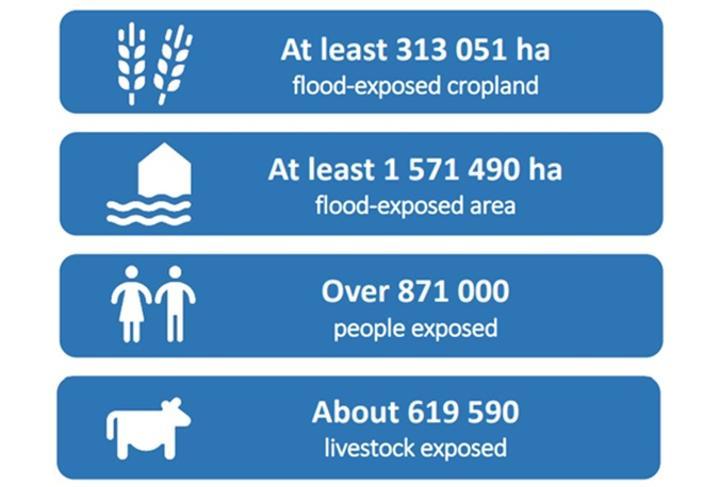
The UN Food and Agriculture Organisation (FAO) explains that “observations from satellite images using the Gridded Livestock of the World data as a baseline source (FAO, 2025), indicate that over 600 000 livestock have been exposed” to the floods.
“In addition, according to the Ministry of Agriculture, Environment and Fishery, more than 27 000 livestock have died,” FAO adds.
“In Gaza, 13 percent of the total livestock have been affected by flooding followed by Maputo (7 percent) and Sofala (5 percent),” the FAO report reads.
According to the FAO document, the numbers are expected to increase “as more carcasses are discovered” and also in view of the advancing rainy season in Mozambique.
“The loss of livestock assets are likely to lead to future loss of livestock products such as milk, eggs and offspring. This also impacts income and depletes the coping capacity of households.,” the organisation points out.
In the same report, the United Nations agency also notes that agricultural plantations in the districts of Marracuene and Manhiça, in Maputo, were the most affected by the floods, with 16% and 12% flooded, respectively.
“The most affected districts by absolute flooded cropland area are Chókwè, Chibuto, Limpopo and Buzi (over 30 000 ha each). By proportion of cropland affected, Limpopo, Marracuene, Chókwè and Manhiça districts each have more than 50 percent of impacted cropland,” the report reads.
“In Manhiça and Marracuene districts, flood impact has had the highest effect on banana plantations. A total of 55 percent and 53 percent of these plantations have been affected, respectively,” the document reads.
The district of Manhiça also has 40% of its sugar cane plantations flooded, as do Búzi (47%) and Chókwè (41%).
The FAO also estimates that 50% to 75% of the yield loss is likely due to flooding and river overflow, based on field observations by the organisation and other field staff.
Mozambican livestock farmers yesterday called for an animal restocking programme, to be promoted by Mozambique’s government, after losing more than 412,000 head of cattle due to the January floods, warning of the risk of famine.
“If they bring back the kind of support we had years ago, maybe things will improve. The government helped during other floods, giving a number of head of cattle for the farmer to raise, and when they began to reproduce, they came to recover their heads of cattle, and the farmer kept the calves,” farmer Nehemia Ntila, from the Moamba Cattle Farmers’ Association in the southern province of Maputo, told Lusa.
Mozambique is in the middle of its rainy season, which runs from October to April, and has already recorded at least 202 deaths, 291 injuries and 852,285 people affected, according to an update from the National Institute for Disaster Risk Management and Reduction (INGD).
The African country is now on alert as tropical cyclone Gezani approaches the coast on Friday, with winds of up to 140 kilometres per hour and heavy rains, expected to affect around 1.1 million people.
On Tuesday, Mozambique’s government explained that the impacts of this cyclone could set back efforts to save lives amid the floods that have already affected the country, warning that displaced people may leave shelters and calling on the population to take preventive measures.
The Mozambican authorities have activated early cyclone response measures in some southern and central provinces that may be affected by the cyclone’s passage.