What You Need to Know
The National Administration of Conservation Areas (ANAC) launched a workshop in Maputo to initiate the selection of a co-manager for the Primeiras and Segundas Islands Environmental Protection Area (APAIPS). Supported by WWF Mozambique and funded by the EU, the process aims to enhance conservation and management effectiveness in this vital marine area.
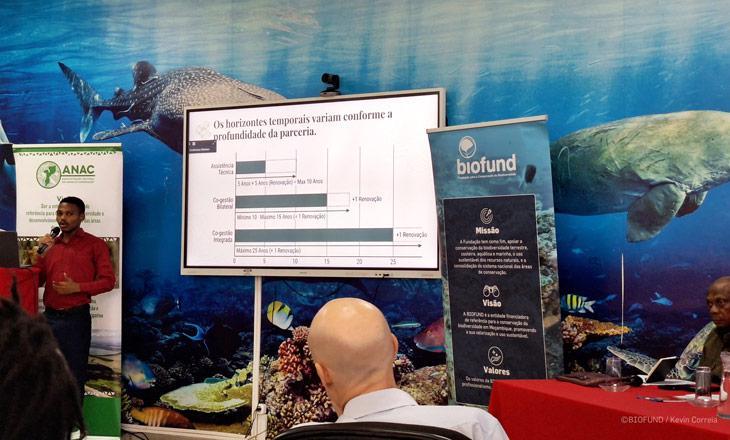
Africa-Press – Mozambique. The National Administration of Conservation Areas (ANAC) held, on 12 February 2026, in Maputo, the Workshop to Identify a Co-Manager for the First and Second Islands Environmental Protection Area (APAIPS).. The meeting was supported by WWF Mozambique, under the PROMOVE Biodiversity project, financed by the European Union and implemented through the Foundation for the Conservation of Biodiversity (BIOFUND).
The workshop marked the start of a competitive, structured and transparent process to select a co-managing entity, with the aim of strengthening management effectiveness, financial sustainability, and conservation in one of the country’s most significant marine protected areas. During the sessions, eligible entities were invited to submit their expression of interest, paving the way for the next phases of the selection process.
As Mozambique’s environmental fund dedicated to mobilising, allocating and managing financial resources for biodiversity conservation, BIOFUND highlighted the strategic importance of APAIPS and the value of consolidating investments already made in the area through a robust and sustainable co-management model.
“APAIPS has a very special meaning for BIOFUND, as it was one of the Foundation’s first projects… Through this workshop, we intend to work together with ANAC and WWF to promote the identification of a co-manager who can help maximise the value of what these projects have already invested in APAIPS,” said Alexandra Jorge, BIOFUND’s Programmes Director.
According to Alexandra Jorge, BIOFUND’s support to APAIPS combines returns from an endowment window (investment capital whose annual returns are channelled to conservation) and project funds, including PROMOVE Biodiversity and MozNorte, both expected to end in 2026. From this endowment, USD 1 million was donated by the Salle family, specifically to support APAIPS operational costs—an outstanding philanthropic contribution linked to the family’s support for global conservation initiatives through Conservation International. The expectation is that selecting a co-manager will help catalyse additional funding and ensure sustained technical support for APAIPS management, also exploring innovative financing mechanisms such as biodiversity offsets and exclusive tourism, among other options.
The identification of a co-manager aligns with the intended results for APAIPS under PROMOVE Biodiversity, which foresees creating conditions for effective management and administration, with technical and financial support to the area’s administration in the medium and long term.
About APAIPS
The Primeiras and Segundas Islands Environmental Protection Area (APAIPS) was established in 2012 by a specific legal instrument and covers approximately 1,040,926 hectares along a coastal strip extending roughly 205 km, spanning coastal districts in the north and centre of the country. APAIPS represents a mosaic of coastal and marine habitats of high importance for biodiversity, and its institutional consolidation is crucial to ensure effective protection, benefits for local communities, and long-term sustainability.
Source: Biofund
The Primeiras and Segundas Islands Environmental Protection Area (APAIPS) was established in 2012 to protect a diverse range of coastal and marine habitats in Mozambique. Covering over 1 million hectares, APAIPS plays a crucial role in biodiversity conservation and supports local communities. The recent workshop signifies a commitment to strengthening management through collaborative efforts with various stakeholders, including BIOFUND and WWF Mozambique. This initiative is part of broader efforts to ensure sustainable environmental practices in the region.