What You Need to Know
Imani Development has launched two significant projects aimed at enhancing trade facilitation in Mozambique and assessing the East African Community’s Vision 2050. The Mozambique Trade Facilitation Programme will address trade constraints along the Beira Corridor, while the EAC Vision 2050 assessment will evaluate progress and recommend updates to ensure regional integration and sustainable growth
Africa-Press – Mozambique. Imani Development is proud to unveil two landmark projects under its Trade and Regional Integration portfolio, commissioned by TradeMark Africa — a leading Aid-for-Trade organization dedicated to boosting intra-African trade and strengthening Africa’s role in global markets.
Project 1: Mozambique Trade Facilitation Programme
Mozambique, with a population of 31 million, is endowed with abundant natural resources including fertile land, minerals, and natural gas. Yet, the country’s economic potential remains constrained by persistent trade facilitation challenges. High transaction costs, recurring climate shocks, limited export diversification, slow progress in digitisation, and low compliance with international Sanitary and Phytosanitary (SPS) standards continue to hinder competitiveness across key value chains.
Further barriers include the delayed implementation of critical trade initiatives such as Authorized Economic Operator (AEO) schemes, Non-Tariff Barrier (NTB) elimination mechanisms, Simplified Trade Regimes (STR), and One-Stop Border Posts (OSBP).
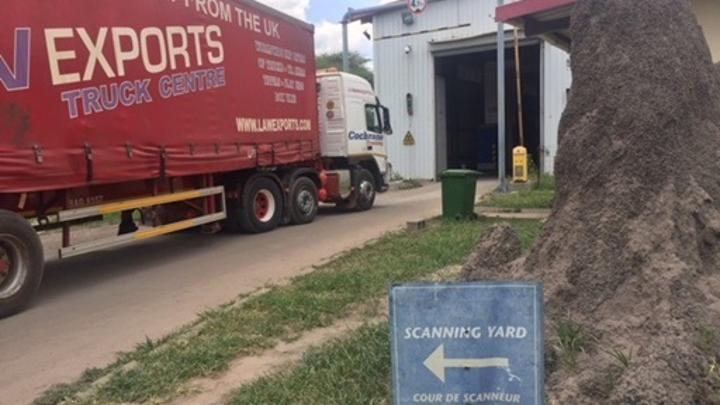
At the same time, Mozambique’s three strategic trade corridors — Nacala, Beira, and Maputo — remain vital not only for the country’s own trade but also for the wider region. These corridors serve as gateways for landlocked neighbours Malawi, Zambia, and Zimbabwe, while offering South Africa alternative routes to global markets. Strengthening their competitiveness is therefore essential to unlocking Mozambique’s trade potential and advancing regional integration.
As part of a wider regional approach to support integrated development of strategic corridors, TradeMark Africa (TMA) secured funding from FCDO ( UK’s Foreign, Commonwealth & Development Office) and the Government of the Netherlands to scale up a trade facilitation programme in Mozambique. The Mozambique Trade Facilitation Programme will focus on unlocking trade potential along the Beira Corridor with a portfolio of interventions to address existing trade constraints in order to foster trade growth and prosperity for Mozambique and its neighbours.
Specifically, this programme aims to;
i) Reduce time and cost of trade along the Beira Corridor by enhancing the implementation of trade facilitation measures to improve the trade environment.
ii) Increase the export competitiveness of the horticulture sector, which is one of the fastest growing sectors.
iii) Increase inclusive small scale cross border trade at the Machipanda Border with Zimbabwe.
Key interventions to be implemented by Imani Development include:
Non-Tariff Barriers (NTBs): Elimination of non-tariff barriers (NTBs) through the National Monitoring Committee (NMC) under the National Trade Facilitation Committee (NTFC), supported by sensitisation efforts and the rollout of an SMS-based NTB reporting tool aligned with the Tripartite mechanism.
Coordinated Border Management (CBM): Establishing a Joint Border Committee (JBC) at key posts such a Machipanda Border to improve coordination between public and private stakeholders.
Customs Data Exchange: Developing regional customs data exchange systems between Mozambique, Zimbabwe, and South Africa. A framework for cross-border payment trials will also be developed.
SPS Compliance for SMEs: Supporting horticultural SMEs to meet international SPS standards and expand exports. Compliance and certification Programme for mango value chain to support market access for horticulture exports (e.g. mango) from Manica. This will involve selection of SMEs to roll out a programme to support both capacity to export and compliance, particularly around managing the fruit fly pest.
Simplified Trade Regime (STR): Advocating for and building the capacity of small-scale cross-border traders (SSCBTs) at Machipanda, with a focus on empowering women and youth and creation of a dedicated desk for women support at Machipanda.
Project 2: Assessment and Review of EAC Vision 2050
The East African Community (EAC) is a regional economic community bringing together eight Partner States: Burundi, the Democratic Republic of Congo, Kenya, Rwanda, Somalia, South Sudan, Tanzania, and Uganda. Established under the Treaty signed in November 1999 and effective from July 2000, the EAC is mandated to promote economic, political, social, and cultural integration across the region. Article 5(1) of the Treaty outlines its core objectives — fostering cooperation through policies and programs that deliver mutual benefits to all Partner States.
To guide this vision, the EAC Vision 2050 was adopted as a long-term framework for transforming the region into an upper-middle-income bloc by mid-century. It emphasizes inclusive growth, structural transformation, and sustainable development, with strategic goals spanning economic progress, social well-being, infrastructure and industrialization, environmental sustainability, and governance.
As part of the Monitoring and Evaluation Framework, it is essential to regularly assess progress, highlight achievements, and address gaps. This ensures the Vision remains relevant and responsive to emerging challenges while aligning with broader continental and global agendas such as the African Union’s Agenda 2063 and the United Nations Sustainable Development Goals (SDGs).
The overall objective of the assessment is to assist the East African Community in assessing the status of implementation of the EAC Vision 2050.
Key deliverables to be implemented by Imani Development include:
i) Assessing the progress made in achieving the goals and objectives outlined in the EAC Vision 2050.
ii) Identifying challenges, gaps, and emerging issues that have impacted the implementation of the Vision 2050.
iii) Evaluating the relevance and coherence of the current Vision in the context of global, regional, and national challenges.
iv) Providing recommendations for updating and realigning the Vision to address identified challenges and capitalise on new opportunities.
v) Proposing a roadmap and implementation framework to guide the EAC towards the Vision 2050 goals.
Building on 40+ Years of Impact
Since 1982, Imani Development has partnered with governments, regional communities, and international donors to translate trade agreements into practical, impactful solutions. These new projects reaffirm its commitment to regional integration, inclusive growth, and stronger global linkages.
Source: Imani Development / Press Release
Imani Development has been active since 1982, working with governments and organizations to improve trade and development across Africa. The Mozambique Trade Facilitation Programme aims to tackle ongoing trade challenges in Mozambique, a country rich in resources but hindered by high transaction costs and compliance issues. The EAC, established in 2000, seeks to foster economic integration among its member states, with Vision 2050 serving as a roadmap for future growth and cooperation in the region.