Africa-Press – Mozambique. Representatives from Gabon, Gambia, Guinea, Malawi, Mali, Mozambique and Morocco are in Brasília for a study visit organised by the World Bank and the Brazilian Ministry of Social Development (MDS).
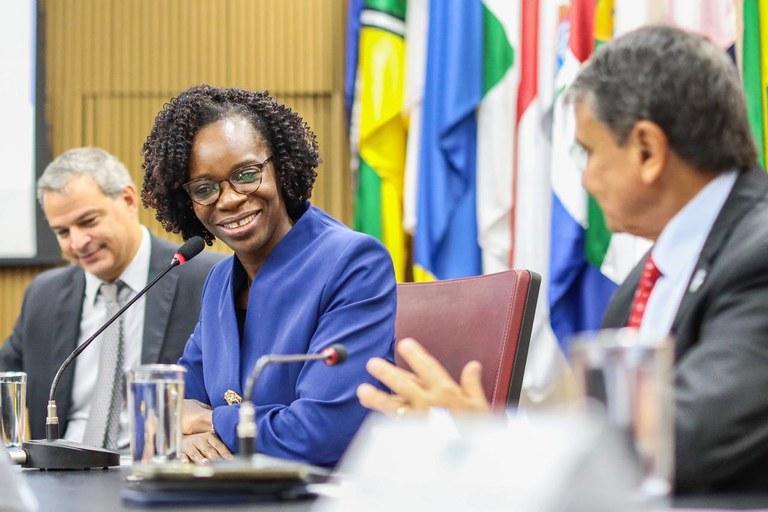
Mozambique’s Minister of Labour, Gender and Social Action, Ivete Alane, is taking part in the visit.
Brazil’s Minister for Social Development, Family and the Fight against Hunger, Wellington Dias, on Tuesday (24 February) presented Brazilian public policies that helped remove the country from the Hunger Map and emphasised the importance of international cooperation within the framework of the Global Alliance Against Hunger and Poverty. The event formed part of the second day of a study visit by representatives from seven African countries to Brasília, the federal capital of Brazil.
The visit’s initiative results from a partnership between the Ministry of Social Development (MDS) and the World Bank. Representatives from Gabon, Gambia, Guinea, Malawi, Mali, Mozambique and Morocco are in the federal capital for an exchange of experiences and to learn about Brazilian actions in social protection, food security, productive inclusion and decentralised governance.
On Tuesday, participants had the opportunity to learn in detail about Brazilian programmes such as Cadastro Único, including processes for collecting and updating data on beneficiary families, integration with federal systems and the management model. The aim is to showcase Brazil’s experience through technical meetings, thematic sessions, field visits and exchanges between delegations.
“I hope we can cooperate through experiences such as Bolsa Família, Cadastro Único, employment initiatives, support for entrepreneurship, school feeding programmes, and this combination of education and health with income transfers. In short, building on highly successful policies developed by Brazil and other countries around the world, we can achieve positive results,” Wellington Dias said.
The Brazilian minister also stressed that the challenges faced by each country, within the framework of the Global Alliance Against Hunger and Poverty, must be addressed jointly while respecting the sovereignty and realities of each nation.
“It is essential that those parts of the world that have already achieved a certain level of development collaborate with others that are still developing. This should not be done as charity. It should be pursued as a global strategy,” Dias stated.
Mozambique’s Minister of Labour, Gender and Social Action, Ivete Ângela dos Anjos Ferrão Alane, also took part in the agenda. According to the Mozambican minister, Brazil’s example in public policy will be important for consolidating the foundations of social protection in the African country.
“We believe this is a valuable reference that we will take with us, not only from Brazil but also from the exchange of experiences with all the other African countries present here, so that we can establish social protection adapted to our reality,” Alane said.
During the afternoon, the Sistema Único de Assistência Social (SUAS) was also presented to the international delegations, with sessions on the work of the Centro de Referência de Assistência Social (CRAS) and the Centro de Referência Especializado de Assistência Social (CREAS), as well as the decentralised management model integrating the federal government, states and municipalities.
As part of the programme, the delegations will visit three CRAS units in the Federal District on Thursday (26 February) to learn about their operations and the services provided. In addition, they will take part in a special session on the Global Alliance Against Hunger and Poverty. On the final day, each country will have the opportunity to present its own experiences and challenges.
Source: Ministério do Desenvolvimento e Assistência Social, Família e Combate à Fome