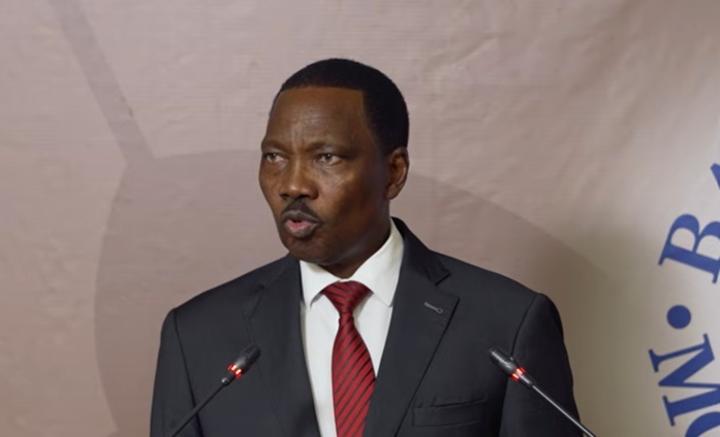
Africa-Press – Mozambique. The Governor of the Banco de Moçambique, Rogério Zandamela, on Monday ruled out a scenario of intervention in the foreign exchange market, following the International Monetary Fund’s (IMF) suggestion in February for convergence between official and parallel market rates.
“Our policy has been this: no intervention in the foreign exchange market. And we see no reason [to intervene]. I would add that throughout this process, it is important to note that we, traditionally as an institution, had a history of continuous presence in the foreign exchange market. We learned a lot from that. We learned and made the difficult decision to step out; it was not easy, because the temptation is very strong, and it required a lot of courage to exit,” said Zandamela.
The central bank governor was questioned by journalists on the matter at the end of the Monetary Policy Committee (CPMO) meeting held in Maputo, regarding intervention in the foreign exchange market, which has not occurred for almost three years.
In February, the IMF called on Mozambique to contain public sector wages, implement urgent structural fiscal reforms, and allow exchange rate flexibility, bringing official rates closer to the parallel market, among other measures.
“Greater exchange rate flexibility would help strengthen the external position, restore balance in the foreign exchange market, reduce the gap between official and parallel rates, and improve resource allocation. Exchange rate controls should not be used as a substitute for justified macroeconomic policy adjustments. Their removal must be gradual and carefully planned to avoid disruptions,” read the IMF recommendations following the 2025 regular consultations.
The document, approved by the IMF on 13 February, noted that the Mozambican authorities’ “commitment” to fiscal reforms and governance “is encouraging, but implementation will be key,” given challenges such as economic growth and financing. It stated that Mozambique’s monetary policy “must remain restrictive,” warning that “monetary easing risks worsening the current foreign currency shortage” and advocating exchange rate policies that support “external adjustment and competitiveness.”
“Now that we have managed to exit, with the help of partners who gave us the courage to step out, when people start saying we must return, that is not a situation for us. This decision is final,” warned the central bank governor this Monday, emphasising that the exchange rate “can never be examined in isolation.”
“It must be linked to the policies being implemented,” Rogério Zandamela added, referring to the country’s current monetary policy.
“As I have been saying, we stopped intervening in the foreign exchange market years ago, more than two years back. The last time was indeed in 2023, and even from 2021 our presence in the foreign exchange market was very modest, and since 2023 it has been completely zero,” Zandamela recalled.