What You Need to Know
Mozambique’s dollar bond selloff has extended into an 11th day, driven by the Iran war’s impact on oil prices and the country’s fragile finances. The bond’s yield has surged, indicating distress, as the government struggles with debt and financing vulnerabilities, exacerbated by rising energy and agricultural costs.
Africa-Press – Mozambique. Mozambique’s dollar bond extended a selloff into an 11th day, pushing the country’s credit deeper into distressed territory, as the oil-price shock strains its already-fragile finances.
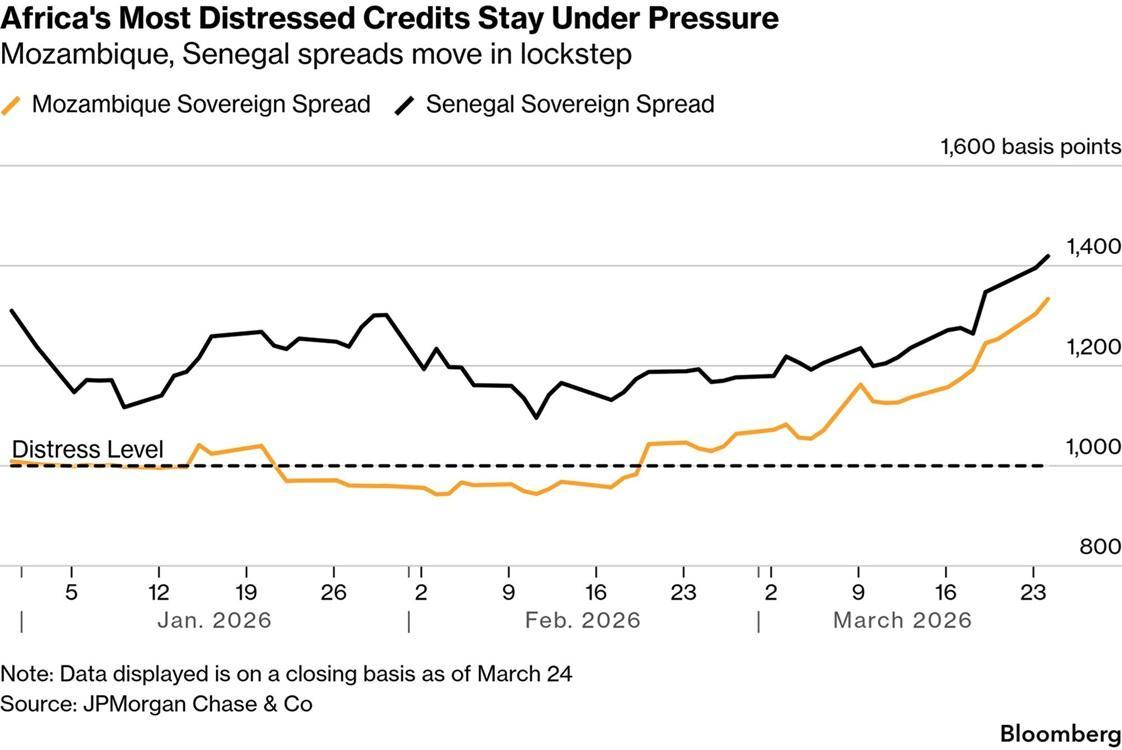
The $900 million note due 2031 extended its decline Thursday to trade around 77.50 cents, the lowest since April 2025 and down more than eight cents since the war started. The bond yield rose to 15.2%, according to CBBT composite pricing.
The moves have taken Mozambique’s yield spread over Treasuries to around 1,336 basis points, well above the 1,000 basis-point level that’s seen as a marker of distress. It’s the only African nation apart from Senegal, whose yield premia exceed 1,000 basis points.
However, Mozambique’s troubles started well before the conflict, with the International Monetary Fund and World Bank already sounding warnings over persistent debt-funded overspending. While it hosts some $50 billion worth of gas projects, progress has been slow, and now, it faces paying higher prices for fuel and fertilizer imports.
“In Mozambique’s case, tapping into its gas wealth is still some way off with insecurity in the north of the country having delayed gas projects,” said Giulia Pellegrini, lead portfolio manager at Allianz Global Investors. Rising energy and agricultural input prices as a result of the conflict is adding to the economy’s vulnerabilities.
“Countries like Mozambique and Senegal with more challenging fiscal and debt situations and meaningful financing needs are bound to stay under pressure,” Pellegrini added.
Within Mozambique, the government’s finances are under severe pressure, with local lenders reporting foreign exchange backlogs as high as $800 million.
Authorities managed to raise the equivalent of $4.88 million in a debt auction on Tuesday. However, that source of funding looks precarious, given that banks are already limiting their participation in such sales.
Absa Bank Limited economists who visited the country last week said the government isn’t servicing domestic bonds, bilateral external debt or Treasury bills issued to finance its day-to-day operations. That’s likely to lock the government out of borrowing on domestic as well as international markets.
“It neither pays interest nor settles maturing paper, merely conducting switch auctions,” Phumelele Mbiyo, senior economist at the lender, wrote in a client note. “Only T-bills issued for monetary policy purposes are being settled.
All that makes it imperative for authorities to unlock funds from multilateral lenders. However, accessing the IMF lifeline requested last year requires implementing critical reforms, which the government has failed to do, the Washington-based lender said last month.
The next coupon on the 2031 dollar bond, a $45 million payment, doesn’t fall due until September. But Samir Gadio, head of Africa strategy at Standard Chartered expects the dollar bond to be under pressure from debt and financing vulnerabilities as well as fuel and fertilizer import disruptions.
An “overvalued exchange rate and a still uncertain time-line for IMF program discussions” further weighs on the credit, Gadio added.
Mozambique has faced economic challenges for years, with the International Monetary Fund and World Bank warning about persistent debt issues and overspending. Despite hosting significant gas projects, progress has been slow, and the country has been grappling with high import costs for fuel and fertilizers, further straining its economy. The ongoing conflict in the region has delayed these projects, adding to the financial pressures on the government and its ability to service debts effectively.