What You Need to Know
Mozambique’s president, Daniel Chapo, hailed the early repayment of €630 million to the IMF as a courageous act demonstrating fiscal responsibility. This decision, funded by the country’s international reserves, aims to strengthen economic stability and attract further investment. Business leaders support the move, emphasizing the need for sustainable growth measures.
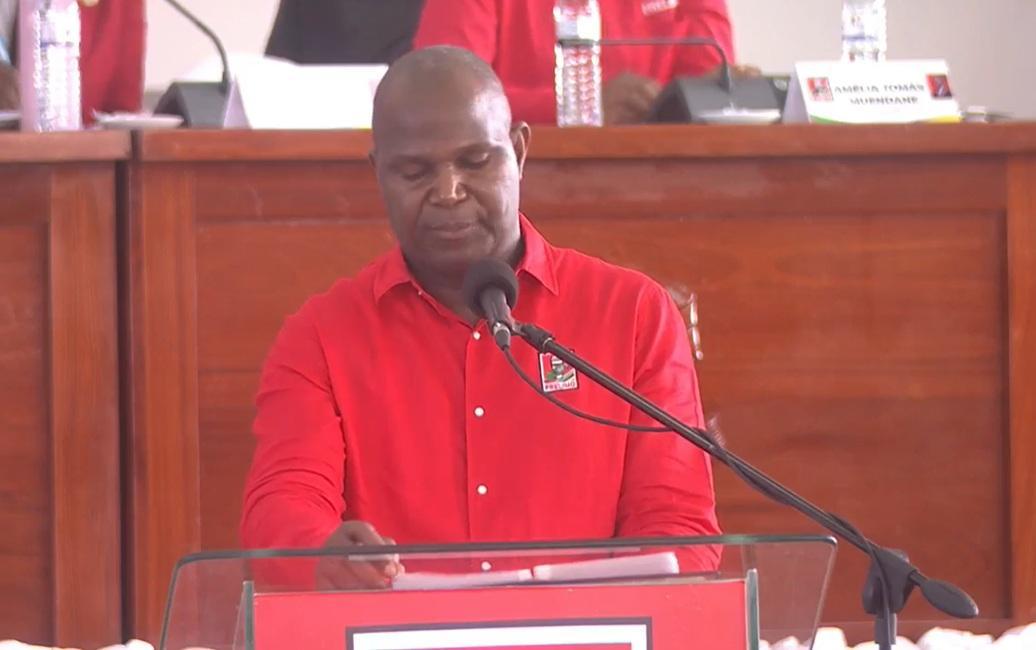
Africa-Press – Mozambique. The president of Frelimo, Daniel Chapo, today described the decision to fully and early repay Mozambique’s €630 million debt to the International Monetary Fund (IMF) as “courageous,” emphasising that it demonstrates the country’s “responsibility.”
Speaking at the opening of the fifth ordinary session of the Central Committee of the Mozambican Liberation Front (Frelimo), the ruling party he leads, Chapo confirmed that the repayment, made “in full” and “in advance,” used Mozambique’s international reserves.
“This courageous decision should be seen positively and strategically, as an unequivocal signal of macroeconomic responsibility and the strengthening of Mozambique’s international stability. And because the dignity of a people has no price,” Chapo said.
“Therefore, we will continue to adopt measures that stimulate domestic production, attract further investment by creating a more favourable business environment, and promote an increasingly competitive economy,” he added, noting the government’s openness to a new IMF support programme under negotiation since 2025.
“We reaffirm our commitment to strengthening the strategic partnership with the IMF and other bilateral and multilateral partners on a mutually beneficial and respectful basis,” he said.
The news agency Lusa reported this week that Mozambique’s net international reserves (NIR) soared to a new record of $4.258 billion (€3.862 billion) in February, before the government used them in March to settle the IMF debt.
These reserves – foreign currency required for the import of goods and services – had risen 1% in September, according to a statistical report from the Bank of Mozambique accessed by Lusa, to $3.937 billion (€3.409 billion), maintaining similar levels in October after a previous peak of $4.035 billion (€3.494 billion) in August.
From December to January, reserves rose by almost 1%, covering over four months of import needs, and again in February to a new high.
The Mozambican finance minister confirmed on Tuesday that the repayment to the IMF does not compromise state institutions.
“We paid the debt service to the IMF using the country’s NIR. These are reserves already available at the level of international financial institutions,” explained Carla Loveira.
She clarified that the resources used for the full and early repayment of €630 million to the IMF “are financial positions the country holds,” and no “budgetary adjustment was needed for this purpose.”
According to Loveira, there is no risk to the functioning of state institutions, as the repayment was not made using the national budget.
The Ministry of Finance confirmed on Thursday that it made a “full and early repayment” of €630 million to the IMF, settling loans contracted under the Poverty Reduction and Growth Trust (PRGT).
In a statement, the ministry noted that Mozambique repaid “all obligations” associated with the IMF PRGT programme, totalling $698,587,604 (€630 million).
Mozambican business leaders welcomed the debt settlement, saying it strengthens external partner confidence and creates conditions for deeper economic and financial cooperation, while cautioning that macroeconomic stability must be supported by “consistent domestic measures that promote inclusive and sustainable growth.”
Mozambique has faced significant economic challenges, including high debt levels and reliance on international financial institutions like the IMF. The country has been working to stabilize its economy through various reforms and partnerships. The recent decision to repay its IMF debt early is seen as a pivotal step towards restoring confidence among international partners and ensuring macroeconomic stability. This move reflects a broader strategy to enhance Mozambique’s economic resilience and foster sustainable growth in the long term.