What You Need to Know
Maputo is experiencing a significant fuel crisis, with long queues at petrol stations and many closed due to shortages. Drivers express frustration as they wait for hours to fill their tanks, while the government attributes the situation to economic dynamics and external conflicts affecting fuel imports. The crisis has raised concerns about transport operations and the livelihoods of many drivers.
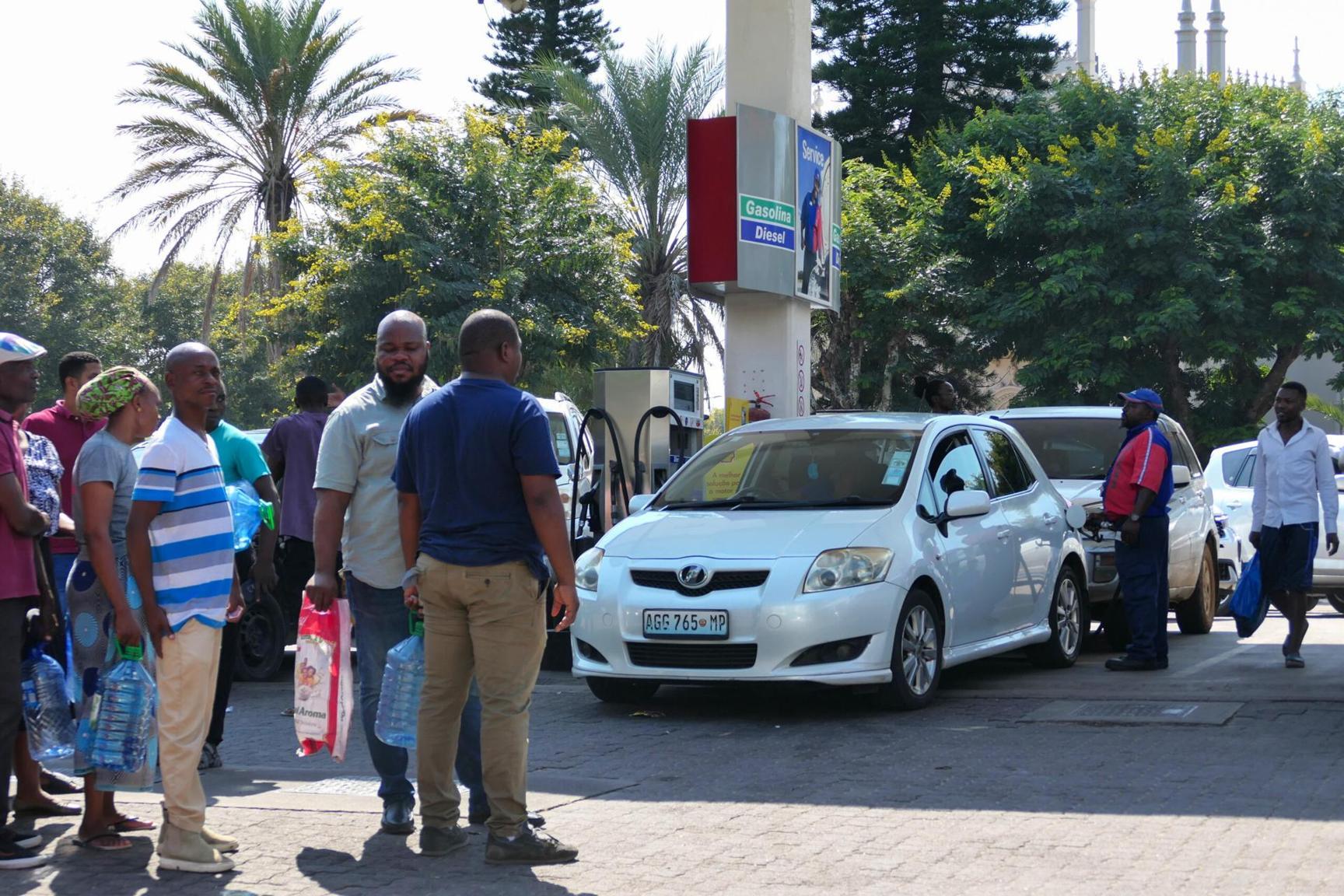
Africa-Press – Mozambique. Queues stretching for hundreds of metres, widespread congestion and petrol stations closed without petrol or diesel are today marking central Maputo, with motorists in despair and others already running on empty pushing their vehicles along the street.
By mid-morning, Manuel Ponge, a ride-hailing driver in Maputo, was waiting to be able to fill up the maximum allowed at petrol stations of 1,000 meticais (€13.2) at one of the few stations still open in the Mozambican capital.
“Very critical, as you can see,” he says, amid traffic congestion caused by queues of dozens of cars stopped at several fuel stations either trying to refuel or holding their place for when fuel becomes available.
“We have to endure this queue to ensure we get fuel, even if in a very limited way. From what I was told, it is only 1,000 meticais per person,” he adds.
He had already visited several stations during the morning in search of fuel and found many, the majority, closed, with employees sitting on the ground without work. He also heard about a mobile application developed in recent hours and being widely shared, which regularly updates which stations are open and supplying fuel.
“I saw it on the app and came here. I have been here for 25 minutes,” he explains, admitting he still has fuel in his “economical” car to continue working in passenger transport for three days.
“Waiting for the situation to improve. Saving enough for another three or four days and then we will see,” says Manuel Ponge, although he calls for “priority for transport operators” in refuelling, as they are the “solution” to the current problem.
The Mozambican government had already acknowledged on Tuesday “pressure” on fuel stations, as huge queues began appearing this week amid fears of stock shortages and price increases due to the conflict in the Middle East, despite guarantees of sufficient stock in the country until May.
“Indeed, we have been monitoring some pressure at the pumps. The information available is that there is still stock available. I cannot here state how many days or weeks, but this is an issue being monitored daily at government level,” said Minister Salim Valá, spokesperson for the weekly Council of Ministers meeting held on Tuesday in Maputo.
The government therefore attributes the queues to an “economic dynamic” based on “perceptions and expectations”.
Meanwhile, Avelino Fonda is also queuing at a fuel station in Maputo. In two days he has managed to obtain only 10 litres of diesel, enough to keep the car running, but he does not know until when.
“I have been here for 30 minutes, but I came from another station where I waited for two hours, and when I got there they had already run out,” he says, adding: “This is going to get even harder.”
“The new prices will have to come,” said the President of the Republic on Tuesday, justifying the fuel situation with the war in the Middle East, which is affecting Mozambique, whose imports depend on 80% of shipments through the Strait of Hormuz, blocked by Iran and now by the United States of America.
“As long as the war continues, we will not be able to keep stretching the current prices for much longer,” said Daniel Chapo.
Yussufo Vicente, a taxi driver, has been queuing at a station in the capital since early morning in search of a few litres of diesel to continue working.
“I have been here since morning still looking for fuel and only now I am going to refuel,” he explained, pointing to a wait of several hours and the 1,000 meticais limit.
“If the problem continues, my expectation is to stop. All of us will be stopped (…) There is no way, we will just stay at home,” he says, exhausted after more than two hours in the same queue.
The same concern is shared by António Manuel, a ‘txopela’ driver for 15 years, the motorised tricycles that weave through Maputo traffic transporting passengers.
“We are going through very difficult times. We do not even know what our lives will be like in the near future, because we depend on transport to feed our families,” he says, adding ironically: “Politicians say there is no fuel shortage. We are becoming puzzled.”
The days have become “a war” in the search for fuel, and since Tuesday he has managed to obtain only 2.5 litres.
“I spent the whole day struggling,” he says, describing the situation as “chaotic” and uncertain.
“There is no more business. We may just park the vehicles and who knows what. Maybe go back to the countryside and take up the hoe,” he says.
Elsewhere in the city, Assifo Ussene waits with a friend for fuel to arrive at the station. He is on a lift because the car he uses, which needs refuelling every three days to work, is already on reserve and has been left at home.
“I do not even know how I will continue working (…) We were almost being served and when it was our turn they signalled that there was no more petrol,” he says, calling on the government to prevent fuel stations from “taking advantage” of the situation.
“I will keep waiting for a miracle and for things to improve. I will keep doing my work without a car,” he says.
José Dias is also already expecting to stop due to lack of fuel for company vehicles.
“We have no way, we can only use minibuses,” he says, while waiting since 07:00 to refuel.
“I have already been to some stations. I heard that from 14:00 they will start supplying fuel, so I came here,” he says, worried that the company is about to be forced to stop.
“I do not know. I only know that this is getting worse. With each passing day it is getting worse,” he laments.
The current fuel crisis in Maputo is exacerbated by geopolitical tensions, particularly the conflict in the Middle East, which has disrupted global oil supplies. Mozambique relies heavily on imports for its fuel needs, with a significant portion coming through critical shipping routes. This dependency makes the country vulnerable to fluctuations in global oil prices and supply chain disruptions, leading to the current shortages and public unrest over fuel availability. The government has acknowledged the situation but insists that there is still stock available, attributing the chaos to public perception and panic buying.