What You Need to Know
The Mozambican government has reiterated that there is no risk of fuel shortages, despite long queues at filling stations. Abida Patel from IMOPETRO confirmed that fuel is available at ocean terminals, although supply logistics have been affected by the blockade of the Strait of Hormuz. The government has taken measures to ensure fuel distribution continues smoothly.
Africa-Press – Mozambique. The Mozambican government on Thursday insisted again that there is no risk of fuel shortages – despite the long queues of vehicles at filling stations in Maputo and other cities.
Abida Patel, director of operations at the Mozambican Petroleum Importer (IMOPETRO), has guaranteed that fuel is available at the country’s four ocean terminals, which means that there is no risk of shortages, despite the impact of the war of aggression waged by the United States and Israel against Iran.
In the wake of the war, the Strait of Hormuz –which is responsible for the daily flow of almost 20 percent of the world’s oil sales – was blocked, preventing the passage of ships carrying gas and oil.
About 80 percent of Mozambique’s fuel imports pass through routes connected to the Strait of Hormuz, which means that the impact of the war in the Middle East is potentially disastrous for the country’s economy.
According to Patel, interviewed by Rádio Moçambique, Mozambique has stopped importing fuel from the Middle East due to the blockade of the Strait of Hormuz, and has been resorting to other routes.
“A large part of the fuel came from the Middle East, but due to the blockade of the Strait of Hormuz, the supply has shifted to other markets. Despite the changes in supply routes, the country continues to receive regular shipments”, she said.
“Ships continue to arrive and there is fuel available at the oceanic terminals”, she added.
Patel called on the population in general to calm down, as many people have been rushing to filling stations for fear that the fuel will run out.
“There is no reason to panic. Citizens should refuel normally, without the need for hoarding,” she said.
However, Patel acknowledged that the international shocks have been affecting supply logistics, increasing transport costs.
“While previously transport took about 15 days, now it takes 10 days more. Even so, any occasional delays should not compromise the country’s supply. There may be some delay in the arrival of ships, but this will not impact the availability of fuel”, she claimed.
As a result of these constraints, import costs are tending to increase “which could put pressure on companies in the sector. The import bill increases and companies need greater liquidity to meet these costs.”
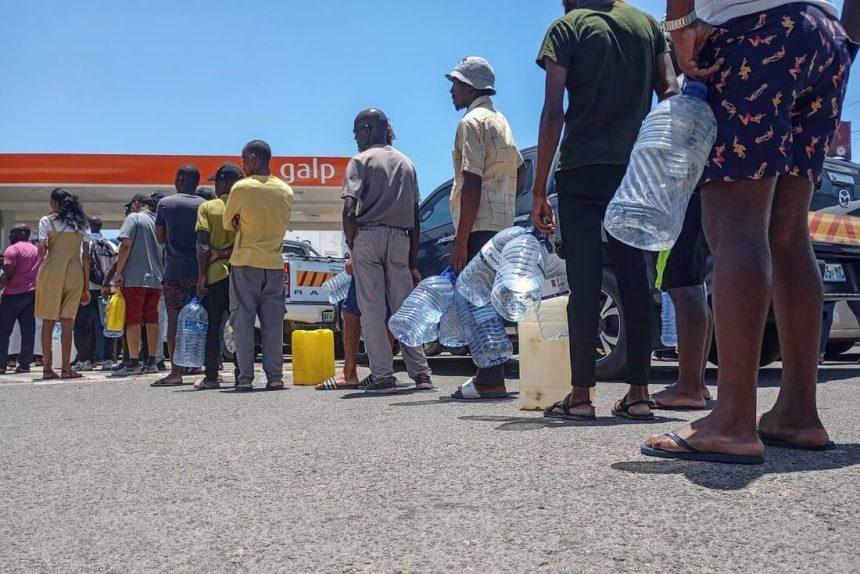
Despite Patel’s optimism, motorists in Maputo fear that supplies of petrol and diesel could run out. For the past four days, there have been long queues of vehicles at the service stations. This is not a question of “hoarding” as Patel suggested, but merely a legitimate attempt by motorists to keep their vehicles on the road.
Shortages are reported from most other cities. The main exception is the northern city of Pemba, capital of Cabo Delgado province, where all the filling stations are operating normally.
One measure taken by the government to alleviate the crisis was to cut the contractual ties between fuel distributors and retailers.
As an “exceptional measure”, the Ministry of Mineral Resources and Energy authorised retail outlets to acquire fuel from any distributor who has stocks, regardless of any contractual arrangements.
It is not yet clear how much impact this measure will have. The Ministry dispatch also called for calm and discouraged hoarding. It urged motorists not to buy more fuel then strictly necessary.
Mozambique relies heavily on fuel imports, with about 80% coming through the Strait of Hormuz. Recent geopolitical tensions have disrupted these supply routes, raising concerns about fuel availability. The government has responded by shifting import strategies and encouraging calm among citizens, emphasizing that fuel supplies remain stable despite logistical challenges. Historical reliance on Middle Eastern oil has made Mozambique vulnerable to international conflicts, necessitating adaptive measures in fuel sourcing.