What You Need to Know
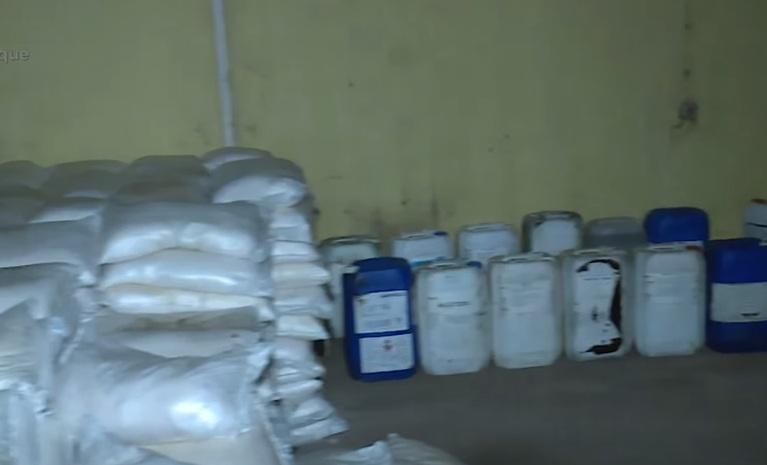
Mozambique’s police have seized 10 tonnes of powdered acid and over 2,000 litres of liquid chemicals linked to drug production. Three suspects, including two Mexican nationals tied to the Sinaloa Cartel, were detained in Maputo. The operation revealed a significant drug trafficking network, prompting international cooperation in the investigation.
Africa-Press – Mozambique. Mozambique’s police have seized 10 tonnes of powdered acid and more than 2,000 litres of liquid chemicals used in drug production, after detaining three people in Maputo suspected of belonging to the Sinaloa Cartel, according to the authorities.
“After their detention, we became aware that there was a product at the residence of the Mozambican national. Following this, a search led to the location of the product. We found around 10 tonnes of powdered acid and more than 2,000 litres of liquid acid that tested positive as a precursor for drug production,” said Hilário Lole, spokesperson for Mozambique’s National Criminal Investigation Service (SERNIC), in comments to Lusa.
Mozambican police detained the three suspects on 11 April at Maputo International Airport, including two Mexican nationals suspected of belonging to the Sinaloa Cartel, one of the world’s largest organised crime syndicates, which allegedly intended to establish operations in Mozambique.
Hilário Lole said at the time that the two Mexican nationals had transited through Portugal and Spain, but their passports showed no immigration records, in a process facilitated by a fellow Mexican citizen residing in Mozambique.
The seizure of powdered and liquid acid used in drug production took place on Tuesday night, following the case of the three detainees, which also includes a Mozambican national, the SERNIC national spokesperson said.
According to Lole, the operation began at the residence of the detained Mozambican national in Marracuene district, Maputo province, but by the time officers arrived, the material had already been removed, allegedly during the night, leaving only traces behind.
Information gathered on site by Mozambican police led to a warehouse in Boane district, also in Maputo province, where the precursor chemicals were found.
“Large quantities were apparently removed during the night, so when we tracked and followed up on the information, we found [the material] at that warehouse belonging to another Mozambican national, who may also be arrested at any time,” said Hilário Lole.
The spokesperson added that the detention status of the three suspects had been validated and upheld, with all remaining in pre-trial detention as the investigation continues to identify and locate further suspects.
According to police, there are strong indications that the three detainees are involved in international drug trafficking, document forgery and criminal association.
Police also said on Thursday that they were cooperating with South African and Mexican authorities to clarify the case, pointing to the involvement of some Nigerian and Mozambican nationals, as well as links to a potential drug trafficker based in South Africa. That location was also identified as a transit point following the establishment of drug production facilities in Matutuine district, Maputo province, in southern Mozambique.
According to forensic analysis derived from extracted phone contacts of the suspects, it was possible to identify conversations with Mexican contacts, including images of drug packets.
SERNIC also clarified that one Mozambican driver fled after noticing the presence of officers. He is believed to be related to an alleged drug dealer operating in one of the drug consumption hotspots in the suburbs of Maputo.
Police have called for community cooperation in reporting similar cases and said investigations are ongoing to dismantle other trafficking networks in the country.
The Sinaloa Cartel, established in 1987 in western Mexico, is considered one of the world’s largest international organised crime syndicates involved in drug trafficking and money laundering, and is designated a terrorist organisation by the United States.
The Sinaloa Cartel, founded in 1987, is one of the most powerful drug trafficking organizations globally, known for its extensive operations in North America and beyond. Mozambique has increasingly become a focal point for drug trafficking due to its strategic location and porous borders, attracting international crime syndicates looking to expand their operations in Africa. Recent law enforcement efforts have aimed to combat this growing threat, highlighting the need for regional cooperation in addressing drug-related crimes.