What You Need to Know
Mozambican President Daniel Chapo has urged a new approach to cooperation with China, advocating for partnerships over traditional aid. Speaking in Beijing, he emphasized the need for structural transformation in Mozambique, focusing on industrialization and human capital. Chapo highlighted global priorities such as digitalization and investment in youth, while Chinese Prime Minister Li Qiang sign
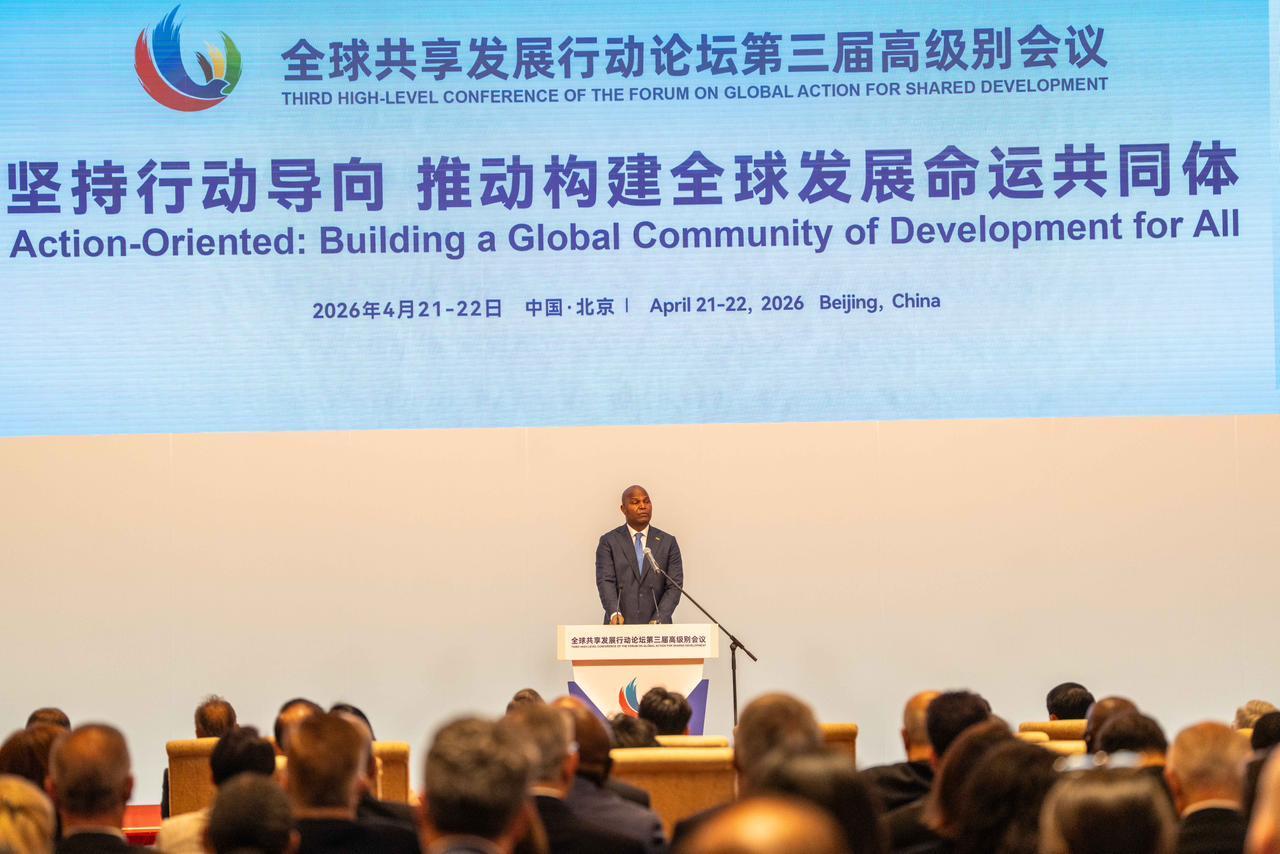
Africa-Press – Mozambique. Mozambican President Daniel Chapo has called for a new approach to international cooperation with China, based on partnerships and concrete results, replacing the traditional aid-centered model.
According to Chapo, who was speaking in Beijing at the 3rd High-Level Meeting of the Forum on Global Action for Shared Development, development is an essential pillar for global stability, but the “world faces risks associated with conflicts, climate change, and financing limitations.”
Chapo stressed that Mozambique is aligned with a vision of cooperation oriented towards structural transformation, focusing on industrialization, infrastructure development, and human capital formation.
“International cooperation must evolve from an aid-centered model to a partnership-based model if we want global development. The future of global development will not be determined by the intentions we declare, but by the decisions and actions we implement”, he said.
During his speech, Chapo highlighted the strengthening of productive capacity, access to financing, digitalization, energy, and investment in youth as global priorities.
The President reaffirmed Mozambique’s willingness to collaborate with partners who share the same vision of development, emphasizing that the country’s participation in the forum is in line with initiatives promoted over the years by the Chinese leadership.
Chapo considered that there is a historic opportunity to build a fairer, more inclusive, and sustainable development model, with direct benefits for the people.
Chinese Prime Minister Li Qiang, speaking during a meeting with Chapo, expressed China’s willingness to support Mozambique in expanding its industrial chains, promoting increased added value and transforming natural resources into engines of sustainable development.
According to Li, Beijing’s interest lies in strengthening the alignment of development strategies with Maputo, as well as expanding bilateral trade and deepening cooperation in key sectors such as agriculture, fisheries, energy, mineral resources, and infrastructure.
Li encouraged Mozambique to take advantage of China’s zero-tariff policies for African products and the so-called “green channels” to facilitate access to the vast Chinese market.
For his part, Chapo reiterated Mozambique’s commitment to improving the business environment, ensuring stability and predictability to attract foreign investment, including from Chinese companies.
The President also expressed gratitude for China’s continued support for the country’s economic and social development, showing openness to deepening cooperation within the Belt and Road Initiative, focusing on areas such as trade, investment, agriculture, energy, transport and telecommunications.
Mozambique has historically relied on foreign aid for its development needs, particularly from countries like China. In recent years, however, there has been a growing recognition of the need for more sustainable and mutually beneficial partnerships. This shift reflects a broader trend among African nations seeking to redefine their relationships with global powers, moving towards models that prioritize economic growth and self-sufficiency. The Belt and Road Initiative has also played a significant role in shaping Mozambique’s engagement with China, offering opportunities for infrastructure development and investment.