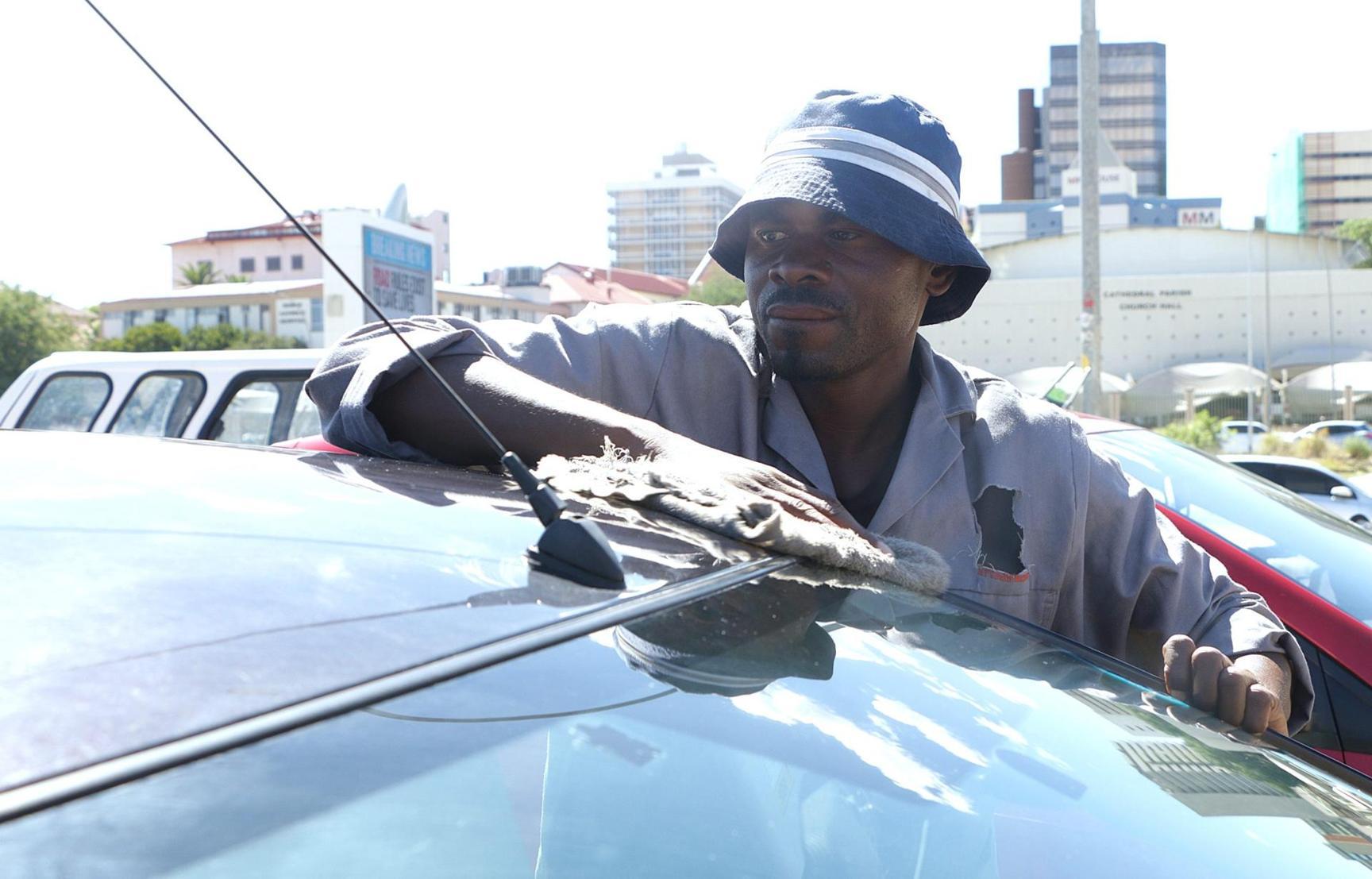
Africa-Press – Namibia. At a dusty open space near Wernhil Bridge in Windhoek, where taxis hoot and commuters move in a constant rush, a group of car washers quietly go about their work, scrubbing, rinsing and hoping the next vehicle will stop.
For Edward Nashinge, who has worked at the spot for over a decade, the routine has become both a lifeline and livelihood.
Commuting from and to Ombili on daily basis, he has built his source of income around washing cars to support his two children. He, however, said steadily over the years he has notice that business has gone down unlike decade before.
The drop in numbers has had a direct impact on his income, making it increasingly difficult to make ends meet. “Business is slow now. There are fewer cars and people are not spending like before,” Nashinge told New Era.
Despite the decline, he continues to show up every day, driven by responsibility rather than choice.
“With the economy the way it is, I have no option but to continue,” he added. But the challenges go beyond just fewer customers. Unlike formal car wash businesses, the group operates without a designated space, forcing them to cover their own costs just to keep working.
Water, a basic necessity for their trade, has to be purchased, along with soap and other cleaning materials. “Water has become expensive where we buy it, while soap price is as well soaring in the shops. Its hard, but what choice do we have left? From the money I make here, I have to spare a few coins to buy water, which is now N$ 5 per bucket, compared to the N$ 3.00 we would buy it back then,” he stressed.
Another man washing at the spot by the name Motibagn Lucas, said business has gone down and seeks a real formal job. “It’s not what we used to know, its hard these days, people aren’t washing their cars like they use to, I think its all because of the pressing economy. We are hoping the government would provide us with Jobs,” he added.
These operational costs further eat into already shrinking earnings, leaving little room for profit. The car washers say they are frequently chased away by City Police, which not only interrupts their work but also results in lost income for the day.
“Sometimes they come and chase us and then we lose money because we can’t work,” Lucas explained.
Like many others operating in informal spaces across Windhoek, he believes that access to proper documentation could ease some of these challenges. “We would like to have permits so we can work without being disturbed,” he says.
After two decades in the trade, he admits that the job is no longer as sustainable as it once was. Still, leaving is not an easy option. “This is what I know, and it is what feeds my children,” he added.
However, he hopes for something more, whether it is a more stable opportunity, or support that could improve their working conditions. “We just need better opportunities, maybe jobs or a better way to do this work,” he concluded.
For More News And Analysis About Namibia Follow Africa-Press