Africa-Press – Namibia. Staff Reporter
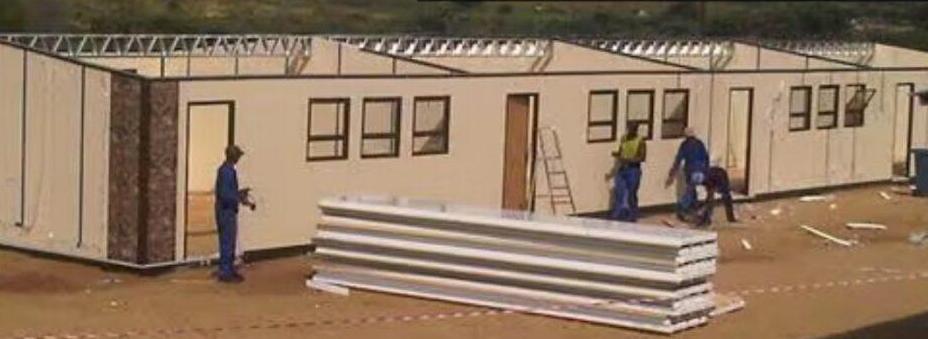
A TOTAL of 237 primary classrooms, 172 pre-primary classrooms, and 51 school ablution facilities, among other educational structures, were constructed in various parts of the country over the past year.
This was highlighted by President Netumbo Nandi-Ndaitwah during her recent State of the Nation Address, in which she emphasised that the government has prioritised the continued expansion and upgrading of educational infrastructure across the country over the past year.
She noted that, in addition to classrooms and ablution facilities, the government also established 40 school administrative offices, 39 science laboratories, 37 computer laboratories, 36 school libraries, as well as several community hostels and community learning development centres. She highlighted that these projects took place across various regions, with the goal of improving learning conditions for pupils nationwide.
The President further underscored the government’s efforts to support tertiary education, including the introduction of a fully subsidised 100% Tertiary Education Funding Model and the expansion of eligibility criteria for the Namibia Students Financial Assistance Fund (NSFAF).
“In higher education, the government implemented a fully subsidized 100% Tertiary Education Funding Model covering registration and tuition fees for eligible undergraduates at all public and private institutions of higher learning as well as technical vocational training centers. This reform was supported by an initial allocation of N$663 million. In the same vein, student support was broadened through the Namibia Students Financial Assistance Fund (NSFAF), which increased the household income limit for non-tuition aid to N$300,000, thereby allowing more middle-income families to qualify,” President Nandi-Ndaitwah said.
The President added that Technical and Vocational Education and Training (TVET) and Science, Technology, Engineering, and Mathematics (STEM) education have been a major focus during this period.
“Initiatives such as the 2026 Science, Technology, Engineering, Arts, and Mathematics (STEAM) Expo and strategic partnerships, including the GIZ Pro-TVET program, have sped up the integration of green and digital skills into vocational training curricula,” President Nandi-Ndaitwah said.
As a result, the president added, TVET enrolment rose to 13,512 trainees. She attributed this growth mainly to the completion and operationalisation of facilities such as the Nkurenkuru and Keetmanshoop Vocational Education and Training Centres.
“To better align education with industry needs, new programs have been introduced focusing on green hydrogen, renewable energy, and other emerging industries. To better equip students and graduates for the job market, the Work Integrated Learning Policy was launched in March 2026 to offer appropriate skills required in the global economy,” the president added.
For More News And Analysis About Namibia Follow Africa-Press