Africa-Press – Namibia. Namibia has called for sweeping reforms of the United Nations, warning that growing double standards in the application of international law threaten the credibility and effectiveness of the global body.
Other challenges include the persistent funding shortfalls and reforms that disadvantage developing countries.
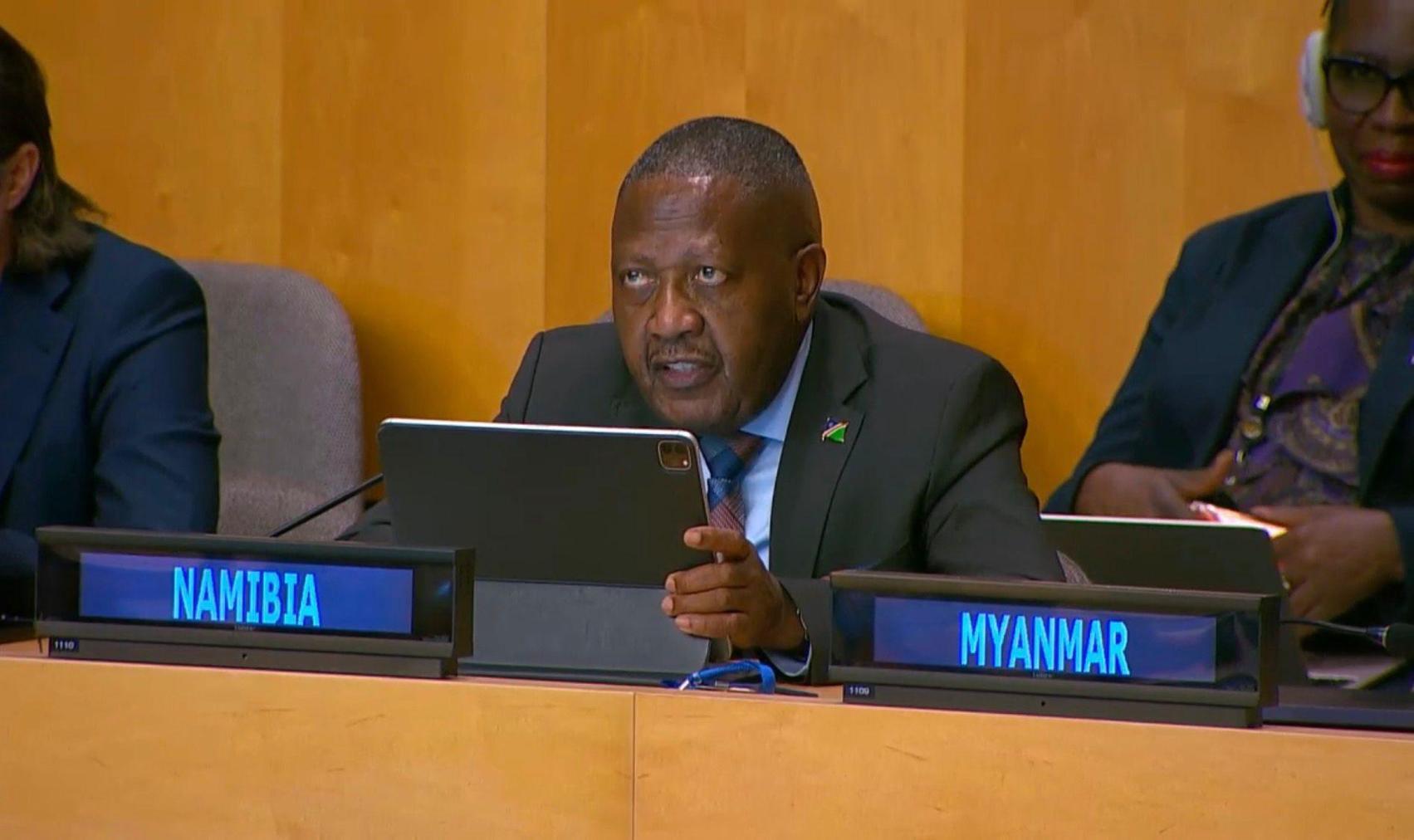
Namibia’s UN Permanent Representative Ambassador Penda Naanda delivered the message at three high-level UN meetings held at the United Nations Headquarters in New York between 26 May and 1 June 2026.
There, Naanda urged member states to strengthen multilateralism, protect development programmes and ensure that reforms serve the interests of all nations, particularly those in the Global South.
At a Security Council high-level debate on strengthening the UN-centred international system, Naanda said the organisation’s credibility was being eroded by selective implementation of international law and double standards in global affairs.
“Commitments are upheld when convenient and disregarded when politically expedient,” he said.
This inconsistency, Naanda said, has weakened trust among nations and undermined confidence in the international system.
The ambassador stressed that the UN Charter remains the cornerstone of global governance and should be applied equally to all countries, regardless of their political or economic influence.
Drawing on Namibia’s own history of colonialism, apartheid, and foreign occupation, Naanda said the country understands the importance of respecting sovereignty, self-determination and international law.
“We reiterate that disputes must be resolved through dialogue, negotiation and peaceful means, not through coercion or confrontation,” he said.
Namibia also used the debate to raise concerns about the continued suffering of Palestinians and other peoples living under occupation.
“The continued existence of such situations stands in direct contradiction to the Charter’s promise of freedom and equality for all nations and peoples,” he said.
UN80
Just two days later, Namibia shifted its attention to the UN80 Initiative, a reform programme aimed at making the organisation more efficient and responsive.
While welcoming efforts to reduce duplication and cut waste, Naanda cautioned against reforms that could weaken programmes supporting developing countries.
“Efficiency must not come at the expense of mandates that serve developing countries,” he said.
Namibia argued that support for Africa, least developed countries, landlocked developing countries and small island developing states must remain protected even as
the UN seeks to improve efficiency.
Namibia also advocated for a UN workforce that reflects equitable geographical representation and gender balance, warning against staff reductions that disproportionately affect junior employees.
ECOSOC
At the ECOSOC Operational Activities for Development Segment on Monday, Naanda focused on the UN’s role in supporting countries to achieve sustainable development.
He welcomed progress made in strengthening the UN Development System and improving coordination among agencies at the country level.
“The UN Development System has an important role to play in supporting countries to harness innovation in ways that respond to national circumstances and priorities,” he said.
The ambassador noted that many countries continue to face complex challenges ranging from poverty and climate change to economic uncertainty and humanitarian crises.
“The UN Development System has an important role to play in supporting countries to harness innovation in ways that respond to national circumstances and priorities.”
Namibia further argued that development, humanitarian assistance, and peacebuilding efforts should be better integrated where appropriate.
“Further efforts are required to address persistent funding challenges, reduce fragmentation, strengthen transparency and results-based management,” said the ambassador.
Naanda praised resident coordinators and UN country teams for promoting partnerships and improving cooperation at the national level. Resident coordinators serve as the senior-most UN representatives in countries and are responsible for coordinating the activities of different UN agencies.
Challenges
However, Namibia warned that persistent funding challenges continue to threaten development efforts across many countries. “Further efforts are required to address persistent funding challenges, reduce fragmentation, strengthen transparency and results-based management,” he stated.
The ambassador noted that many countries continue to face complex challenges ranging from poverty and climate change to economic uncertainty and humanitarian crises.
For More News And Analysis About Namibia Follow Africa-Press