Africa-Press – Namibia. MEMBERS of parliament (MPs) are concerned that schools are neglecting their duty to discipline pupils.
This comes after the Ministry of Education, Arts and Culture in a recent circular said both private and public schools should do away with school rules forcing pupils to have uniform hairstyles, and should stop suspending pupils due to their hairstyles.
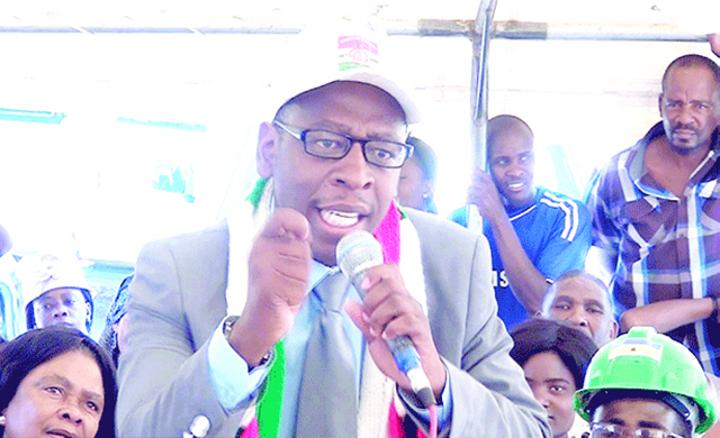
The initial concern was raised by National Unity Democratic Organisation (Nudo) parliamentarian Josef Kauandenge, who asked if this directive would give pupils the right to show up at school with any hairstyle.
“Are we saying children can now come to school with whatever hairstyle they want to? Where is the discipline?” Kauandenge asked the deputy minister of education, arts and culture, Faustina Caley, in the National Assembly last Wednesday.
Caley defended the circular, saying the decision was made after numerous complaints, especially from parents who disagreed with this rule, and the responsibility now lies with parents to assist schools with uniformity.
“All we need is to send our children to school looking decent,” she said. This was countered by Popular Democratic Movement chief whip Vipua Muharukua who said teachers should not forget their role as discipliners.
“The schools are abdicating their responsibility to instil discipline in children by saying parents should do it at home,” he said. Caley said teachers are trained to ensure pupils are better people once they leave school.
“When we bring the rules or circulars, schools have their own rules, and I do not think there is any school in this country that will bring rules, including the ministry, which will harm a child,” she said.
The Namibia National Students Organisation (Nanso) have in the past raised concerns over hairstyle regulations to create uniformity or to use as a form of discipline.
In 2020, Nanso wrote a letter to former acting education minister Martin Andjaba seeking clarity on increasing incidents of pupils being beaten for refusing to trim their hair. Nanso said there was no evidence that such hair policies would prevent disruption in learning environments as contended by critics.
The organisation said it believed it is more disruptive to pupils’ education to harass a child with a certain hairstyle and deny him or her access to the classroom until their hair is cut. DIRECTIVE
Sanet Steenkamp, the executive director of education, arts and culture, last week said the ministry has received a lot of complaints from the general public about pupils being denied access to education because of their appearance.
According to the Namibian Constitution, no person shall be discriminated against on the grounds of sex, race, colour and ethnic origin, religion, creed, or social or economic status.
“Forcing pupils, both boys and girls, to shave their heads in uniformity is a violation of their basic human rights as provided for in the Constitution,” she said.
Steenkamp said there is no proven scientific evidence that supports the idea that short and uniform hairstyles contribute to improved discipline within the school environment.
“The Ministry of Education, Arts and Culture supports internal school rules, however, these rules must not be discriminatory against pupils, or deny them access to education due to their appearance,” she said.
She said pupils’ appearance should be respectable and age appropriate. Steenkamp directed schools to nullify any rule that forces pupils to shave their heads or banishes pupils from school due to their hairstyles.
For More News And Analysis About Namibia Follow Africa-Press