Africa-Press – Namibia. WHEN Mandume Ya Ndemufayo took up arms to fight against Portuguese and British occupation forces he did not know that more than a hundred years after his death people would still be talking about his bravery, erecting monuments in his honour and naming streets after him.
The reigning king of Oukwanyama from 1911 to 1917, Mandume is recognized as a National Hero of both Namibia and Angola. He left an indelible mark not only for standing up against colonial occupation, but also for introducing important reforms to protect the environment — prohibiting the unnecessary cutting down of trees — and to defend widows, orphans and vulnerable children.
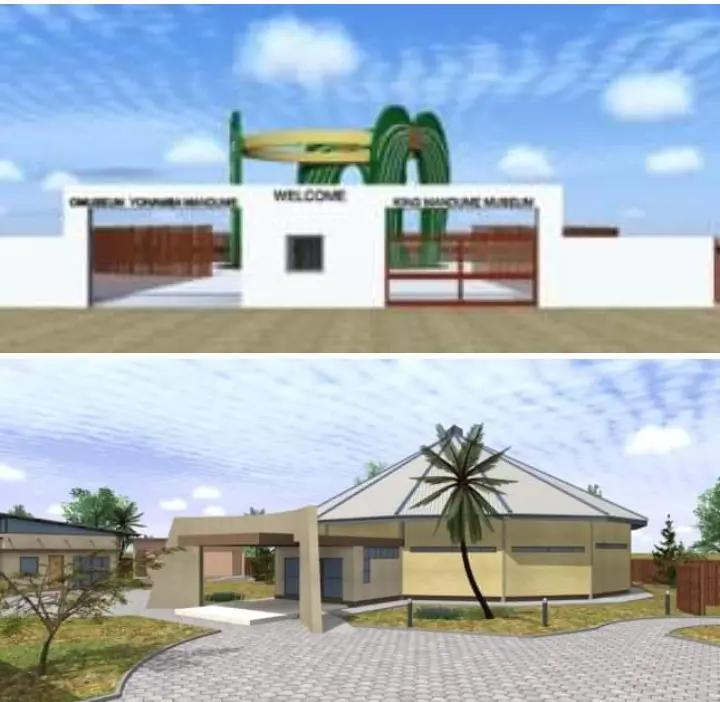
He also stopped the slave and cattle foraging raids to neighbouring tribes. One of the main streets in Windhoek is named after him. So is a university in Angola. Now a multimillion museum is being built at Omhedi in the Ohangwena Region under the auspices of the King Mandume Museum Trust.
The N$8.5 million project was launched nine years ago by the then president Hifikepunye Pohamba and Queen Martha Mwadinomho Kristian Nelumbu of the Oukwanyama Traditional Authority.
Progress was slow due to lack of funds and the delay in the finalisation of the registration of the Trust. A fundraising event for the benefit of the project is taking place at Omhedi Saturday afternoon.
Organizers hope to capitalize on the recent relaxation of Covid-19 prevention measures, including the increase of the number of people allowed to gather at one place from 500 to 1 000.
The acting administrative officer of the King Mandume Museum Trust, Tauno Shikomba, said that prominent leaders and business personalities are expected to attend, including the patron of the museum, former minister Erkki Nghimtina.
Shikonba noted that the number of attendees was initially limited to 500, but following recent relaxation, more people can now bless the event with their presence.
He said that the initial tasks have already been completed, including the fencing off of the area and the construction of an office and ablution facilities as well as stalls for security guards, but, generally, the N$8.5 million project is lagging behind.
The overall site plan of the project includes an administration block, ablution facilities, a house for a curator, a guardhouse, a handicraft workshop, a hall and the Museum proper. Mandume, who ascended to the throne at the age of 17 in 1911, died in combat against colonial forces in February 1917.
He personally participated in the historic battle of Omongwa (Mongua) where the Oukwanyama warriors attacked and besieged for three consecutive days — from 18 to 20 August 1915 — the encampment of the Portuguese expeditionary forces under general Antonio Pereira d’Eca.
For three days the Portuguese could neither receive reinforcements nor evacuate their dead and injured. Both sides suffered heavy losses but Mandume’s fighters failed to dislodge the Portuguese and withdrew back to their Ondjiva headquarters.
Mandume died in combat two years later at his new Oihole headquarters. The commemoration of his death will from now on take place annually at the King Mandume Museum at Omhedi.
For More News And Analysis About Namibia Follow Africa-Press