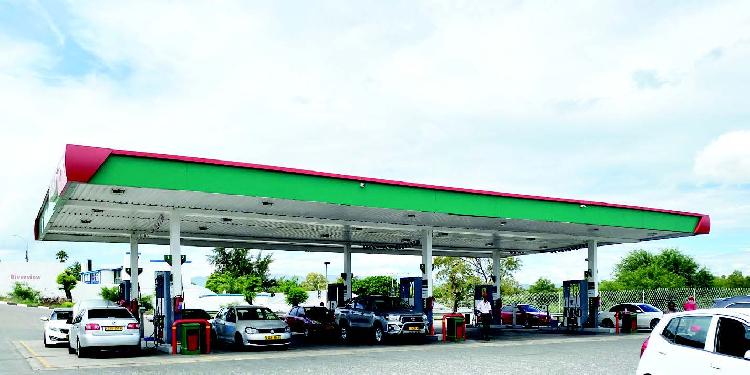
Africa-Press – Namibia. NAMIBIANS, already bent low by the current high cost of living will face new hell on 6 April, when petrol and diesel prices rise by N$1,95 and N$2,95, respectively. And economists agree that the ripple effects of the increases will be felt by all.
Walvis Bay pump prices, which are the cheapest in the country, will be N$19,10 per litre for unleaded petrol, while diesel prices will be N$20,23 per litre, effective on 6 April.
Deputy energy minister Kornelia Shilunga yesterday said the mines ministry has initiated a consultative process with the finance ministry and other state institutions that derive revenue from the levies and taxes imposed on the price of petroleum products.
“The aim is to explore the possibilities of reducing some of the levies and taxes to soften the burden on fuel consumers. The consultations are currently at a very advanced level and are expected to be finalised [this month],” Shilunga noted.
The government is hoping to institute temporary deductions on levies, looking at the merits and demerits of the reductions, if at all, she said. Shilunga reiterated that the government is also looking at plans, whether short or long-term, as economists study the trends to determine whether the country will be negatively impacted or if the situation is likely to improve.
“All these discussions are happening during the time where we are also looking at the developments of the current situation as it unfolds daily,” she added.
Mines and energy executive director Simeon Negumbo stressed that Namibians are now in a difficult time, and everybody is expected to tighten their belts. He said the government will try to see where it can derive savings to cushion consumers from the increases.
Economist in the mines ministry Abednego Ekandjo told The Namibian that using the National Oil Storage Facility as a way to cushion consumers from high fuel prices may expose the government to financial risks, because once filled up at current prices, prices may drop the next week.
“That fuel will need to be sold at a loss. The other strategies could be the option of introducing a 100% import mandate to give one company the mandate to import all the oil for the country, so that we capitalise on economies of scale.”
First National Bank group economist Ruusa Nandago said because fuel makes up a large part of a consumer’s spending, higher fuel prices would mean lower disposable incomes to spend on other goods and services.
She added given that fuel is an input in most industries, fuel price increases will certainly increase the cost of production and cost of operations for many retailers.
“Retailers may face increasing pressures to pass these on to the end consumers, as they may not have the capacity to absorb this increase,” she noted.
Nandago said global oil prices are expected to remain elevated above the USD100/barrel mark. The elevated prices will reflect in further fuel price increases over the course of the year, because Namibia is a net importer of oil, Nandago said.
“This, however, depends on the evolution of Russia’s invasion of Ukraine. Should the conflict be resolved sooner rather than later, it will result in lower global oil prices.”
Nandago said it is difficult for consumers to cushion themselves from fuel price increases particularly because of its effect on other goods and services. Consumers should reprioritise their personal budgets where possible by foregoing or reducing unnecessary expenditure on luxuries, she said.
PSG Namibia research analyst Shelly Louw said from the start of the global pandemic in January 2020 up until yesterday, there have been 12 fuel price increases. For 10 months during this period, fuel prices remained unchanged, while only five price reductions were announced.
“The largest decrease since January 2020 was in March of 2020, and the largest increase thus far was announced in March 2022, two years later,” Louw said.
Consumers should brace themselves for higher prices across the board and adjust their spending habits, she said. “The other concern for consumers are the expected rising interest rates and the impact on loan repayments.” Simonis Storm economist Theo Klein said the impact of the high level oil prices overshadowed the 6% strengthening of the rand during March.
He added that to an extent, businesses can reduce their profit margins to absorb some of the costs of rising input prices, to provide some relief to consumers. However, there is limited space in the economy or scope to do so.
“If the war in Ukraine will continue for a prolonged period of time, this will keep global oil prices elevated. We believe the risks to local fuel prices remains on the upside, so Namibians can expect local fuel prices to increase in the coming months.” Economics lecturer Omu Kakujaha-Matundu said the fuel price hikes will see food prices, the repo rate and transportation costs rising.
“What is the government going to do to ameliorate the impact on the economy? What is the government going to do to offer reprieve to low income or poor households who are going to be hard hit by these increases? Is the government going to go by the dictum ‘everyone for himself, God for all of us?’”
Kavango-East Farmers Union chairperson Adolf Muremi said the fuel price increase will hit farmers hard, as most live far from their farms. “This will affect us heavily.”
For More News And Analysis About Namibia Follow Africa-Press