Africa-Press – Namibia. THE MINISTRY of Gender Equality, Poverty Eradication and Social Welfare says the government has spent N$6,3 billion on social assistance in the 2020/21 financial year.
This was announced by the ministry’s director of policy, planning and research, Wilbard Nashandi, on Thursday at the launch of the Social Protection Policy of Namibia in Windhoek.
Nashandi said this government expenditure is based on social assistance and social insurance. “The old-age grant is the highest grant of all, and that amount is just in two years. That is the annual expenditure by the government on all these grants,” he said.
Nashandi said grants are in the form of cash transfers, social insurance, social care services, and community-based programmes. The old-age grant cost the government N$ 2,9 billion, which constituted a 4,6% proportion of the country’s gross domestic product.
This is followed by students’ financial assistance loans which cost the government N$1,2 billion in the 2020/2021 financial year. Nashandi said another expensive government grant is primary and secondary education subsidies, which were worth N$118,8 million.
Yet another grant is children’s grants, which cost the government N$1,4 billion. Relief (N$101 million) and disability grants (N$545 million), the school-feeding programme (N$75,3 million) and the food bank (N$69,6 million) were also included.
In addition, Nashandi said social housing grants cost the government N$57 million. “Marginalised community grants cost the government N$45,1 million, while funeral benefits cost N$45 million. This is what the government spent in the past two years,” he said.
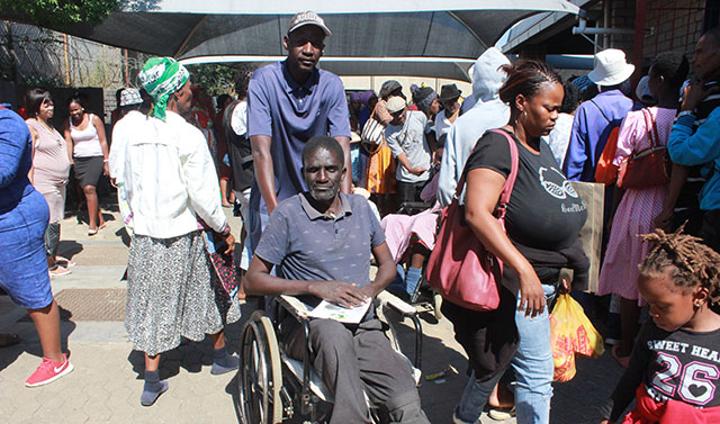
The Namibian in September last year reported that about 773 463 Namibians receive social grants. Nashandi said other grants include maternity, sick-leave and death-benefit funds, the employee-compensation fund and the Motor Vehicle Accident Fund.
‘FALLING THROUGH THE CRACKS’
Speaking at the same event, the minister of gender equality, poverty eradication and social welfare, Doreen Sioka, said the policy aims to provide comprehensive social protection to all citizens.
“The government will continually strive to improve the living standards and livelihoods of the citizenry by implementing people-centred policies to address the triple challenges of high levels of inequality, unemployment, and poverty,” she said.
Sioka said there are still people who are falling through the cracks of the social protection system, who are not covered by various programmes due to fragmentation and a lack of a digitalised and integrated management information system.
The minister said all children, young people, women, unemployed people, marginalised communities, and people with disabilities are given a fair chance and equal opportunities to reach their full potential.
“Our senior citizens and war veterans are guaranteed dignity and support in their old age,” Sioka said. She said the policy would increase the disability grant amount for children under the age of 18 to N$1 300, beginning in 2023/24.
The government also wants to introduce a conditional basic income grant for Namibians between the ages of 18 and 59 faced with socio-economic challenges, Sioka said.
Furthermore, the ministry has converted the food-bank programme into a cash grant effective from 1 April. Sioka said the ministry would consider the matter of assisting the caregivers of people with disabilities.
“I have seen a lot of caregivers and what they go through every day. We will discuss this,” Sioka said.
Executive director of gender equality, poverty eradication and social welfare Esther Lusepani said the policy has undergone many consultations before being implemented.
For More News And Analysis About Namibia Follow Africa-Press