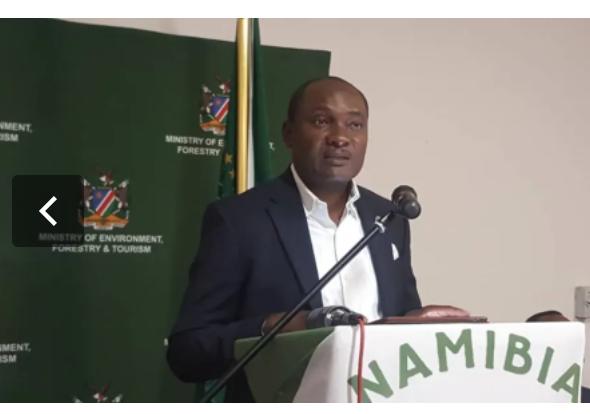
Africa-Press – Namibia. THE Ministry of Environment, Forestry and Tourism wants to see all Communal Conservancies and Community Forests being financially sustainable.
According to Minister Pohamba Shifeta, there are currently 86 registered Communal Conservancies, 43 Community Forests and two Community Associations in Namibia.
Shifeta stated that the Ministry is aware that Communal Conservancies and Community Forests rely on hunting, tourism and other natural resources for their income which is severely affected by Covid-19.
“Our economy has been subjected to unprecedented pressure, particularly in the tourism sector, as flight travel was suspended and lockdowns were imposed in many countries throughout the world, Namibia included,” he said.
Shifeta stated that the ministry immediately recognized the threat this pandemic posed to their flagship Community-Based Natural Resource Management (CBNRM) program, which relies heavily on photography, hospitality and conservation hunting to support the operations and livelihoods of the people
“The Covid-19 pandemic heavily impacted rural livelihoods and we estimated that over 3 000 jobs in our sector were at risk. For these reasons, the MEFT and its partners responded by establishing the Conservation Relief, Recovery and Resilience Facility (CRRRF) to invite partners from all sectors within Namibia and internationally for assistance,” he said.
He emphasised that CBNRM is a unique program that provides rural communities with incentives to manage their natural resources and further unlock enormous tourism development opportunities and benefits from the use of wildlife.
Shifeta stated that their emphasis should be to continuously enhance good governance, distribute benefits, fight poaching, reduce human-wildlife conflict, and make the CBNRM program sustainable.
“Human-wildlife conflict management interventions remain high on the agenda and program of the Ministry of Environment, Forestry and Tourism,” he said.
He indicated that they will continue to put mitigation and preventative measures for human and wildlife conflict in place in all affected areas of the country.
Shifeta said they will continue to manage conflict in a way that recognizes the rights and development needs of local communities, recognizes the need to promote biodiversity conservation, promotes self-reliance and ensures that decision-making is quick, efficient and based on the best available information.
Oshana governor Elia Irimari said conservancies are great developmental tools and opportunities that provide communities with incentives to manage and conserve their areas and natural resources to unlock enormous tourism development opportunities and benefits from the use of wildlife.
Irimari stated that thousands of rural communities benefit from the conservancies through employment creation, cash income, development projects and social projects.
He added that conservancies also bring about the electrification of rural areas, the upgrading of road networks and other development needs in their communities.
For More News And Analysis About Namibia Follow Africa-Press