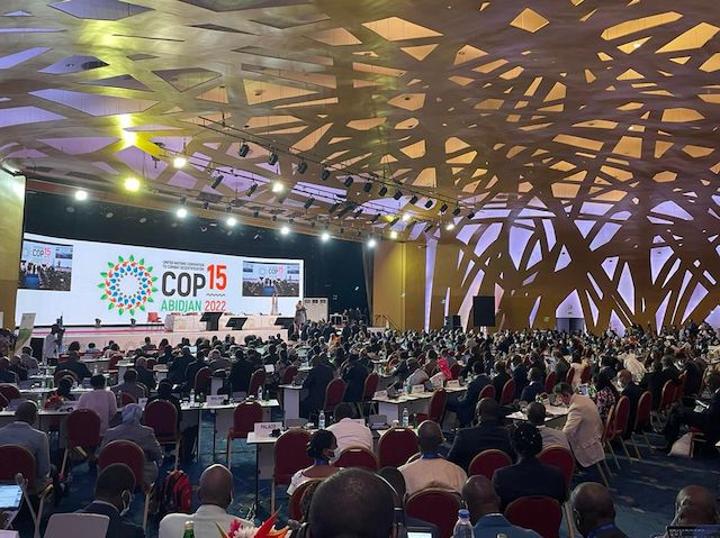
Africa-Press – Namibia. THE 15th Conference of the Parties to the United Nations Convention to Combat Desertification (UNCCD) held in Abidjan, Ivory Coast, recently concluded with a united global pledge to boost drought resilience and invest in land restoration for future prosperity.
Speaking at the closing ceremony, the prime minister of Ivory Coast, Patrick Achi, said each generation faces the thorny question of how to meet the production needs of societies without destroying forests and lands.
The conference, which took place from 9 to 20 May, drew nearly 7 000 participants, including heads of state, ministers, delegates from UNCCD’s 196 parties and the European Union, as well as members of the private sector, civil society, women, youth leaders and the media.
At the press conference on the major outcomes of the conference, the president of COP15, Alain-Richard Donwahi, said it was the first time the Ivory Coast hosted a conference of parties for one of the three Rio conventions, and he emphasised his country’s continued commitment to keeping land issues high on the international agenda.
UNCCD executive secretary Ibrahim Thiaw said the meeting was held against the backdrop of multiple global challenges, including the worst drought in 40 years in Eastern Africa, as well as food and economic crises fuelled by the ongoing Covid-19 pandemic and conflicts. Parties to the convention have sent a united call about the importance of healthy and productive land for securing future prosperity for all.
Some of the new commitments made at the conference were to accelerate the restoration of one billion hectares of degraded land by 2030, boosting drought resilience, establishing an intergovernmental working group on drought, addressing forced migration and displacement driven by desertification.
The conference also committed to address land degradation by creating social and economic opportunities that increase rural resilience, improve women’s involvement in land management as important enablers for effective land restoration and address sand and dust storms and other escalating disaster risks.
The convention issued three declarations, namely: the Abidjan Call (issued by the head of states and governments), to boost long-term environmental sustainability across major value chains in the Ivory Coast while protecting and restoring forests and lands and improving communities’ resilience to climate change, which will require the mobilisation of US$1,5 billion over the next five years.
The other two were the Abidjan Declaration on achieving gender equality for successful land restoration and the COP 15 land, life and legacy declaration, which responds to the findings of the UNCCD’s flagship report, Global Land Outlook 2 – a five-year study within 21 partner organisations.
Released on 27 April, the study found that up to 40% of all ice-free land is already degraded, with dire consequences for the climate, biodiversity and livelihoods.
LAND OUTLOOK
There were also reports launched at the conference, which include ‘Drought in numbers 2022’, a compendium of drought-related facts and figures, indicating a 29%, a rise in droughts since 2000 and a projection that three-quarters of the world’s population will be affected by drought by 2050 unless urgent action is taken.
The special southern Africa thematic report, released as part of the Global Land Outlook series, warned of rising pressure on land and land-based resources, exacerbated by insecure land tenure systems, pervasive poverty, and low rural literacy levels, raising risks for the most vulnerable among Africa’s population.
‘The sand and dust storms compendium’ is an information and guidance on assessing and addressing the economic, environmental and health risks of these increasing phenomena.
UNCCD is the global vision and voice for land. Signed by 197 parties, UNCCD is a multilateral commitment to mitigating today’s impacts of land degradation and advancing tomorrow’s land stewardship to provide food, water, shelter and economic opportunities to all people in an equitable and inclusive manner.
For More News And Analysis About Namibia Follow Africa-Press