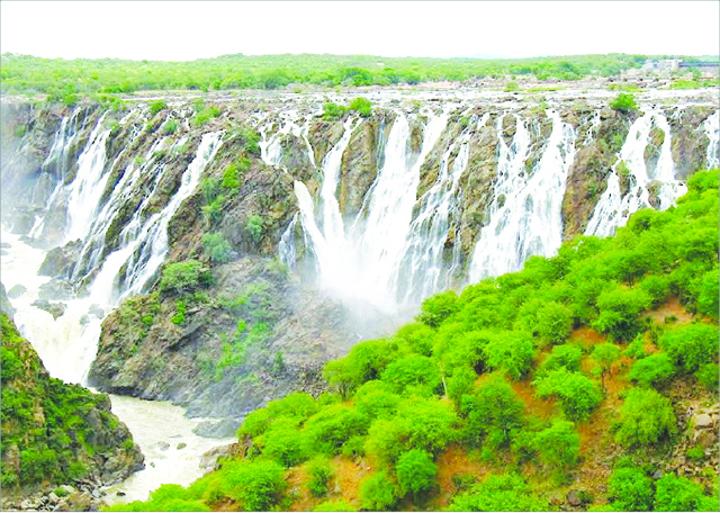
Africa-Press – Namibia. THE search is on by the Uukolokadhi-Ruacana conservancy to find a private tourism enterprise to launch an ecotourism accommodation facility and campsite at the breathtaking Ruacana Falls.
The coordinator of the conservancy, Martha Kamati, says the Ruacana Falls offer great views and recreational activities.
“As we speak, there is a proposal for the establishment of a campsite,” she says.
Kamati says other plans include the establishment of the Slate Plate Harvesting Mine Plant at Otjovanatje village, as the conservancy continues to look for projects to increase opportunities for income generation.
The Uukolonkadhi-Ruacana conservancy was registered in September 2005, and covers 2 993km2.
It is a savanna area, with springbok and kudu as key wildlife species.
Kamati says although the conservancy has wild animals, it is faced with the challenge that the core wildlife area is not fenced off, which has led to poaching.
“Our wild animals are just wandering around, and this is not safe for them at all,” she says.
Kamati says the Covid-19 pandemic has negatively affected the conservancy’s efforts to generate more income.
She says they have planned to allocate some wild animals (which the Ministry of Environment, Forestry and Tourism gave them) to trophy hunting, but this has not materialised as hunters could not travel to Namibia due to Covid-19 lockdowns.
“We had a client from Germany, and he was not able to enter the country. So, basically this means the two-year quota has been in vain,” she says.
The conservancy has, however, seen some achievements over the years since its establishment.
This includes securing the Ruacana Falls to be part of the conservancy.
The conservancy also managed to compensate members who were victims of human-wildlife conflict in 2020 and 2021 through the ministry’s human-wildlife conflict self-relience scheme.
Kamati says the conservancy held an annual general meeting on 25 September last year, and a diesel borehole has also been drilled at Otjoriute, while through the assistance of the Environmental Investment Fund (EIF) of Namibia, the conservancy has managed to rehabilitate 24 boreholes.
The conservancy is managed by 12 committees and has five game guards, one fish monitor and one coordinator.
For More News And Analysis About Namibia Follow Africa-Press