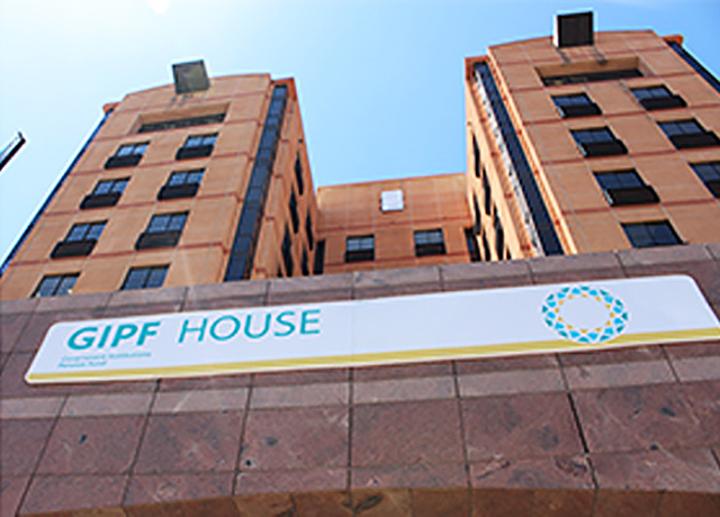
Africa-Press – Namibia. AT least 52,5% of the Government Institutions Pension Fund’s active members will retire in the next 10 years.
This should, however, not raise concerns as the fund is still in a sound financial position to reasonably pay out pension benefits, said the fund’s actuaries, Humanity Employee Benefits Co (Pty) Ltd, who on Friday released valuations as at 31 March 2021.
Not only is the biggest member group in their 50s, but the average age of active members is 41 years and six months.
This is followed by pensioners, who are owed some N$32 billion.
The fund owes nmmbers between the age of 50 and 60 N$33 billion.
Valuators have cautioned the fund’s management to ensure it invests wisely as its inflows from contributions are currently N$3 billion less than outflows in terms of pension and other payouts.
This difference is now being compensated for by investment income, which, at 31 March last year stood at N$27 billion.
According to Humanity Employee Benefits, there is a need to ensure investments are aligned to members’ ages.
“We recommend that the trustees align the investment strategy to allow for the generation of liquid income that can be used to cover the contributions shortfall,” the actuaries said in their valuation report.
Humanity Employee Benefits said the fund was valued at N$135,8 billion, owes its members N$118,9 billion, and has a surplus of N$16,5 billion.
This surplus means the fund is adequately funded at 113,8% – an increase when compared to the funding level of 100,7% when the last valuation was done in 2018.
This type of report, which measures whether a pension fund is able to pay out its members as soon as they retire, is prepared every three years, and is important as it largely informs how the fund should invest, Penda Ithindi, one of the board’s trustees responsible for investments, says.
“The fund can therefore maximise its long-term return, subject to minimising the risk of not being able to meet its liabilities, by investing 35% to 45% of its assets in interest-bearing securities and cash, with the balance of 55% to 65% invested in growth assets,” the actuaries say.
This could to an extent fix the payout dilemma, which the fund’s chief executive officer, David Nuyoma, says is one of the key things he thinks of when he wakes up in the morning.
At 31 March 2021, the report shows the fund had 104 501 members – 49 717 males and 54 784 females.
The average annual pensionable salary paid by these active members stood at N$181 592, compared to N$156 144 in 2018, when the last actuarial report was released.
Civil servants who contributed to the fund during the 2021 financial year earned a pensionable salary of N$18,8 billion.
In 2018, the GIPF had 106 335 members, but this number reduced within the three years as many members were just about to retire.
With the government not recruiting, the risk exists that inflows in terms of contributions to the fund would continue to decline, but Nuyoma said the fund has factored this in its investment strategy.
“We cannot tell the government to recruit more. We believe those in the position to decide have made their assessments,” he said when asked whether he would implore the state to lift the recruitment freeze.
The GIPF’s assets are mostly in N$58,8 billion worth of shares, fixed interest of N$35 billion, N$18 billion in private equity, and N$7,3 billion in properties.
A cash balance of N$5,5 billion was held at the end of March last year.
The fund’s private equity and property holdings have seen a significant increase from 6,4% as at the previous valuation date, to approximately 19,1% as at the valuation date.
Private equity and property investment are significantly less liquid than bond, cash and listed equity instruments, which the actuaries said was not good for the maturing number of currently active members.
“We recommend the trustees ensure the investment policy framework includes effective measures to monitor, review and address the liquidity and valuation risks that arise from holding such assets, including due diligence on the valuation and pricing methodology of the managers of such assets,” the actuaries said.
They also cautioned the fund to ensure that interest-bearing assets, “which are slightly underweight when considering the risk to the fund of failing to meet the fund’s guaranteed liabilities”, should be reviewed.
The fund’s head of strategy and projects, Desmond Nikanor, said most of the recommendations made in the report have been adopted in the new investment strategy, which will be rolled out soon.
The full actuarial report is available from the GIPF.
For More News And Analysis About Namibia Follow Africa-Press