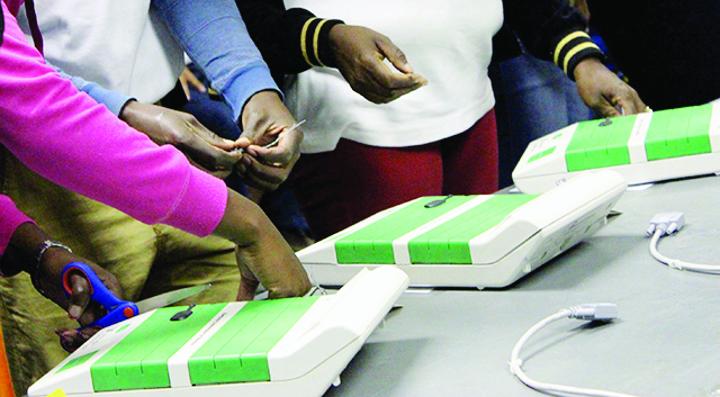
Africa-Press – Namibia. OPPOSITION parties are blaming the government for the lost investment on the electronic voting machines (EVMs), which cost taxpayers N$60 million.
The Electoral Commission of Namibia (ECN) earlier this week announced that it will be using paper ballots for the next five years.
The EVMs will not be used until the ECN has found a product that meets all the needs in terms of a voter-verifiable paper audit trail (VVPAT).
The ECN spent over N$60 million in acquiring EVMs from India, which were used in the 2014 and 2019 presidential and National Assembly elections, as well as in the 2015 regional council and local authority elections.
National Unity Democratic Organisation (Nudo) parliamentarian Joseph Kauandenge has labelled the EVMs a short-sighted investment by the Namibian government.
“First, they failed to do due diligence to determine the viability and reliability of the said machines. They disregarded the fact that India’s own court declared the use of EVMs a non-starter in a democratic dispensation without a paper trail,” he said.
Kauandenge said it is regrettable that the country spent over N$60 million on machines that are now collecting dust.
“The Swapo-led government must take full blame for this wastage of our public resources,” he stressed.
He also blamed ECN and the Cabinet for this.
“I can’t remember now under which ministry it falls, but at the time it fell under the Office of the Prime Minister, and by extension the whole Cabinet should be held accountable,” he said.
Rally for Democracy and Progress member of parliament Mike Kavekotora said the ECN could have complied with the provisions of the law instead of letting the N$60 million go to waste.
“To them, it was mission accomplished. Swapo won and we have honourable members of EVMs in parliament. One can reasonably argue that parliamentary seats were allocated to the detriment of the nation,” he said.
The MP said the political party representatives who visited the manufacturer in India are not technical people who understood the technology.
“Besides, the problem arose when some provisions of the law were intentionally left out and not implemented,” he added.
According to Kavekotora, some provisions of the electoral law were intentionally ignored to leave room for rigging.
“That investment only served Swapo but did nothing to ensure free, fair and transparent elections in Namibia,” he added.
Landless People’s Movement spokesperson Eneas Emvula said the usage of EVMs in any election across the globe did not build a credible reputation.
In 2020, the Supreme Court ruled that former minister of urban and rural development Charles Namoloh’s decision that the parts of the Electoral Act requiring a VVPAT for EVMs would not come into operation with the rest of the act was in conflict with the Constitution and invalid.
This came after Panduleni Itula and four other candidates filed a legal challenge over the use of EVMs without a VVPAT during that year’s presidential election in 2019.
“Yet, the Swapo government managed to get away with a voting process that has now dragged the country into severe governance and financial ruin and tainted Namibia’s international perception,” Emvula said.
The spokesperson said the country needs to regain its own confidence in the sovereignty it listed over the past decades.
The deputy chief whip of the Popular Democratic Movement said political parties are not happy with EVMs.
“In the absence of a paper trail we don’t see the need for it. We were promised paper trails when it was introduced but up till now nothing came from it,” he said.
The United Democratic Front’s Dudu Murorua suggested the banning of EVMs from all elections.
“How do you sell something which you yourself do not use?” he questioned.
Indian courts banned the use of EVMs for their elections.
For More News And Analysis About Namibia Follow Africa-Press