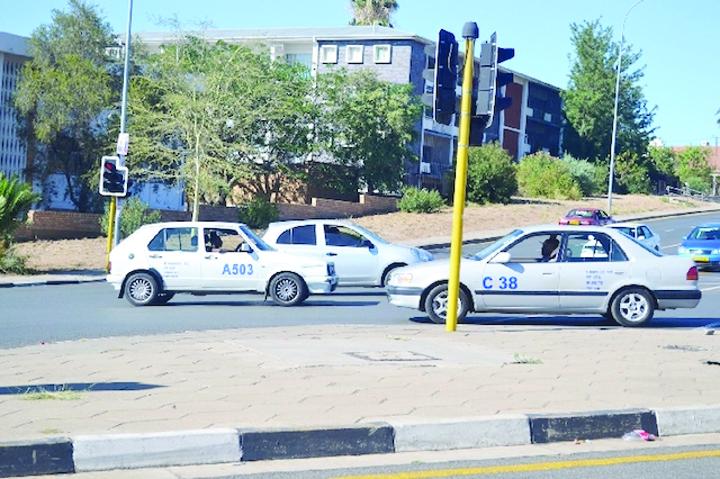
Africa-Press – Namibia. TAXIS and seven-seater operators are threatening to go on a nationwide strike on 26 July for an indefinite period, depending on the government’s response to their request for a 40% increase in taxi fares.
National Transport and Taxi Union (NTTU) president Werner Januarie yesterday said they are struggling to make a living under the current economic conditions and amid fuel price increases.
He said there have been up to seven fuel price hikes since the last taxi fare increase.
“The cost of fuel right now is N$22 per litre, while the taxi fare is only N$13, meaning we have to run a taxi at a loss.
“No business person wants to run at a loss unless it is a charity,” he said.
Januarie said besides the cost of fuel, the cost of maintaining their vehicles has also increased.
On average, he says, they change their car tyres every second month.
The NTTU has been mobilising public transport operators countrywide to go on an indefinite strike should the Ministry of Works and Transport’s response not favour them.
Januarie said should they go on strike, no taxi would ferry any passengers, including schoolchildren.
Chairperson of the Seven-Seater Association Benedict Ndjitaviua said they would park their vehicles until an increase is approved.
“The fuel price increase has a huge impact on our operations. We are no more doing business, and if they have to increase the price of fuel again, I don’t know what we would do,” he said.
Ndjitaviua said they currently only work towards maintaining their vehicles and paying drivers’ salaries.
“There were times we were saying let’s just park the cars, because it is a loss. If it was the opposite where I was fuelling less and making a profit, we would not be complaining,” he said.
Ndjitaviua said operators currently earn about N$700 per trip, of which N$200 goes to the driver, and the remaining N$500 towards vehicle maintenance.
He said apart from fuel, their biggest expense is tyres, which cost a minimum of N$800 per tyre, and are replaced monthly.
Efforts to get comment from the transport ministry proved futile.
The Ministry of Mines and Energy on Monday indicated the government is exploring all avenues in an attempt to reduce fuel prices.
DRAMA, DRAMA, DRAMA
The public transport drama comes amid fuel retailers urging the Ministry of Mines and Energy, among others, to implement an interim rescue profit margin as they continue to scrape together a pittance from the petrol and diesel they sell to the public.
They have also urged the ministry to impose regulatory measures against banks, which are said to be encroaching on the fuel retail sector through card commissions, bank costs and fuel incentives.
A widely shared WhatsApp message on Tuesday said: “People, just be prepared. There is a big possibility that there would be no petrol sold for the whole of next week, because there is a dispute between service station owners and the Namibian government.
“They say petrol is coming in at the port of Walvis Bay at about N$8 a litre, but service stations are not getting any profit and want to know where all the money is going.”
For More News And Analysis About Namibia Follow Africa-Press