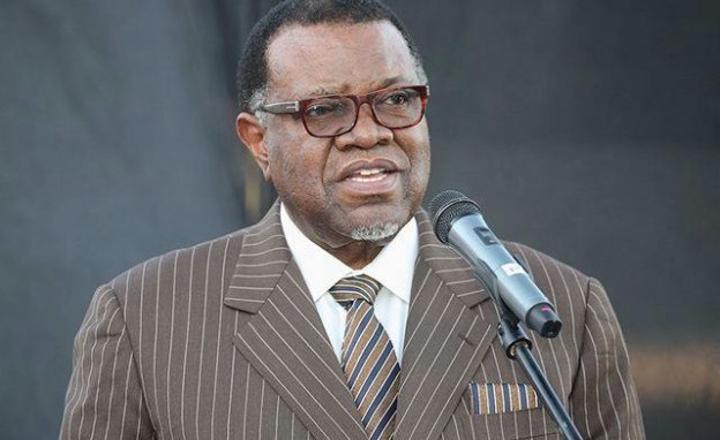
Africa-Press – Namibia. PRESIDENT Hage Geingob has said the classification of affected communities in the genocide negotiations is divisive.
During the negotiations of the Nama-Herero genocide of 1904 to 1908, the Damara and San communities wanted to be included in the deal, stating that they suffered as a result of the extermination order.
The /Khomanin Traditional Authority was one of the groups that called on the government to be included in the negotiations.
Geingob was speaking to the /Khomanin Traditional Authority yesterday during a courtesy visit at State House.
“So to say only them is divisive. I never liked it. But this is what happened where only two tribes were ordered,” president said.
The president said after debates and fights, the affected communities pointed out that the extermination order only mentioned two tribes, the Namas and Ovahereros.
“When this issue of genocide started, I was involved and president [Hifikepunye] Pohamba had just left. My approach is to have Namibians who were killed by Germany and then we could maybe say in particular [Namas and Hereros],” he explained.
Geingob said they later on gave in because they were getting into serious matters.
“The extermination order was ordered to kill Namas and Hereros. That is why we told them to use that as a basis of negotiation,” he said.
To further argue his case, the president pointed out that a number of other Namibians died as a result of different wars.
“I gave examples and I was hated by some people when I said if you look at Cassinga, we are talking about 95% Aawambo people but we say just Namibians,” he added.
Geingob told the /Khomanin Traditional Authority that they were quiet when the Nama and Ovaherero communities wanted a distinction from Namibians.
“You were not saying we were also killed. That is the problem. Therefore, the decision was made to say they were killed. This Namutoni fort, would there be a fort without war,” he stressed.
“If we believe in nation building, we would say just Namibians were killed. But areas were identified, so if you live in those areas you are covered,” he further said.
The traditional authority agreed when Geingob said this.
The draft declaration does not include individual compensation for those affected by the genocide but development projects for areas.
Vice president Nangolo Mbumba agreed with Geingob, saying they want everybody to be included in the agreement.
“We want to discuss this with all traditional communities [for them] to have a say. But whatever development will come out of that will cover all seven southern regions,” he said.
Mbumba welcomed any advice from the traditional authority.
In the draft joint declaration between the German and Namibian governments, the Damara and San communities were recognised to have been massacred, therefore, they will also benefit from the financial aid worth more than €1,1 billion (N$18 billion) over 30 years.
Currently, the agreement or declaration of apology submitted to the National Assembly contains an offer of more than N$18 million as compensation for the atrocities perpetrated against the Nama and Ovaherero communities.
This would be paid to Namibia in various forms, including in support of developmental projects over a period of 30 years.
The Nama Genocide Technical Committee (NGTC) has issued a warning to communities affected by the 1904 to 1908 Nama-Ovaherero genocide against what they term “government divisive forces”.
The chairperson of the NGTC, Ida Hoffmann, said the Namibian government has initiated divisive forces among those who have been spearheading the genocide discourse since independence.
For More News And Analysis About Namibia Follow Africa-Press