Africa-Press – Namibia. JB TJIVIKUA
WHEN THE UKRAINE war broke out, German chancellor Olaf Scholz announced a ‘zeitenwende’, a paradigm shift to underscore that Germany is willing to take drastic action to support Ukraine.
Germany, the economic powerhouse of Europe, is now engrossed in a war of attrition on its eastern border, and unable to adequately deal with the Namibian genocide issue.
Also, because of the war, the German economy is at risk of shrinking nearly 2% this year. Germany may also face a recession if the war escalates and spurs a further energy ban.
The embargo on Russian coal, oil and gas would lead to restrictions on power providers and industry, while further sanctions will have catastrophic consequences for the global energy market.
The risks are high that Russia’s escalation of its attack on Ukraine will trigger aggravated sanctions and counter-sanctions, with a complete ban on energy set to have the biggest impact on growth.
This holds wider consequences for energy prices, market structures and global food security.
‘DITHERING’ COMMITMENT
Thus, Germany could start dithering over its genocide negotiations with Namibia, as the reparations may no longer be on top of its priority list in the face of dwindling resources.
Fact is, no one knows how long this war will last. In the meantime, Germany has adopted a strategy to follow its partners’ lead and, rather hesitantly, does what its allies are doing, such as imposing an economic embargo on Russia, while providing financial aid and arms to Ukraine.
Meanwhile, chancellor Scholz is now desperately seeking allies for his country’s economic strategy elsewhere.
In order to boost Germany’s source of energy and its economy, it hopes to tap Senegal’s gas reserves in the future.
All this could diminish the immediate prospects of Namibia/German genocide negotiations. It is no surprise that the German chancellor overflew the Namibian capital on his trip to South Africa from West Africa.
For the past three decades, Germany has tried to make amends for atrocities committed against the Ovaherero and the Nama people more than 118 years ago.
After almost 15 years of negotiations, Germany halfheartedly acknowledged its role in the genocide and agreed to pay compensation in the form of aid to the country and the descendants of victims of the Ovaherero and the Nama people.
The aid, to be spent over 30 years, is not nearly enough.
The trauma is still raw and the loss is impossible to quantify. The course of history has permanently disadvantaged the affected groups.
Further, the situation is complicated by the fact that many descendants of German settlers live in Namibia and own large swathes of arable land, as do descendants of the victims of genocide trying to fork out a living on overcrowded ‘communal reserves’.
IMPEDIMENTS
In a dramatic turn of events, groups representing the descendants of genocide victims and the Namibian government apparently do not see eye to eye after an abortive ‘Joint Declaration’ between Germany and Namibia on the reparations.
It is therefore imperative that a comprehensive dialogue should be found – for the sake of the country and for posterity – to lay to rest the first genocide of the 20th century.
The perpetual corrosive division among the Ovaherero and Nama people is heartbreaking and unfortunately is repeating itself.
This has brought about some degree of despair, hopelessness and insecurity in their communities.
In 1890, when the Germans conspired to conquer the Maharero Royal House, and, therefore, the Ovaherero nation, they dragged a camel between the homestead and the holy fire.
In Ohorongo cultural tradition, this is a bad omen. Maharero subsequently died and his nation was doomed. We seem to be facing a similar demise.
We need to take substantive lessons from history.
The differences we are experiencing among ourselves in dealing with reparations is not an isolated issue nor unique.
After World War 2, many Israelis and Jewish Holocaust survivors were opposed to the idea of reparations from Germany. They deemed it blood money and felt it would whitewash Germany’s crimes.
Prime minister David ben Gurion, who was fighting for reparations, nonetheless forged on and was eventually victorious.
With the crisis in Ukraine, Namibia could miss an opportunity.
A common position with representatives of the affected parties on implementing the National Assembly resolution of 26 October 2006 needs to be found without delay.
This can as well be done through the concept of ‘Best Alternative To A Negotiated Agreement’ (Batna). This is the most advantageous alternative course of action a negotiating party can take if negotiations fail.
The government needs to be strategic on national issues of this magnitude.
We call on the president to be a catalyst in finding an amicable, fair and just solution soonest.
It is apt to quote star cricketer Virat Koli: “Self-belief and hard work will always earn you success”. Otherwise, posterity will judge us harshly.
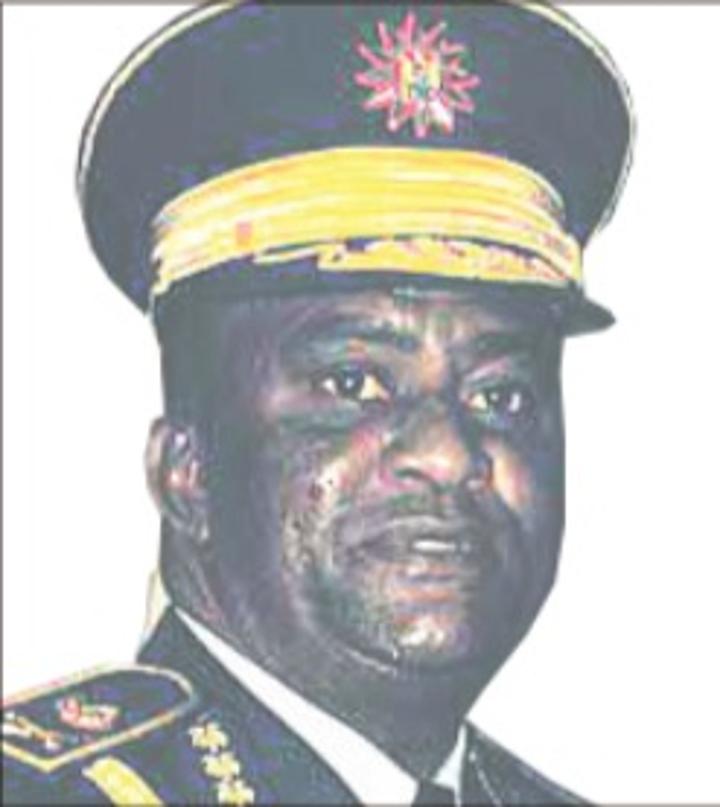
– Major general JB Tjivikua served in the Namibian Police for 27 years
For More News And Analysis About Namibia Follow Africa-Press