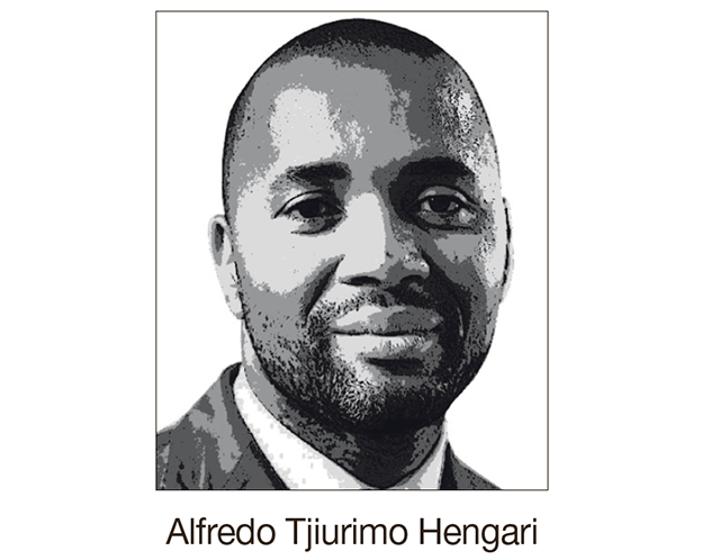
Africa-Press – Namibia. ALFREDO TJIURIMO HENGARI
IN MAY 2017, PRESIDENT Hage Geingob, on the occasion of World Press Freedom Day, warned that the press should not become a lapdog but should remain a watchdog as the Fourth Estate.
ALFREDO TJIURIMO HENGARI
IN MAY 2017, PRESIDENT Hage Geingob, on the occasion of World Press Freedom Day, warned that the press should not become a lapdog but should remain a watchdog as the Fourth Estate.
The president has also repeated on several occasions that irrespective of untruths, and bias by omission, for as long as he remained president of the republic, freedom of the press would be guaranteed and no journalist would be made a martyr.
Even if some in the press do not play their part in nation building, the press has an important role to play in building a nation and in creating an informed, peaceful and prosperous Namibia.
They would be failing if they were to take on the role of lapdogs, which they often do, inciting Namibians and seeking to create a wedge between the sovereigns and those elected by the sovereigns, of whom the president is the primus inter pares (first among equals).
Certain English dailies have been in campaign mode, publishing misleading articles that cite bits from statements made by the president on various platforms.
Two issues, namely the effects of colonialism and the informal settlements, have enjoyed press headlines with the clear objective of creating a certain impression of the president allegedly blaming colonialism for the challenges facing the nation.
Regrettably, certain newspapers frame these issues lightly and unreflectively in terms of their impact on public policy and the transformation agenda president Geingob has pursued since 2015.
In light of the fact that these issues are framed in terms that are purely sensational, not objective and with seeming intent to harm and misinform the Namibian public, with phony politically motivated ‘SMSes’ selectively published to reinforce the bias of the newspapers, the Presidency finds it necessary to provide clarity.
HISTORIC FACTS
There are facts that cannot be contested or erased in the history of what is today Namibia.
In 1886, following the Berlin Conference, our territory was annexed as a colony of Imperial Germany.
It is safe to assume that some reporters don’t know the fact that among all the colonies, German colonialism in Namibia was the most brutal and its impact on livelihoods have been the most atrocious, with the first genocide of the 20th century and similar massacres committed against Namibians.
Many people of the territory were displaced from their land, robbed, enslaved, and women raped and chased into desert lands with limited potential for continuity of their subsistence farming.
Following the brutality of Imperial Germany, the territory of South West Africa was placed under the South African regime in 1915, which unleashed another chapter of violence through its policy of apartheid.
It deepened inequalities and created ethnic bantustans through the ghastly Odendaal Commission of 1964, of which the perverse effects of ownership remain visible upto today.
No editorials or headlines are dedicated to these perversities of the past and how they undermine nation building.
There is no headline or cries of a scandal when a German family sells tracts of stolen land in Windhoek for N$300 million.
Regrettably, the dehumanising effects of apartheid and separate development are still evident in such transactions.
Yet, blacks have been signed up as apologists and afro-pessimists, made to behave as if Namibia didn’t experience the longest period of brutal occupation in the form of colonialism.
When we consider the fact that our territory was barbarically colonised in 1886 and only became independent in 1990, a basic count arrives at more than a century of colonial domination of the black majority by racists who had no regard for the lives of the black majority.
To be precise, the black majority went through 104 years of racial inequalities.
‘BEASTS WITH NAMES’
Economists and economic historians, including, Thomas Piketty, have strenuously traced the history of inequality to patterns of property ownership dating back centuries.
Yet, The Namibian and Namibian Sun report spuriously and falsely that explaining inequality and poverty within the context of a century of colonialism is “blaming colonialism” for our ills.
In fact, the president with the experience and education that he brings to the table is not in a position to frame a problem in such simplistic terms.
Yes, our housing challenges and our spatial and economic inequalities are structural.
And yes, they are a consequence of beasts with names, 104 years of brutal German Imperialism and South African apartheid occupation.
Since white people have perpetrated the inequalities, certain newspapers have taken the editorial decisions to never call our inequalities by their right name as racial inequalities.
President Geingob has always spoken candidly about the challenges facing Namibians after 32 years of independence.
The president has also spoken candidly about the fact that Namibia today is different from the underdeveloped and racially segregated country we inherited as a black majority in 1990.
Under South African apartheid occupation and German colonialism, Namibia was preserved and designed for a white minority to thrive through ownership of land and access to resources and all the opportunities that lead to a decent life.
The black majority was subservient to this small white, but brutal minority.
It is therefore logical and entirely honest for the president to say – yes, we have worked hard over the past 32 years to redress the wrongs of 104 years of brutal German and South African apartheid occupation.
However, we will not be able to redress those pervasive wrongs in 32 years. It is an honest assessment because to say the contrary would be a lie.
NATIONAL PRIORITIES AND TANGIBLE STEPS
The Geingob Presidency has prioritised poverty eradication and housing provision since 2015, when the president declared in his inaugural speech that poverty eradication would be a key priority of the government.
Also, following the landmark second Land Conference of 2018, president Geingob elevated the upgrading of informal settlements to a higher government priority by declaring that they constituted a humanitarian disaster.
Through a collaborative approach involving all stakeholders, the government is currently strengthening the environment for housing delivery.
The revised national housing policy and the Implementation Action Plan provide a more responsive framework to deliver affordable housing.
Furthermore, through the Ministry of Urban and Rural Development – in conjunction with the Khomas Regional Council, the National Housing Enterprise, and the Windhoek municipality – a pilot project, the Informal Settlement Upgrading Pilot Project, has been set in motion.
It is aimed at constructing 1 200 incremental housing units in two phases (600 houses in phase 1 and 600 houses in phase 2) over a period of two years.
These are tangible steps in a long journey of housing provision and need support from all stakeholders.
In light of the above, the president is well within his mandate of speaking honestly to Namibians about challenges in public policy implementation when he says people settling illegally in urban centres are undermining the government’s housing provision efforts.
It is correct for the president to say that individuals should not settle on unserviced land, only to claim later that there is no sanitation and other amenities.
It is a call that should be supported by newspaper reports, editorials and all of us, especially in a country that emphasises processes, systems and institutions.
‘CORE TRUTHS’
The Presidency welcomes constructive and honest conversations from journalists about public policy challenges and the role of the president in resolving issues facing Namibians.
President Geingob has never shied away from engaging Namibians honestly and dealing with their problems with urgency.
Unfortunately, some newspapers have abandoned core principles of journalism by posing bias and opinions as news.
The credibility of news has been eroded because the newsmen and women in certain newsrooms have replaced news for citizens with rumours and have reneged on core tenets of journalism as a discipline of verification.
* Alfredo Tjiurimo Hengari, presidential spokesperson
The president has also repeated on several occasions that irrespective of untruths, and bias by omission, for as long as he remained president of the republic, freedom of the press would be guaranteed and no journalist would be made a martyr.
Even if some in the press do not play their part in nation building, the press has an important role to play in building a nation and in creating an informed, peaceful and prosperous Namibia.
They would be failing if they were to take on the role of lapdogs, which they often do, inciting Namibians and seeking to create a wedge between the sovereigns and those elected by the sovereigns, of whom the president is the primus inter pares (first among equals).
Certain English dailies have been in campaign mode, publishing misleading articles that cite bits from statements made by the president on various platforms.
Two issues, namely the effects of colonialism and the informal settlements, have enjoyed press headlines with the clear objective of creating a certain impression of the president allegedly blaming colonialism for the challenges facing the nation.
Regrettably, certain newspapers frame these issues lightly and unreflectively in terms of their impact on public policy and the transformation agenda president Geingob has pursued since 2015.
In light of the fact that these issues are framed in terms that are purely sensational, not objective and with seeming intent to harm and misinform the Namibian public, with phony politically motivated ‘SMSes’ selectively published to reinforce the bias of the newspapers, the Presidency finds it necessary to provide clarity.
HISTORIC FACTS
There are facts that cannot be contested or erased in the history of what is today Namibia.
In 1886, following the Berlin Conference, our territory was annexed as a colony of Imperial Germany.
It is safe to assume that some reporters don’t know the fact that among all the colonies, German colonialism in Namibia was the most brutal and its impact on livelihoods have been the most atrocious, with the first genocide of the 20th century and similar massacres committed against Namibians.
Many people of the territory were displaced from their land, robbed, enslaved, and women raped and chased into desert lands with limited potential for continuity of their subsistence farming.
Following the brutality of Imperial Germany, the territory of South West Africa was placed under the South African regime in 1915, which unleashed another chapter of violence through its policy of apartheid.
It deepened inequalities and created ethnic bantustans through the ghastly Odendaal Commission of 1964, of which the perverse effects of ownership remain visible upto today.
No editorials or headlines are dedicated to these perversities of the past and how they undermine nation building.
There is no headline or cries of a scandal when a German family sells tracts of stolen land in Windhoek for N$300 million.
Regrettably, the dehumanising effects of apartheid and separate development are still evident in such transactions.
Yet, blacks have been signed up as apologists and afro-pessimists, made to behave as if Namibia didn’t experience the longest period of brutal occupation in the form of colonialism.
When we consider the fact that our territory was barbarically colonised in 1886 and only became independent in 1990, a basic count arrives at more than a century of colonial domination of the black majority by racists who had no regard for the lives of the black majority.
To be precise, the black majority went through 104 years of racial inequalities.
‘BEASTS WITH NAMES’
Economists and economic historians, including, Thomas Piketty, have strenuously traced the history of inequality to patterns of property ownership dating back centuries.
Yet, The Namibian and Namibian Sun report spuriously and falsely that explaining inequality and poverty within the context of a century of colonialism is “blaming colonialism” for our ills.
In fact, the president with the experience and education that he brings to the table is not in a position to frame a problem in such simplistic terms.
Yes, our housing challenges and our spatial and economic inequalities are structural.
And yes, they are a consequence of beasts with names, 104 years of brutal German Imperialism and South African apartheid occupation.
Since white people have perpetrated the inequalities, certain newspapers have taken the editorial decisions to never call our inequalities by their right name as racial inequalities.
President Geingob has always spoken candidly about the challenges facing Namibians after 32 years of independence.
The president has also spoken candidly about the fact that Namibia today is different from the underdeveloped and racially segregated country we inherited as a black majority in 1990.
Under South African apartheid occupation and German colonialism, Namibia was preserved and designed for a white minority to thrive through ownership of land and access to resources and all the opportunities that lead to a decent life.
The black majority was subservient to this small white, but brutal minority.
It is therefore logical and entirely honest for the president to say – yes, we have worked hard over the past 32 years to redress the wrongs of 104 years of brutal German and South African apartheid occupation.
However, we will not be able to redress those pervasive wrongs in 32 years. It is an honest assessment because to say the contrary would be a lie.
NATIONAL PRIORITIES AND TANGIBLE STEPS
The Geingob Presidency has prioritised poverty eradication and housing provision since 2015, when the president declared in his inaugural speech that poverty eradication would be a key priority of the government.
Also, following the landmark second Land Conference of 2018, president Geingob elevated the upgrading of informal settlements to a higher government priority by declaring that they constituted a humanitarian disaster.
Through a collaborative approach involving all stakeholders, the government is currently strengthening the environment for housing delivery.
The revised national housing policy and the Implementation Action Plan provide a more responsive framework to deliver affordable housing.
Furthermore, through the Ministry of Urban and Rural Development – in conjunction with the Khomas Regional Council, the National Housing Enterprise, and the Windhoek municipality – a pilot project, the Informal Settlement Upgrading Pilot Project, has been set in motion.
It is aimed at constructing 1 200 incremental housing units in two phases (600 houses in phase 1 and 600 houses in phase 2) over a period of two years.
These are tangible steps in a long journey of housing provision and need support from all stakeholders.
In light of the above, the president is well within his mandate of speaking honestly to Namibians about challenges in public policy implementation when he says people settling illegally in urban centres are undermining the government’s housing provision efforts.
It is correct for the president to say that individuals should not settle on unserviced land, only to claim later that there is no sanitation and other amenities.
It is a call that should be supported by newspaper reports, editorials and all of us, especially in a country that emphasises processes, systems and institutions.
‘CORE TRUTHS’
The Presidency welcomes constructive and honest conversations from journalists about public policy challenges and the role of the president in resolving issues facing Namibians.
President Geingob has never shied away from engaging Namibians honestly and dealing with their problems with urgency.
Unfortunately, some newspapers have abandoned core principles of journalism by posing bias and opinions as news.
The credibility of news has been eroded because the newsmen and women in certain newsrooms have replaced news for citizens with rumours and have reneged on core tenets of journalism as a discipline of verification.
* Alfredo Tjiurimo Hengari, presidential spokesperson
For More News And Analysis About Namibia Follow Africa-Press