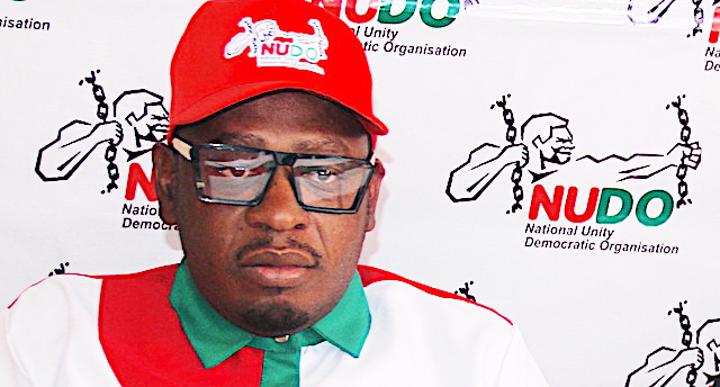
Africa-Press – Namibia. National Unity Democratic Organisation (Nudo) secretary general Joseph Kauandenge, has criticised the Ministry of Mines and Energy’s ongoing uranium exploration activities in the Aminuis constituency within the Omaheke region.
National Unity Democratic Organisation (Nudo) secretary general Joseph Kauandenge, has criticised the Ministry of Mines and Energy’s ongoing uranium exploration activities in the Aminuis constituency within the Omaheke region.
Kauandenge said there was no prior broad consultation from the regional, traditional and constituency leadership with regards to the mining activities of the highly toxic mineral.
“The fact that they have to drill [bore holes]for prospective exploration presents a higher risk of contamination, which cannot be confined, and its impact to the ecosystem could be massive.
“The uranium mining technique is not controllable, it is inherently unsafe and is not an environmentally friendly method of mining,” he said in the National Assembly on Tuesday.
The drilling of boreholes by Headspring Investments’ Project Wings Exploration at the Okahiokavapa and Omurambauondjombo villages in the region is [done by] a subsidiary of Uranium One, which is a subsidiary of Rosatom, a Russian state-owned uranium exploration, mining and processing company.
Kauandenge said 12 000 inhabitants of the Aminuis constituency, who directly depend on the only permanent water resource in the area of Stampriet, are at risk of underground contamination, which could have catastrophic consequences.
Kauandenge said [people in] the constituency still live in poverty, despite mines in the area.
“Similar mining operations are evident in areas of Khorixas, but the level of poverty remains at an all-time high as moreover, most of the job prospects at such mines are taken by people from other regions, ignoring the inhabitants,” he said.
“The area has been hit hard by prevailing drought over the past years, and lost a significant number of livestock, 400 head of cattle,to be exact, succumbed to famine.”
Kauandenge questioned contingency resettlement plans in light of the post Covid-19 effects and economic hardships, noting that the 12 000 inhabitants of the Aminuis constituency’s lives depend on the groundwater, which is at risk of contamination due to uranium exploration.
“The drilling process boreholes into a uranium deposit injects corrosive chemicals to dissolve the uranium within the ore zone, ” he said.
The most common acidic chemical used is sulphuric acid and oxidized agents including oxygen or hydrogen peroxide, while alkaline agents include ammonia or sodium-bicarbonate or carbon dioxide, which pose a significant environmental risk and pollution burden on current and future users of groundwater, which should be protected at all costs, he said.
The Uranium One Group intends to invest between N$5 billion and N$8,5 billion (between US$300 million and US$500 million) in the Namibian economy. The investment will be made over a period of time, dating back three years, when the company first started drilling and exploring for uranium at farm Tripoli, close to Leonardville in the Omaheke region. The lifespan of the project is meant to be 25. However, Uranium One has had its exclusive prospecting licence (EPL) for 10 years.
According to the company’s project manager, Kirill Egorov, Uranium One has invested about N$855 million (US$50 million) in the domestic economy to date.
In August, Aminuis constituency councillor Peter Kazongominja joined his community in denouncing the prospects of uranium mining in the area.
Kazongominja said while the project has been going on for almost two years, there have been no significant talks between his office and the exploration entities.
“We were just told they have permission from the government to explore, and that all they wanted was permission for water use,” he said.
“What we understand is that they have an exploration licence, and will only be granted a mining licence by the ministry once they have found the minerals.”
Kazongominja said his office has been inundated with complaints by members of the community over exploration activities.
In August, agriculture minister Calle Schlettwein rallied behind the aggrieved communities, citing the prevalence of prospecting for uranium at Aminuis.
“I believe any mining in an aquifer is potentially harmful. In this case, they want to mine and discharge the effluent (sulphuric acid) into the Stampriet artesian aquifer on which the whole central-eastern farming community is depending.
“I think it would be irresponsible to allow the potential pollution and destruction of such a valuable water resource in an otherwise dry country,” he said in a previous interview.
At the time, Schlettwein said the same company had its water licence revoked because it did not comply with the regulations.
“The regulations required the company to report back and conduct inspections, which it did not do.”
Last year, Schlettwein said the government should equally hasten to stop potentially harmful exploration and other mining activities currently taking place in areas which have been declared water reserves.
Kauandenge said there was no prior broad consultation from the regional, traditional and constituency leadership with regards to the mining activities of the highly toxic mineral.
“The fact that they have to drill [bore holes]for prospective exploration presents a higher risk of contamination, which cannot be confined, and its impact to the ecosystem could be massive.
“The uranium mining technique is not controllable, it is inherently unsafe and is not an environmentally friendly method of mining,” he said in the National Assembly on Tuesday.
The drilling of boreholes by Headspring Investments’ Project Wings Exploration at the Okahiokavapa and Omurambauondjombo villages in the region is [done by] a subsidiary of Uranium One, which is a subsidiary of Rosatom, a Russian state-owned uranium exploration, mining and processing company.
Kauandenge said 12 000 inhabitants of the Aminuis constituency, who directly depend on the only permanent water resource in the area of Stampriet, are at risk of underground contamination, which could have catastrophic consequences.
Kauandenge said [people in] the constituency still live in poverty, despite mines in the area.
“Similar mining operations are evident in areas of Khorixas, but the level of poverty remains at an all-time high as moreover, most of the job prospects at such mines are taken by people from other regions, ignoring the inhabitants,” he said.
“The area has been hit hard by prevailing drought over the past years, and lost a significant number of livestock, 400 head of cattle,to be exact, succumbed to famine.”
Kauandenge questioned contingency resettlement plans in light of the post Covid-19 effects and economic hardships, noting that the 12 000 inhabitants of the Aminuis constituency’s lives depend on the groundwater, which is at risk of contamination due to uranium exploration.
“The drilling process boreholes into a uranium deposit injects corrosive chemicals to dissolve the uranium within the ore zone, ” he said.
The most common acidic chemical used is sulphuric acid and oxidized agents including oxygen or hydrogen peroxide, while alkaline agents include ammonia or sodium-bicarbonate or carbon dioxide, which pose a significant environmental risk and pollution burden on current and future users of groundwater, which should be protected at all costs, he said.
The Uranium One Group intends to invest between N$5 billion and N$8,5 billion (between US$300 million and US$500 million) in the Namibian economy. The investment will be made over a period of time, dating back three years, when the company first started drilling and exploring for uranium at farm Tripoli, close to Leonardville in the Omaheke region. The lifespan of the project is meant to be 25. However, Uranium One has had its exclusive prospecting licence (EPL) for 10 years.
According to the company’s project manager, Kirill Egorov, Uranium One has invested about N$855 million (US$50 million) in the domestic economy to date.
In August, Aminuis constituency councillor Peter Kazongominja joined his community in denouncing the prospects of uranium mining in the area.
Kazongominja said while the project has been going on for almost two years, there have been no significant talks between his office and the exploration entities.
“We were just told they have permission from the government to explore, and that all they wanted was permission for water use,” he said.
“What we understand is that they have an exploration licence, and will only be granted a mining licence by the ministry once they have found the minerals.”
Kazongominja said his office has been inundated with complaints by members of the community over exploration activities.
In August, agriculture minister Calle Schlettwein rallied behind the aggrieved communities, citing the prevalence of prospecting for uranium at Aminuis.
“I believe any mining in an aquifer is potentially harmful. In this case, they want to mine and discharge the effluent (sulphuric acid) into the Stampriet artesian aquifer on which the whole central-eastern farming community is depending.
“I think it would be irresponsible to allow the potential pollution and destruction of such a valuable water resource in an otherwise dry country,” he said in a previous interview.
At the time, Schlettwein said the same company had its water licence revoked because it did not comply with the regulations.
“The regulations required the company to report back and conduct inspections, which it did not do.”
Last year, Schlettwein said the government should equally hasten to stop potentially harmful exploration and other mining activities currently taking place in areas which have been declared water reserves.
For More News And Analysis About Namibia Follow Africa-Press