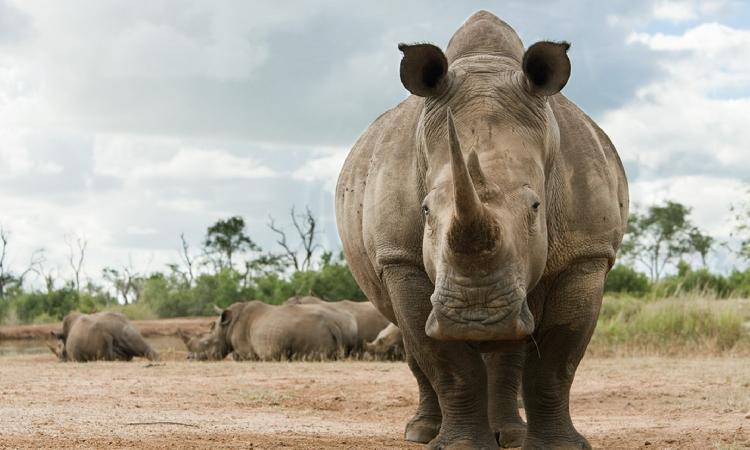
Africa-Press – Namibia. THE International Council for Game and Wildlife Conservation (CIC) says it supports Namibia’s proposal to the Convention on International Trade on Endangered Species (Cites) to transfer its population of white rhinoceros from Appendix I to Appendix II.
THE International Council for Game and Wildlife Conservation (CIC) says it supports Namibia’s proposal to the Convention on International Trade on Endangered Species (Cites) to transfer its population of white rhinoceros from Appendix I to Appendix II.
This would be for the exclusive purpose of allowing international trade in live animals for in-situ conservation and trophy hunting.
The spokesperson of the Budapest-based CIC, Shukho Lee, says the CIC has noted Namibia’s Strategy in Wildlife Protection and Law Enforcement of 2021 to 2025 and the 1st Operation Blue Rhino Special Report of 2021, which resulted in a shift from reactive to proactive law enforcement to combat wildlife crimes, and also the associated reduction in rhino losses reported by Namibia and Botswana.
“The CIC supports this proposal strongly as it presents a well-documented and great conservation success. Namibia now has the second-largest white rhino population in the world, one that has more than doubled in the last 10 years,” Lee says.
He says the CIC also provided its stance on this at the stakeholder consultation meeting for the European Union (EU) on the upcoming 19th Conference of the Parties to Cites on 15 July.
The CIC is an independent, international, non-governmental advisory organisation that advocated wildlife conservation through the principles of sustainable use.
In its proposal, Namibia argues that hunting for trophies is recognised as a valuable management tool which provides much-needed revenue for rhino conservation, while trade in live animals is similarly important for income generation in support of protection measures.
“Transferring the population to Appendix II would enable Namibia to export live animals and hunting trophies to more countries, and would increase revenue through sustainable use,” the CIC says.
According to the proposal, Namibia holds the second-largest white rhino population in the world after South Africa, and its population in 2021 were 1 237, based on aerial surveys of known individuals derived from dehorning operations, and annual information submitted by private owners to the Ministry of Environment, Forestry and Tourism.
“The white rhino population in Namibia has grown from the initial introduction of 16 animals in 1975 to the current national population of 1 237.
“The growth rate in the population from 2002 to 2021 was 6,7%, including imports from South Africa,” the council says.
Namibia says the rationale behind its proposal is that the white rhino population is secure and does not meet the criteria for inclusion in Appendix I, and the proposed transfer to Appendix II would not threaten the survival of the species in Namibia as the necessary enforcement measures are in place and have shown to be relatively successful in curbing illegal killing and illegal trade.
This would help Namibian owners and managers to effectively and pre-emptively manage populations, which is particularly important in small, protected areas and privately owned populations, and revenue generated from rhino sales would go directly back into rhino conservation and anti-poaching programmes, as well as equipment, law enforcement, education, community initiatives, infrastructure and habitat management.
This would be for the exclusive purpose of allowing international trade in live animals for in-situ conservation and trophy hunting.
The spokesperson of the Budapest-based CIC, Shukho Lee, says the CIC has noted Namibia’s Strategy in Wildlife Protection and Law Enforcement of 2021 to 2025 and the 1st Operation Blue Rhino Special Report of 2021, which resulted in a shift from reactive to proactive law enforcement to combat wildlife crimes, and also the associated reduction in rhino losses reported by Namibia and Botswana.
“The CIC supports this proposal strongly as it presents a well-documented and great conservation success. Namibia now has the second-largest white rhino population in the world, one that has more than doubled in the last 10 years,” Lee says.
He says the CIC also provided its stance on this at the stakeholder consultation meeting for the European Union (EU) on the upcoming 19th Conference of the Parties to Cites on 15 July.
The CIC is an independent, international, non-governmental advisory organisation that advocated wildlife conservation through the principles of sustainable use.
In its proposal, Namibia argues that hunting for trophies is recognised as a valuable management tool which provides much-needed revenue for rhino conservation, while trade in live animals is similarly important for income generation in support of protection measures.
“Transferring the population to Appendix II would enable Namibia to export live animals and hunting trophies to more countries, and would increase revenue through sustainable use,” the CIC says.
According to the proposal, Namibia holds the second-largest white rhino population in the world after South Africa, and its population in 2021 were 1 237, based on aerial surveys of known individuals derived from dehorning operations, and annual information submitted by private owners to the Ministry of Environment, Forestry and Tourism.
“The white rhino population in Namibia has grown from the initial introduction of 16 animals in 1975 to the current national population of 1 237.
“The growth rate in the population from 2002 to 2021 was 6,7%, including imports from South Africa,” the council says.
Namibia says the rationale behind its proposal is that the white rhino population is secure and does not meet the criteria for inclusion in Appendix I, and the proposed transfer to Appendix II would not threaten the survival of the species in Namibia as the necessary enforcement measures are in place and have shown to be relatively successful in curbing illegal killing and illegal trade.
This would help Namibian owners and managers to effectively and pre-emptively manage populations, which is particularly important in small, protected areas and privately owned populations, and revenue generated from rhino sales would go directly back into rhino conservation and anti-poaching programmes, as well as equipment, law enforcement, education, community initiatives, infrastructure and habitat management.
For More News And Analysis About Namibia Follow Africa-Press