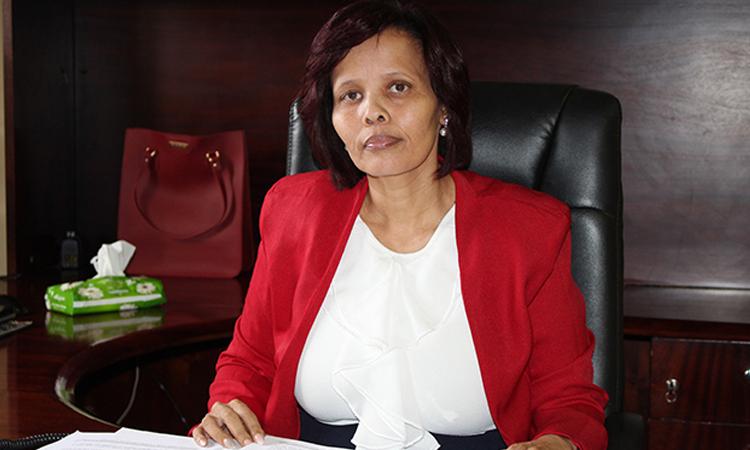
Africa-Press – Namibia. THE governor of the //Kharas region, Aletha Frederick, says the region has long awaited the signing of the African Continental Free Trade Area (AfCFTA) agreement, ratification and implementation process.
THE governor of the //Kharas region, Aletha Frederick, says the region has long awaited the signing of the African Continental Free Trade Area (AfCFTA) agreement, ratification and implementation process.
She made the remarks in a speech read on her behalf by Keetmanshoop Rural councillor Gerrit Witbooi at the Namibia Trade Forum workshop held on Wednesday with the assistance of the United Nations Development Program to create awareness about the free trade area, policy reforms and access to new markets for business people.
“We, as leaders, are in full support of this trade agreement as it will reduce tariff payments at border posts for upcoming small and medium enterprises. Therefore, I am pleased and applaud the government of Namibia for interacting for such an agreement,” said Frederick.
//Kharas region is home to four border posts, namely Noordoewer, Ariaamsvlei, Klein-Mannase and Mata-Mata, that facilitate the movement of goods, services and people involved in this trade.
The implementation process requires a review of existing trade policies to allow for intra-African trade through progressive elimination of tariffs and non-tariff barriers, enhanced efficiency of customs procedures, trade facilitation and transit.
The AfCFTA agreement covers trade in industrial and agricultural, goods and services, investment, intellectual property rights and competition policy. Investment, intellectual property rights and competition policy are expected to be negotiated in the second phase.
Based on the United Nations country report, Namibia’s exports would to increase between US$640 million and US$664 million with the implementation of the AfCFTA.
“Significant gains are to be expected in all main sectors, with strong potential to promote industrialisation in sectors including textiles, clothing, leather, milk and dairy products, wood and paper, metals, chemicals, vehicle and transport, electronics and other machinery,” said the report.
Over 85% of the gains in Namibia’s exports to the rest of Africa would be in industrial products, about 10% in agriculture and food and less than 5% in energy and mining, while the country’s exports would go beyond the Southern Africa Customs Union markets to countries such as Cameroon, Kenya, Rwanda, Senegal, Tunisia and Zimbabwe, says the report.
Therefore, the Namibia Trade Forum is hosting countrywide visits to raise awareness on the country’s trade policy and market access potential linked to AfCFTA, with the support of the United Nations Development Program.
UNDP financial specialist Sophia Nambahu said the AfCFTA holds potential for Namibians to access larger markets for their export goods, improved opportunities for employment and thereby improved living standards.
Nambahu said UNDP, as a development partner, partnered with Namibia to assist with the implementation of the trade agreement by finalising the trade in goods, trade in services policies and the national AfCFTA implementation strategy.
“UNDP is a developmental partner. Therefore, everything we can do to support the growth of the country, the economy and creation of jobs we will partner with Namibia. We want to support the new agreement because once implemented can bring employment and improve the livelihoods of every Namibian,” said Nambahu.
She said during the Covid-19 pandemic, the informal sector proved to be the mainstay income generator and employment retainer that catered for women and youth-led businesses, and the AfFCFTA strongly supports the formalisation of the informal market into small and medium enterprises (SMEs).
“About 80% of the businesses on the African continent are SMEs. Moreover, informal businesses are a potential pipeline for formalisation as SMEs, lessening fragmentation in the sector and generating economies of scale,” said the financial specialist.
She made the remarks in a speech read on her behalf by Keetmanshoop Rural councillor Gerrit Witbooi at the Namibia Trade Forum workshop held on Wednesday with the assistance of the United Nations Development Program to create awareness about the free trade area, policy reforms and access to new markets for business people.
“We, as leaders, are in full support of this trade agreement as it will reduce tariff payments at border posts for upcoming small and medium enterprises. Therefore, I am pleased and applaud the government of Namibia for interacting for such an agreement,” said Frederick.
//Kharas region is home to four border posts, namely Noordoewer, Ariaamsvlei, Klein-Mannase and Mata-Mata, that facilitate the movement of goods, services and people involved in this trade.
The implementation process requires a review of existing trade policies to allow for intra-African trade through progressive elimination of tariffs and non-tariff barriers, enhanced efficiency of customs procedures, trade facilitation and transit.
The AfCFTA agreement covers trade in industrial and agricultural, goods and services, investment, intellectual property rights and competition policy. Investment, intellectual property rights and competition policy are expected to be negotiated in the second phase.
Based on the United Nations country report, Namibia’s exports would to increase between US$640 million and US$664 million with the implementation of the AfCFTA.
“Significant gains are to be expected in all main sectors, with strong potential to promote industrialisation in sectors including textiles, clothing, leather, milk and dairy products, wood and paper, metals, chemicals, vehicle and transport, electronics and other machinery,” said the report.
Over 85% of the gains in Namibia’s exports to the rest of Africa would be in industrial products, about 10% in agriculture and food and less than 5% in energy and mining, while the country’s exports would go beyond the Southern Africa Customs Union markets to countries such as Cameroon, Kenya, Rwanda, Senegal, Tunisia and Zimbabwe, says the report.
Therefore, the Namibia Trade Forum is hosting countrywide visits to raise awareness on the country’s trade policy and market access potential linked to AfCFTA, with the support of the United Nations Development Program.
UNDP financial specialist Sophia Nambahu said the AfCFTA holds potential for Namibians to access larger markets for their export goods, improved opportunities for employment and thereby improved living standards.
Nambahu said UNDP, as a development partner, partnered with Namibia to assist with the implementation of the trade agreement by finalising the trade in goods, trade in services policies and the national AfCFTA implementation strategy.
“UNDP is a developmental partner. Therefore, everything we can do to support the growth of the country, the economy and creation of jobs we will partner with Namibia. We want to support the new agreement because once implemented can bring employment and improve the livelihoods of every Namibian,” said Nambahu.
She said during the Covid-19 pandemic, the informal sector proved to be the mainstay income generator and employment retainer that catered for women and youth-led businesses, and the AfFCFTA strongly supports the formalisation of the informal market into small and medium enterprises (SMEs).
“About 80% of the businesses on the African continent are SMEs. Moreover, informal businesses are a potential pipeline for formalisation as SMEs, lessening fragmentation in the sector and generating economies of scale,” said the financial specialist.
For More News And Analysis About Namibia Follow Africa-Press