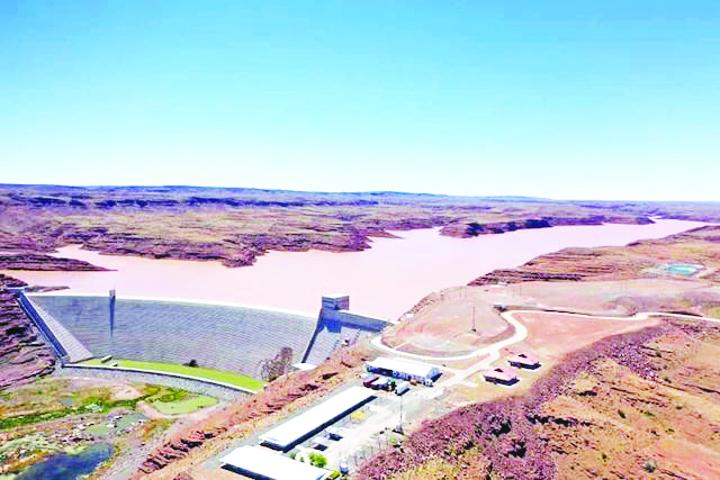
Africa-Press – Namibia. THE //Kharas Regional Council has resolved to apply for land at the Neckartal Dam from the Ministry of Agriculture, Water and Land Reform for agricultural purposes.
THE //Kharas Regional Council has resolved to apply for land at the Neckartal Dam from the Ministry of Agriculture, Water and Land Reform for agricultural purposes.
Chairperson of the regional council Joseph Isaacks says regional councils need to develop income-generating arms to supplement funds received from the central government for capital projects and progressive development.
Isaacks says land and other productive resources are not part and parcel of the jurisdiction and mandate of regional councils, therefore, the regional council resolved to apply for land and water rights from the Ministry of Agriculture, Water and Land Reform. The council plans to bring investors on board to develop this land for agricultural and tourism activities that would benefit the region’s inhabitants.
“It is very important that councils must capacitate themselves on a fiscal basis because we cannot really render services to our people. So we need a business arm to generate an income for the greater benefit of our people. Thus, this land is not for the community but for the council,” said Isaacks.
In July this year, The Namibian reported that a Swapo think tank report advised the ruling party to allocate eight state-owned green schemes to regional councils to manage, create jobs and address food security.
The report, titled ‘Pursuing Efficient National Agricultural Land Use for Enhanced Economic Growth and Food Security’, notes four of the 12 schemes are leased out to the private sector, while eight are managed through the state-owned Agriculture Business Development Agency (AgribusDev) and that they were added to the list of projects to be sold off to foreign investors in the Middle East.
“Regional councils will be strengthened to come up with their own initiatives to take green schemes allocated to them to greater heights and generate income for regional development. This strategy will encourage the regions to engage more in agricultural production.
“This approach will produce food for national consumption and address the issue of food security, initiate value addition and solicit support for processing industries that can create employment for people in their regions such as tillers, tractor and truck drivers and machine operators,” said the report.
However, minister of agriculture Calle Schletwein said councils cannot run green schemes. He made these remarks at Rundu in August while addressing governors, councillors and traditional authorities from Kavango East and West who were seeking permission to run two green schemes.
Schlettwein said green schemes were designed to be economic opportunities for local farmers.
“The government’s long-term vision with green schemes is that local farmers would initially own small parts of the scheme, but as time goes by, their equity would grow to bigger parts of the business. Green schemes must be linked to the value chain and must end at the farm gate,” said Schlettwein.
Deputy executive director in the ministry of agriculture Penda Ithindi said in a meeting held at Lüderitz in August that the government is considering inviting proposals for the development of the Neckartal irrigation scheme whereby the government would obtain an operator who can build, operate and transfer the project back to locals at a later stage. The operator could be local or international or a combination.
“Therefore, our thinking is to copy the green hydrogen route and put Neckartal out on request for proposals (RFP) and obtain a suitable operator. RFPs are a tested process which we feel can work. However, we are open for consultation and input from the community,” said the deputy executive director.
Chairperson of the regional council Joseph Isaacks says regional councils need to develop income-generating arms to supplement funds received from the central government for capital projects and progressive development.
Isaacks says land and other productive resources are not part and parcel of the jurisdiction and mandate of regional councils, therefore, the regional council resolved to apply for land and water rights from the Ministry of Agriculture, Water and Land Reform. The council plans to bring investors on board to develop this land for agricultural and tourism activities that would benefit the region’s inhabitants.
“It is very important that councils must capacitate themselves on a fiscal basis because we cannot really render services to our people. So we need a business arm to generate an income for the greater benefit of our people. Thus, this land is not for the community but for the council,” said Isaacks.
In July this year, The Namibian reported that a Swapo think tank report advised the ruling party to allocate eight state-owned green schemes to regional councils to manage, create jobs and address food security.
The report, titled ‘Pursuing Efficient National Agricultural Land Use for Enhanced Economic Growth and Food Security’, notes four of the 12 schemes are leased out to the private sector, while eight are managed through the state-owned Agriculture Business Development Agency (AgribusDev) and that they were added to the list of projects to be sold off to foreign investors in the Middle East.
“Regional councils will be strengthened to come up with their own initiatives to take green schemes allocated to them to greater heights and generate income for regional development. This strategy will encourage the regions to engage more in agricultural production.
“This approach will produce food for national consumption and address the issue of food security, initiate value addition and solicit support for processing industries that can create employment for people in their regions such as tillers, tractor and truck drivers and machine operators,” said the report.
However, minister of agriculture Calle Schletwein said councils cannot run green schemes. He made these remarks at Rundu in August while addressing governors, councillors and traditional authorities from Kavango East and West who were seeking permission to run two green schemes.
Schlettwein said green schemes were designed to be economic opportunities for local farmers.
“The government’s long-term vision with green schemes is that local farmers would initially own small parts of the scheme, but as time goes by, their equity would grow to bigger parts of the business. Green schemes must be linked to the value chain and must end at the farm gate,” said Schlettwein.
Deputy executive director in the ministry of agriculture Penda Ithindi said in a meeting held at Lüderitz in August that the government is considering inviting proposals for the development of the Neckartal irrigation scheme whereby the government would obtain an operator who can build, operate and transfer the project back to locals at a later stage. The operator could be local or international or a combination.
“Therefore, our thinking is to copy the green hydrogen route and put Neckartal out on request for proposals (RFP) and obtain a suitable operator. RFPs are a tested process which we feel can work. However, we are open for consultation and input from the community,” said the deputy executive director.
For More News And Analysis About Namibia Follow Africa-Press