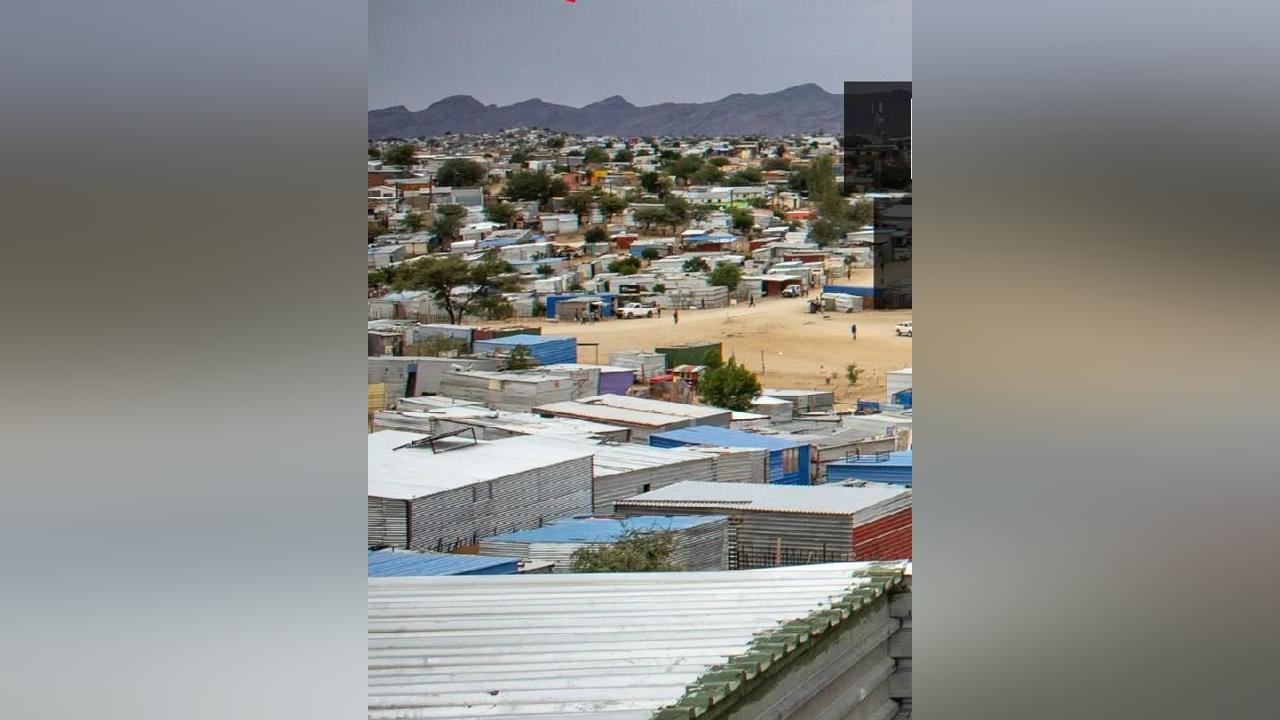
Africa-Press – Namibia. THE High Court of Namibia will make its ruling on determining the legality of the Squatters Proclamation, 21 of 1985, and the judgement has been set for 16 February 2023.
This is after the Namibian legal practitioner, Kadhila Amoomo, finalised his closing arguments on behalf of Dimbulukeni Nuyoma, who is challenging the act which has resulted in the eviction of many residents of informal settlements by the city council as they have “illegally occupied the land”.
In the founding affidavit, Nuyoma put it to the court that part of this law has already been declared unconstitutional by the Supreme Court of Namibia in as far as it previously permitted the eviction of persons from land without court orders.
“I, however, submit that the entire Squatters Proclamation is unconstitutional on the basis that it is one of those laws which was enacted for the sole purpose of denying ordinary Namibians access to land and/or housing,” Nuyoma said.
He added that the realities of Namibia’s land issue as we speak can simply not be reconciled with the Squatters Proclamation.
“There is no need for a Squatters Proclamation in its form in our constitutional dispensation. In fact, the mere connotation of the word squatters has a glaring reminder of the terms that were used to describe our people before independence. To refer to someone as a “squatter” in an independent Namibia is to violate their right to dignity,” Nuyoma argued.
He argued that the Squatters Proclamation Act is unconstitutional because it violates article 8 of the Namibian Constitution in as far as the dignity of human beings are concerned.
Furthermore, Nuyoma said that the Squatters Proclamation is also unconstitutional in that it violates article 16 of the Namibian Constitution.
“Section 2 of the Squatters Proclamation is particularly unconstitutional and contravenes the principle of legality for being overly broad and vague in that the concept of ‘enter’ in the context of entering land, building or structure is not defined. The Squatters Proclamations is further unconstitutional in that it does not consider the period of time that a person may have occupied the land in question from which eviction is being sought. In other words, if a person has been occupying the land for more than 2 years, the Squatters Proclamation does not make the necessary provision for the circumstances to be considered, particularly having regard to children, disabled persons, elderly and persons who are indigent,” Nuyoma argued.
He concluded that the criminalisation of the occupation of vacant land (albeit owned by the local authority) or the erection of structures on vacant land should not be criminalised in a constitutional dispensation in the country.
“This is against article 8 of the Namibian Constitution. Better measures should be adopted in order to accommodate persons who are unemployed and who reside in urban areas and who do not have access to land. This is because during the apartheid era, if one is unemployed, then one was not allowed to reside in the local authority area. In fact, one could not be employed in a local authority unless one has access to suitable accommodation. This is no longer the reality of our country. It is common cause that those who are in rural areas now flock to urban areas in order to achieve their aspirations of not only obtaining employment but also accessing land and housing in the local authority,” Nuyoma concluded.
For More News And Analysis About Namibia Follow Africa-Press