Africa-Press – Namibia. SWAPO has directed the government to define and classify the country’s mineral resources, including oil and green hydrogen, as strategic minerals to be used for national development and the establishment of national reserves.
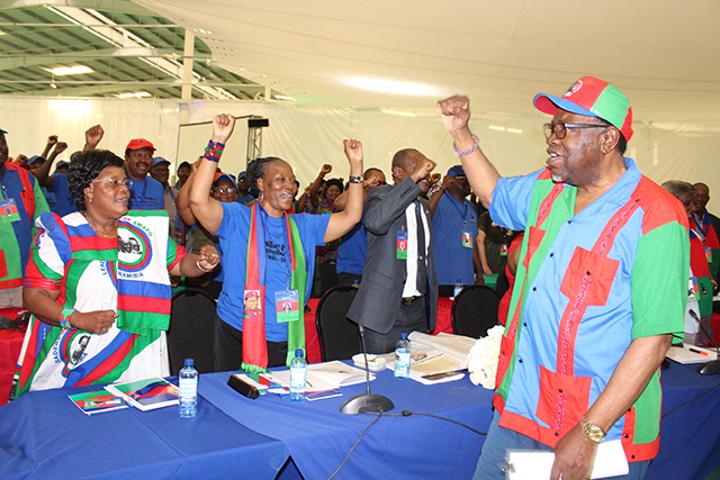
This is one of the resolutions adopted by the party at its congress held in Windhoek recently.
Swapo said Namibia has an abundance of natural resources, of which mining, tourism, agriculture and fisheries are major industries.
The party said these sectors, including the mining, oil and gas industries, could provide several benefits, such as employment, and poverty reduction.
“Value can be added or retained in the national or local economy when the mining, and oil and gas operations source inputs locally,” the party said in its resolutions.
Swapo resolved to direct the government to incorporate a local content policy in the Minerals Act.
The party further resolved that the government, through the Ministry of Mines and Energy, should speed up the finalisation of the local content policy for the oil and gas industry.
The ruling party asked the ministry to incorporate this into the Petroleum Act to ensure oil and gas are landed in Namibia before being exported.
“The Swapo party directs the government through the Ministry of Mines and Energy to speed up the implementation of the newly drafted mineral beneficiation strategy,” the party said.
The congress also resolved that the government, through the Ministry of Industrialisation and Trade, should ensure the relevant directorate is capacitated to enable the implementation of the mineral beneficiation strategy.
Acting executive director of mines and energy, Bryan Eiseb, referred The Namibian to former mines commissioner Erasmus Shivolo.
National Petroleum Corporation of Namibia (Namcor) managing director Immanuel Mulunga said the implementation of the resolutions would depend on whether investors have the appetite to set up a refinery, which would have to be backed up by a robust feasibility study in Namibia.
“We are not necessarily producing oil for a Namibian-based refinery. The licence owners would sell the oil wherever it’s going to make commercial sense for them,” he said.
GENERATIONAL TRANSITION
Swapo has tasked its think tank to develop a policy for its leadership succession and generational transition.
According to the resolutions, the party says there is a need to identify critical positions within Swapo and to develop clear plans of action for the thorough induction and preparation of cadres to assume top party positions.
In addition, it was resolved that the think tank, through the office of the secretary general, should develop a draft of a party succession policy document with clear timelines for the completion of the policy.
On the nomination of candidates for the top four positions, the party says it wants to do away with the two centres of power separating the country’s president from the president of the party for a prolonged period.
Political analyst Ndumba Kamwanyah says these resolutions are a step in the right direction.
He says it’s vital for the party to pre-empt the future.
“Generational succession is one of the most controversial and sensitive issues, therefore it’s important that policy guidelines be put in place to ensure it takes place in an orderly and guided process that’s clear to all members,” Kamwanyah says.
For More News And Analysis About Namibia Follow Africa-Press