Africa-Press – Namibia. DUNDEE Precious Metals has yet to inform various ministries that its Tsumeb smelter has allegedly partially affected the town’s potable water supply.
Last month, the copper smelter’s managing director, Zebra Kasete, issued a statement claiming Tsumeb’s water is not fit for human consumption based on a microbiological quality assessment.
The company has since been providing its employees with potable water on site.
Ministry of Environment, Forestry and Tourism spokesperson Romeo Muyunda says the ministry has not received a formal report from Dundee on the matter yet.
“This will inform whether or not the situation warrants intervention from the ministry or from the water authorities,” he says.
Ministry of Mines and Energy spokesperson Simon Andreas says the ministry has not been informed of the issue, but it is engaging Dundee on the matter.
Ministry of Agriculture, Water and Land Reform spokesperson Jona Musheko says the ministry is preparing a media release on the matter today.
‘NO MONITORING’
EJAtlas, an international organisation which collects information about communities around the world fighting for environmental justice, says the Dundee copper smelter is one of a few mines in the world of which the highly polluting process is not monitored.
This puts water resources, workers’ and residents’ lives, as well as the area’s biodiversity at risk, the organisation says.
It claims that the smelting process releases arsenic trioxide.
Dundee acquired the operation from Namibia Custom Smelter in 2010 when the global demand for copper dropped.
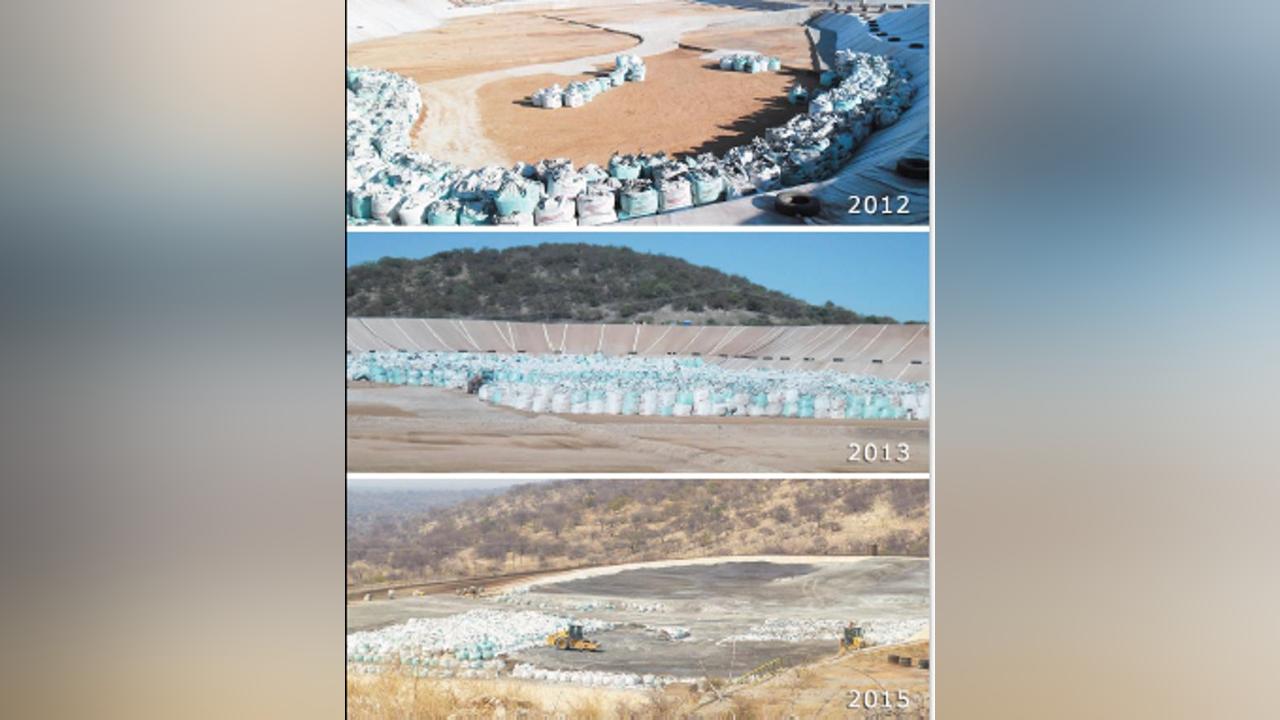
EJAtlas further claims that arsenic dust waste is piling up in bags at the operation site, which is a few metres away from houses at the town.
Dundee has been smelting copper from its mother company’s operations in Bulgaria. This is after Bulgarian laws prohibited copper ore smelting due to environmental pollution.
“The terms of the transaction granted Dundee no accountability for the smelter’s previous impacts under its former owners,” says EJAtlas.
In 2016, Dundee proposed to expand its smelter capacity to increase the copper concentrate throughput capacity from 240 000 tonnes per year to 370 000.
ENVIRONMENTAL COST
A Bulgarian campaigner, Genady Kondarev, in 2017 warned that the planned increase would have an additional impact on the environment and people’s health. He has since urged the Tsumeb municipality to demand the government’s intervention.
Tsumeb mayor Mathew Hangula yesterday confirmed that the council will receive water test results this week.
“We have a meeting with Dundee on Tuesday [today],” he said.
Hangula said the municipality has not been to the site for inspection.
“The whole mining area is contaminated, including a few parts of the town,” he said.
He said he has received reports of high concentrations of arsenic trioxide.
Hangula said the council has not received any health-related complaints from residents. Dundee spokesperson Aline Garises has not responded to questions sent to her.
Last month, she could not explain the type of microbiological content the company claimed was in the water.
Since last month, Tsumeb residents have been advised to boil water before consumption or to pour water into clear plastic bottles and place them in the sun as this could kill disease-causing organisms.
For More News And Analysis About Namibia Follow Africa-Press