Africa-Press – Namibia. OPPOSITION political parties have been advised to keep an eye on the government to ensure it does not make “unpopular” economic decisions – especially as the country is gearing up for elections next year.
With the global economy expected to remain subdued this year due to rising inflation, governments in Africa, including Namibia, may be forced to implement unsustainable economic policies to remain in power.
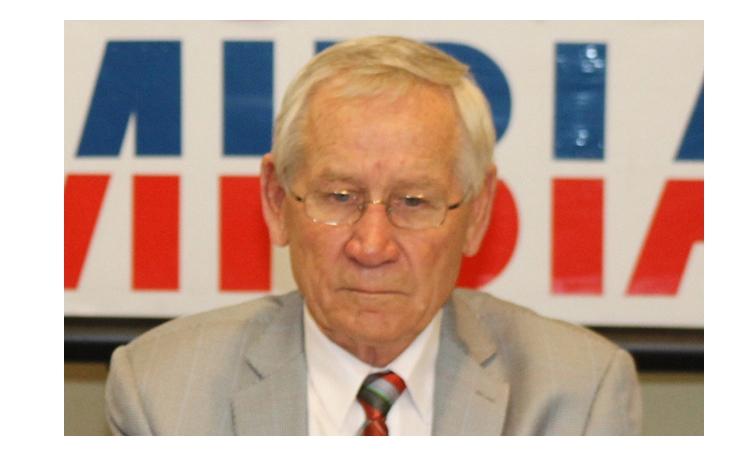
This is according to University of Namibia associate professor Lesley Blaauw.
“We have elections next year, and we all know what politicians do when we have elections,” Blaauw says.
He says it is the responsibility of the opposition to point out the negative consequences of government decisions.
“We cannot just say no, this is going to affect us negatively. We need to be able to quantify what we are saying. Once we are able to do that, that will be impactful.”
The international relations academic said this on Friday during a presentation on the global and African economic outlook for 2023 at a planning retreat of the Landless People’s Movement (LPM) in Windhoek.
Blaauw said as global conditions continue to tighten, it will become more expensive for African countries to borrow money.
The International Monetary Fund has predicted that the global economy will grow by 2,3% this year, down from 3,2% in 2022.
He cautioned that this has a political impact on Namibia and other African countries.
“For us as a continent, it will become much more expensive to get money from international institutions and developed countries, because they will be concerned with their own national issues.
“But it will also become more expensive for the developed countries to give more money to African countries. And of course, this has implications for our development on the continent,” Blaauw said.
He said rising global inflation will give rise to expensive commodities for households and those in manufacturing.
“So, in the developed world, what is happening is that governments counteract this by basically giving subsidies to households and by giving money to enterprises to continue doing what they are doing.
“The question is: Can we afford to do the same with the limited economies we have? How many governments on the continent can do that? I don’t think we have one at all,” he said.
With several African countries expected to hold elections this year, Blaauw warned that many governments may be forced to overborrow to stay in power.
“For the government, if you want to stay in power, you have to spend more. And it is not necessarily economically sustainable. So that’s the drawback,” he said.
Meanwhile, opposition lawmaker Nico Smit said while several major disruptors are currently active across the globe, the one that affects Namibians most is inflation.
The Popular Democratic Movement (PDM) parliamentarian said inflation in Namibia has nothing to do with wheat production in the Ukraine or sanctions against Russia.
Smit said one of the causes is that the national currency continues to weaken, which starts with a budget deficit.
“The bigger the budget deficit, the more the government has to borrow, the higher its debt, the worse its credit profile, the higher the interest it must pay on its borrowings.
“This makes the currency weak, which in turn pushes up inflation,” he said.
“The victims are the poor people, and the beginning of the rot lies with the Swapo government’s inability to address the widespread corruption among its own members.
“Pervasive wastage and pilferage increase the budget deficit, undermine the value of the Namibia dollar, push up inflation, cause extreme hardship for poor people, and ultimately force the Bank of Namibia to increase interest rates,” he said.
For More News And Analysis About Namibia Follow Africa-Press