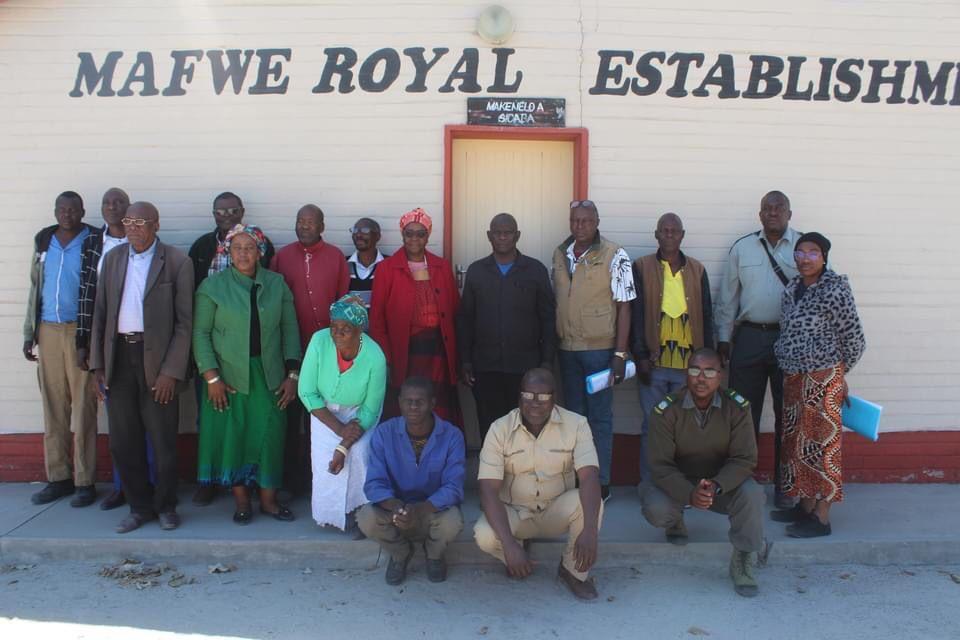
Africa-Press – Namibia. In a bid to address the ongoing challenges of human-wildlife conflict in the Zambezi region, the Mafwe Traditional Authority at Chincimane, situated approximately 65 kilometers southwest of Katima Mulilo, has put forward a series of recommendations to mitigate the conflict. The traditional authority proposes the strategic installation of boreholes to prevent water source competition between humans and wild animals, which frequently results in conflicts. They also advocate for government assistance to farmers in fencing off their crop fields, considering that numerous villages within the area fall under conservancy boundaries.
In a significant development, the Parliamentary Standing Committee on Natural Resources engaged in a consultative session with the Mafwe Traditional Authority today. This meeting forms part of a larger series of public hearings designed to gather community input from regions such as Zambezi and Kavango East and West, aimed at finding effective solutions to the persisting human-wildlife conflict.
Natamoyo, an advisor to the Mafwe chief, Patrick Kawana, expressed concerns over the inadequacy of compensation for victims of human-wildlife conflict. Kawana highlighted that the compensatory amounts offered to affected residents, whether for funeral arrangements, crop losses, or injuries, are meager. Moreover, he emphasized the lack of additional support for victims, such as aid for disabled individuals, including wheelchairs, and counseling for those traumatized by the conflicts. Kawana further criticized the Ministry of Environment for delays in responding to reported incidents, which often force affected parties to take matters into their own hands, potentially leading to legal consequences.
The escalating populations of both wild animals and humans, coupled with the proliferation of conservancies, have exacerbated the occurrence of human-wildlife conflict, Kawana noted. He suggested that the government should explore innovative alternatives, such as the relocation of problematic wild animals to areas farther away from human settlements. Problematic wildlife species identified in the region include lions, elephants, buffaloes, hippos, and crocodiles.
Leading the delegation of lawmakers, Hon. Agnes Kafula acknowledged the concerns expressed by the local residents. While sympathizing with their situation, she underscored the positive impact of conservancies on communities. Kafula proposed an alternative approach by advocating for an increase in hunting quotas for problem animals. This strategy aims to control their populations and mitigate the conflicts arising from their interactions with human settlements.
For More News And Analysis About Namibia Follow Africa-Press