Africa-Press – Namibia. Staff Reporter
THE Executive Director within the Ministry of Health and Social Services, Ben Nangombe, has urged members of the public to remain calm and refrain from spreading misinformation about Mpox. He emphasized that the Health Ministry has enhanced surveillance to identify potential cases early, ensuring prompt response and treatment.
Since January 2022, a total of 15 countries in the African region have reported Mpox outbreaks. In the last 7 months (January — July 2024), a total of 14,250 confirmed cases and 456 deaths, with a case fatality rate (CFR) of 3.2%, were reported, compared to 1,145 cases and 7 deaths in 2023. The Democratic Republic of the Congo accounts for more than 90% of the reported cases. A new variant/clade that emerged in September 2023 is circulating in its eastern region and has also been reported in Rwanda, Uganda, and Kenya.
The Africa Centres for Disease Control and Prevention (Africa CDC) has since declared Mpox a Public Health Emergency of Continental Security (PHECS). This was followed a day later by the World Health Organization (WHO)’s declaration of Mpox as a Public Health Emergency of International Concern (PHEIC) on August 14, 2024.
Nangombe said that these declarations follow a marked increase in Mpox cases globally and on the African continent, warranting coordinated public health responses. “The WHO has said an increase of 80% in Mpox cases reported in July 2024 compared to the previous month, raising concern about the virus’s rapid transmission beyond traditional endemic regions,” Nangombe said.
Mpox is a zoonotic disease (an infectious disease that is transmitted between species from animals to humans or from humans to animals) caused by an orthopoxvirus, which results in a smallpox-like disease in humans. The virus was initially discovered in monkeys in 1958 and in humans in 1970 in the Democratic Republic of the Congo. Since then, the disease has been reported in humans in several other Central and West African countries, such as Cameroon, Central African Republic, Côte d’Ivoire, Gabon, Liberia, Nigeria, Republic of the Congo, and Sierra Leone. Cases have been reported outside Africa in recent years.
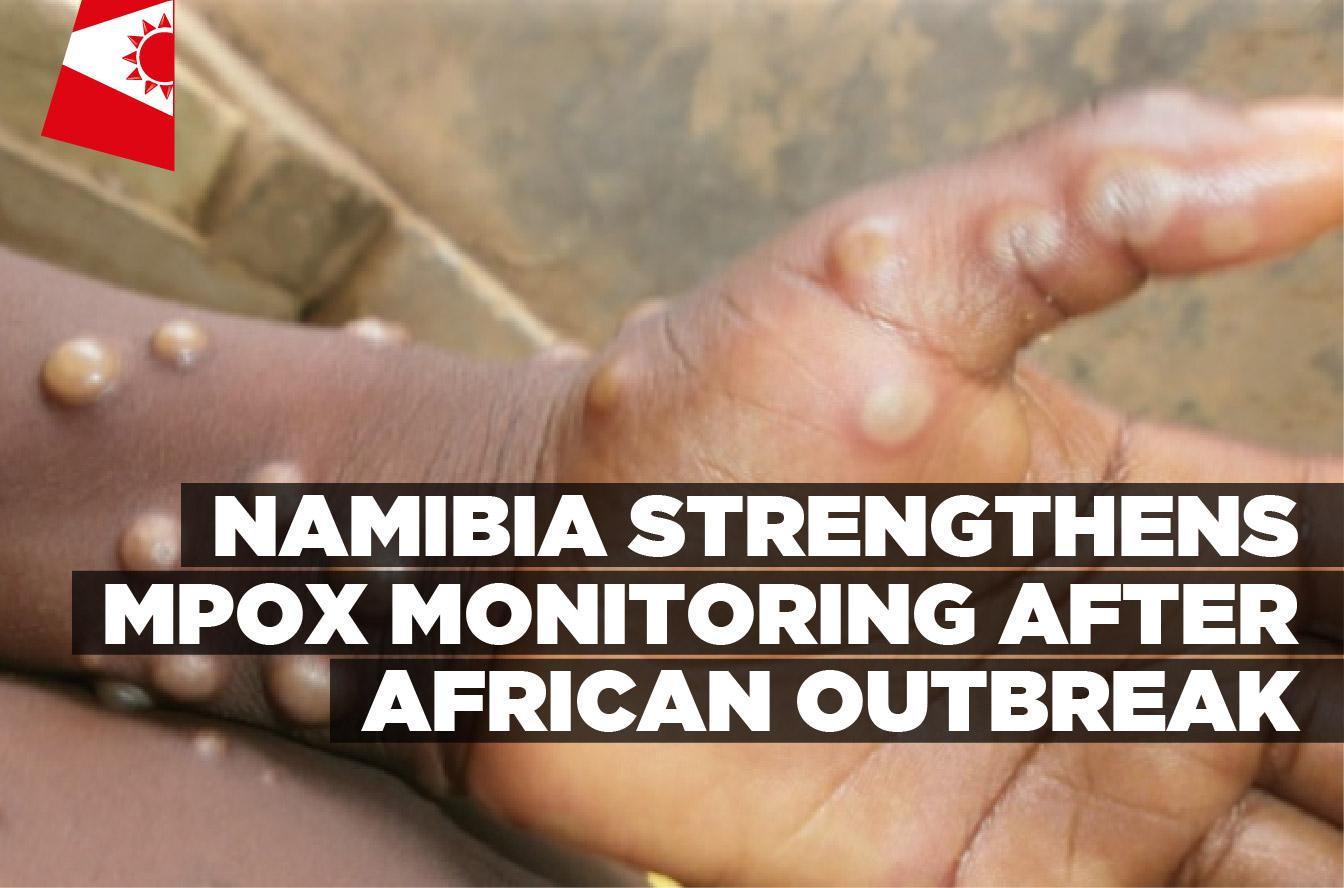
The incubation period (the interval from exposure to the virus and onset of symptoms) of Mpox is typically from 6 to 13 days, but it can range from 5 to 21 days. Symptoms include fever, intense headache, swollen lymph nodes, muscle aches, and a rash that appears some days after the onset of symptoms, eventually turning into blisters and crusting over time. The rash tends to be concentrated on the face, palms of the hands, and soles of the feet. The mouth, genitals, and eyes may also be affected. The symptoms and skin rashes generally last for 2–4 weeks. During this period, a person can transmit the infection to others. Mpox is a self-limiting disease; however, severe cases can also occur, which may lead to death.
Measures to prevent infection with the Mpox virus include isolating infected patients from others who could be at risk, practicing good hand hygiene after contact with infected persons or animals (especially those imported from endemic countries), and washing hands with soap and water or using alcohol-based sanitizer.
The public is also urged to avoid direct contact with any materials, such as bedding or laundry, that have been in contact with an infected person or animal. Mpox virus can be destroyed using a standard washing machine with warm water and detergent. It is also recommended to use appropriate personal protective equipment (PPE) when caring for patients, including gowns, gloves, respirators, and eye protection.
For More News And Analysis About Namibia Follow Africa-Press